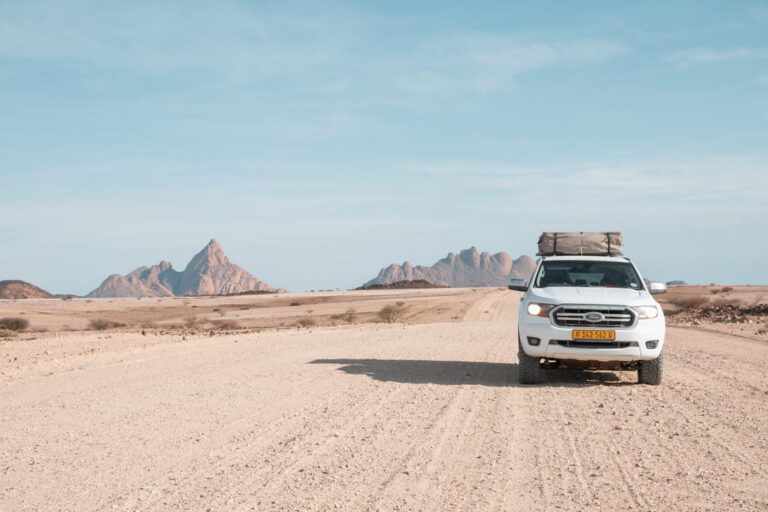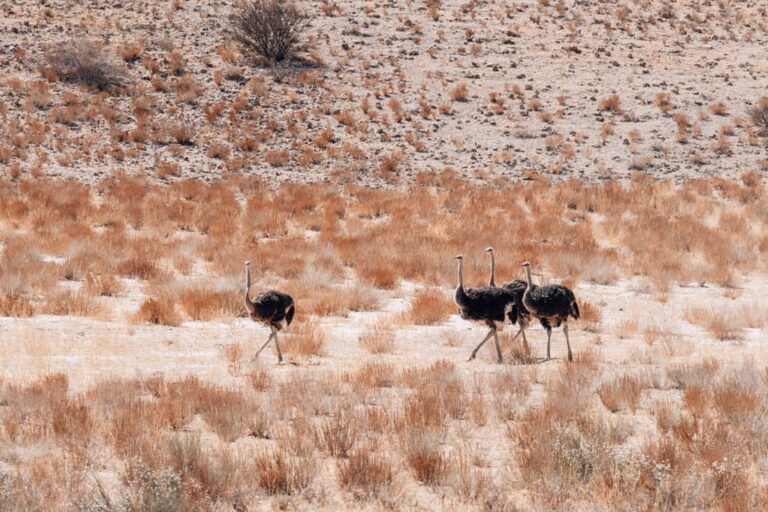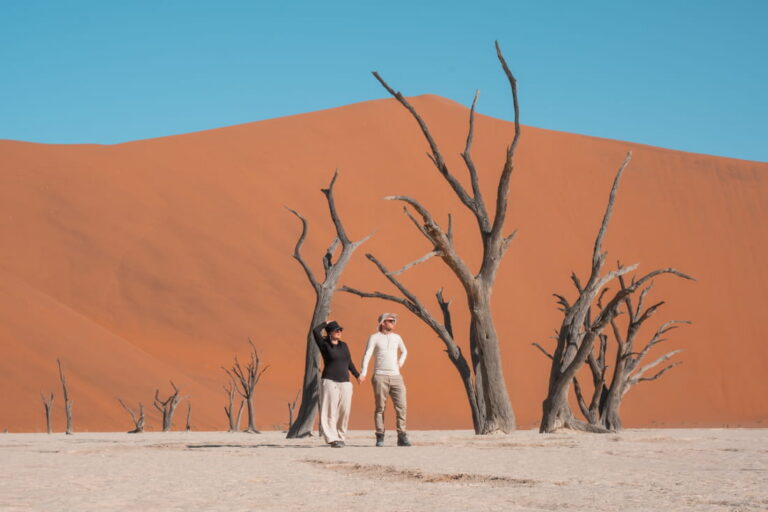

The coastal town of Swakopmund was the place where we planned some days to recover from the heat that we experienced in inland Namibia. But we didn’t really had a planning on what to do there. Most travelers head to Swakopmund to go to Walvis Bay or Sandwich Harbour to explore the dunes, but we wanted something a bit different. We found the perfect detour that would offer us a sense of adventure and got us away from the main tourist trail: the Welwitschia Drive.
Read more: Our 17-day itinerary for Namibia
This drive, in the Namib-Naukluft desert, is famous for its surreal desert landscapes and endemic plant species that look like they belong on another planet. As soon as we read about the drive, we were convinced this was right in our alley. We sorted our permit and set off to see if this self-drive route was worth the detour. And spoiler: It was!

If you are looking from something different and want to explore a moonscape and thousands-of-years-old flora, we got you covered. In this post, we’ll share everything there is to know about driving the Welwitschia route yourself.
Table of Contents
Some of the links on this blog are affiliate links. This means if you click on a link and purchase, we receive a small commission at no additional cost to you. The affiliate links concern only products and services we appreciated highly and trust. This means the views and opinions expressed in this post are purely our own. For more information, read our privacy and cookie policy.
Below you can find a map with all the main attractions to drive the Welwitschia route.
How to use this map / Click on the top left of the map to display the list of locations. You can also click on the locations to display further information. Click on the top right corner of the map to open a larger version of the map in a new tab. Click the star (favorites) next to the name of the map to save to your Google Maps.
How to get a permit for Welwitschia drive
Before you head to the Namib-Naukluft desert, make sure you first pick up a permit. The Welwitschia drive runs through the northern section of this national park, but there are no entrance gates where you can pay. So it is important that you secure your permit beforehand in Swakopmund.
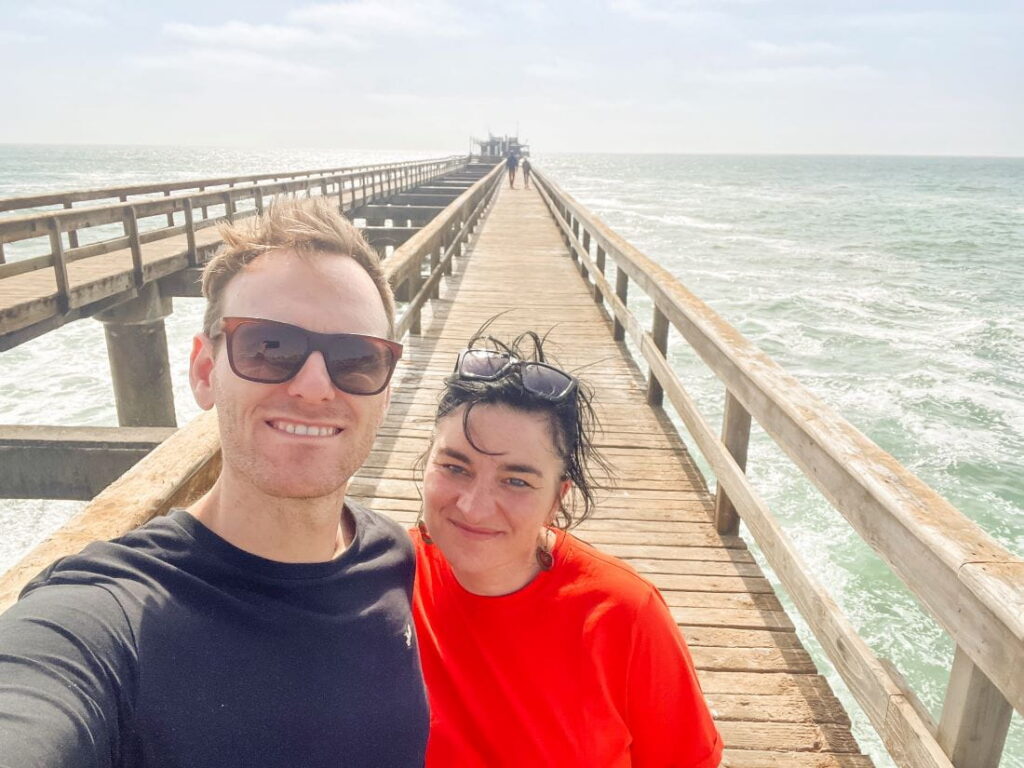
To get a permit, the process is very straightforward. Head over to the Ministry of Environment, Forestry and Tourism (MEFT) / NWR office in the center of Swakopmund. It is located in the yellow building right at the intersection of Bismarck Street and Sam Nujoma Avenue (see our map). Go inside and ask where you can get the permit and they will guide you to the correct person. You can pash by card or cash.
The permit costs N$280 per person and an extra N$60 for your vehicle (updated prices from 1st of April 2026). When you purchase it, the staff will hand you a detailed paper map of the route. Hold onto this map, as it marks the official 13 numbered stops along the drive and also gives you more information about what you are looking at.
Pack to Life tip: Grab your permit the morning you plan to leave or the afternoon before. The process is straightforward, but keep in mind the opening hours of the office: From Monday to Friday, from 8 am until 1 pm and from 2 pm until 5 pm. Opening hours in the weekend are from 8 am until 1 pm.
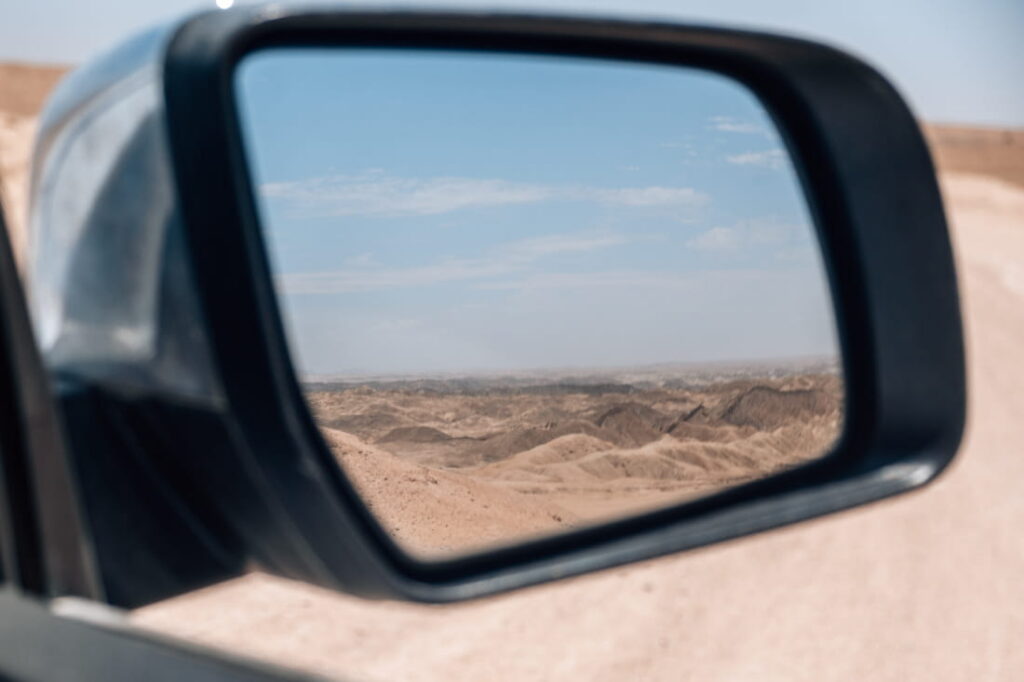
Some practicalities
Once you’ve got your permit sorted, actually getting to the start of the drive is straightforward.
How to get to the Welwitschia drive?
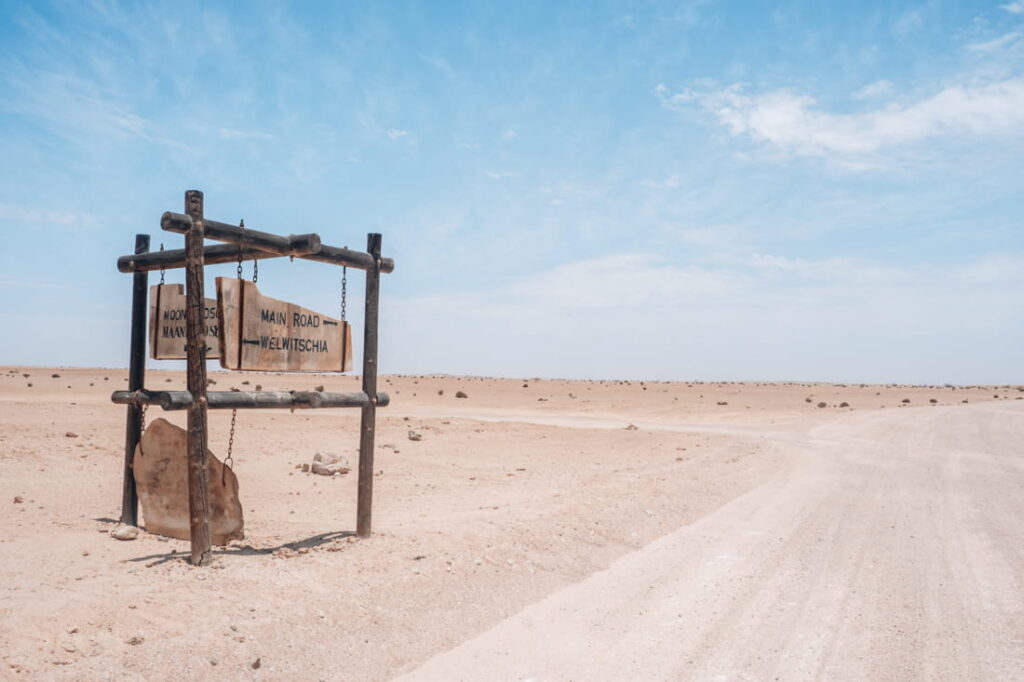
The start of the drive is a 30-minute drive from Swakopmund. When leaving Swakopmund, take the B2 heading towards Windhoek. Just outside of town, turn onto the gravel C28 road. After driving for a few kilometers, you’ll see the turnoff on your left onto the D1991, which marks the official start of the route and leads you right to the first beacon.
How much time do you need for the Welwitschia drive?
You’ll need half a day (about 4 hours) to complete the drive and take in the landscapes. The entire drive is about 160 kilometers round trip from Swakopmund. While the actual driving distance isn’t massive, you’ll want plenty of time to pull over at the 13 markers, stretch your legs, and soak in the views.
Do you need a 4×4?
On forums, you often read that a 4WD vehicle is required because of gravel conditions and sandy riverbeds. In our experience, the road was completely fine and we didn’t need our 4×4 mode to drive the road. As long as you have a solid 2WD with good ground clearance and drive carefully, you should be fine.
Pack to Life tip: Make sure your spare tire is in good shape and you have enough fuel before heading out!
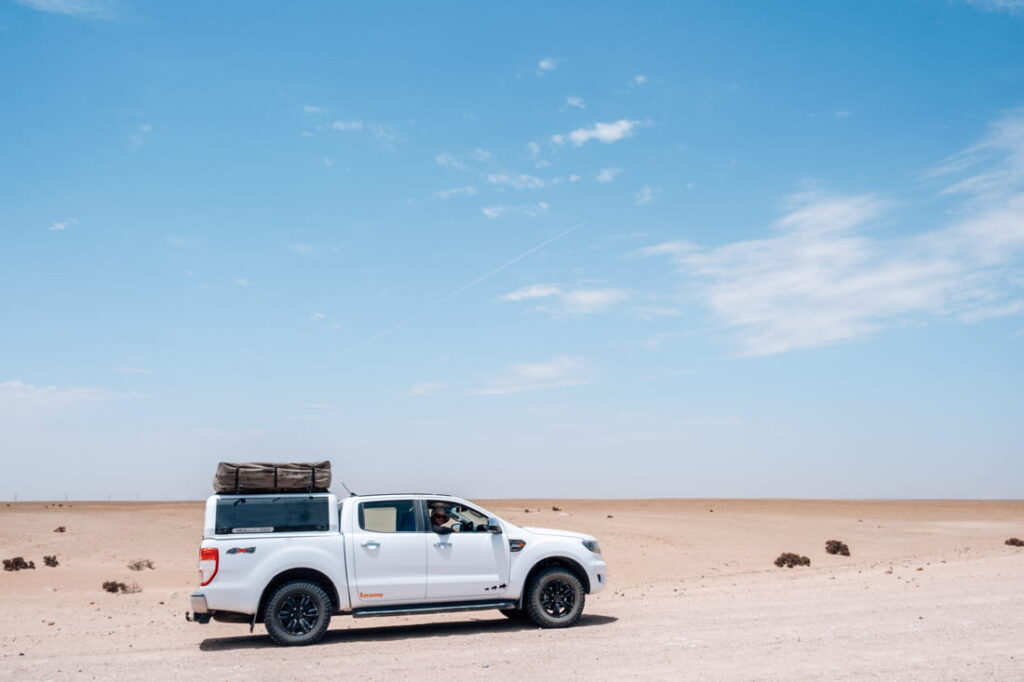
Note that this drive is perfectly doable by yourself, but is you prefer a guided tour, this is a good option.
Our favorite stops along the Welwitschia drive
The route is marked by 13 numbered beacons, each pointing out a unique geological feature, historical remnant, or a rare desert plant. More information about each stop can be found on the paper you received when receiving your permit.
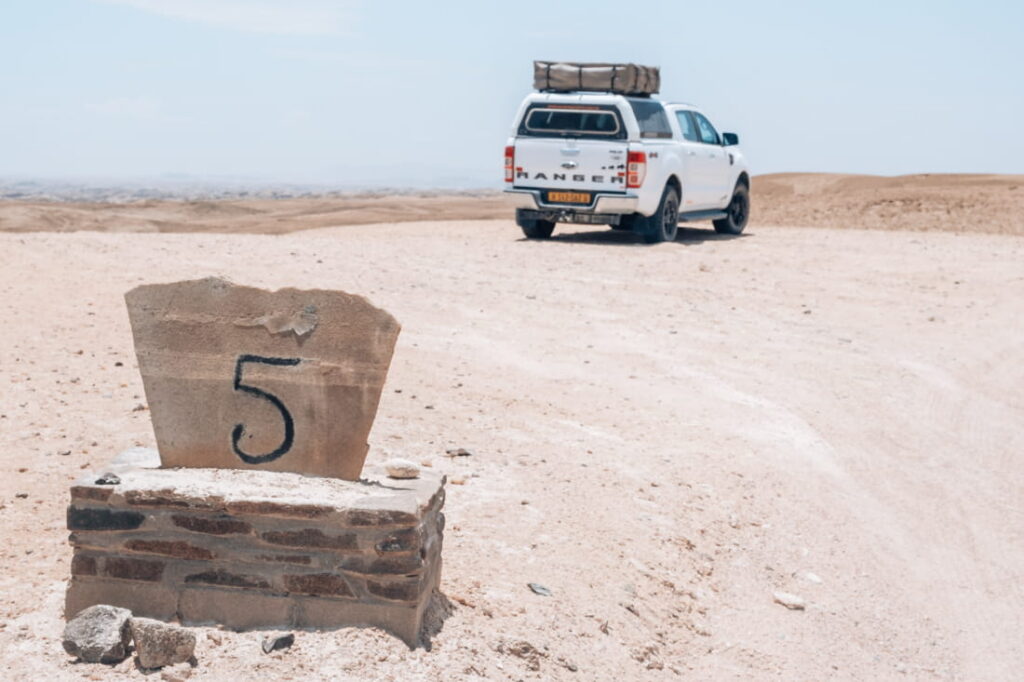
You don’t need a lot of time at every single marker, but these are the main highlights we advise you not to miss:
Curious plants: Lichen fields and the dollar bushes (stops 1–3)
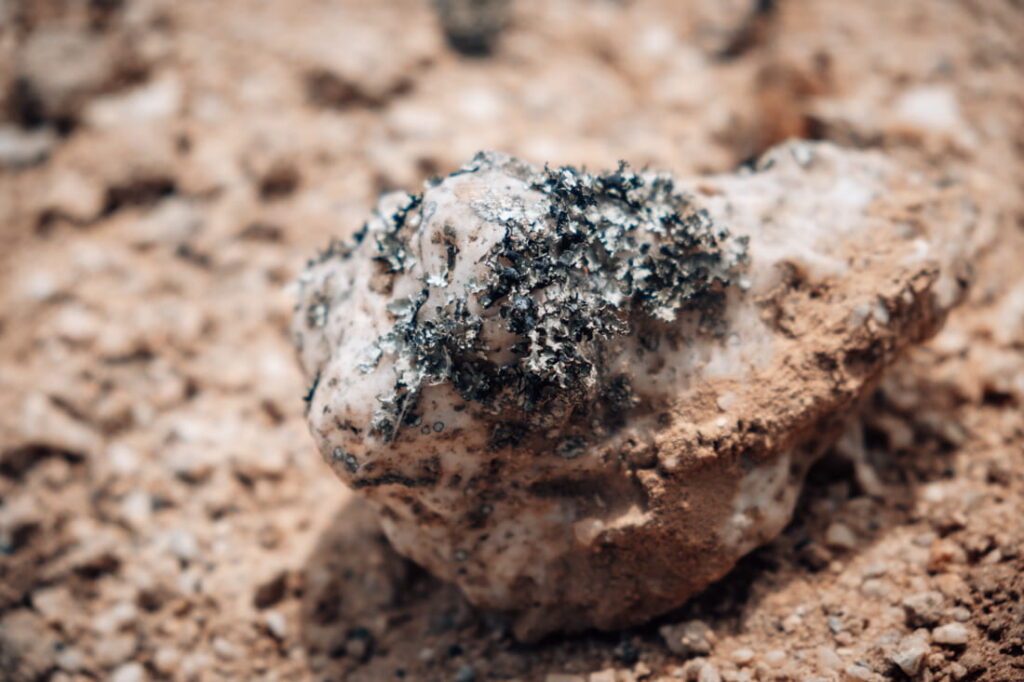
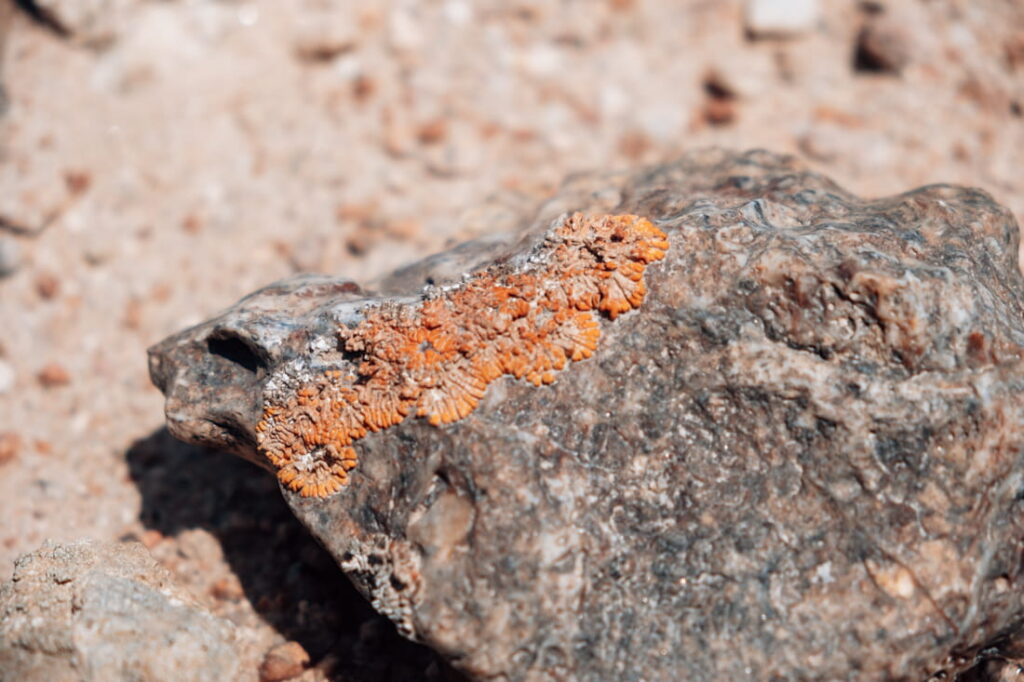
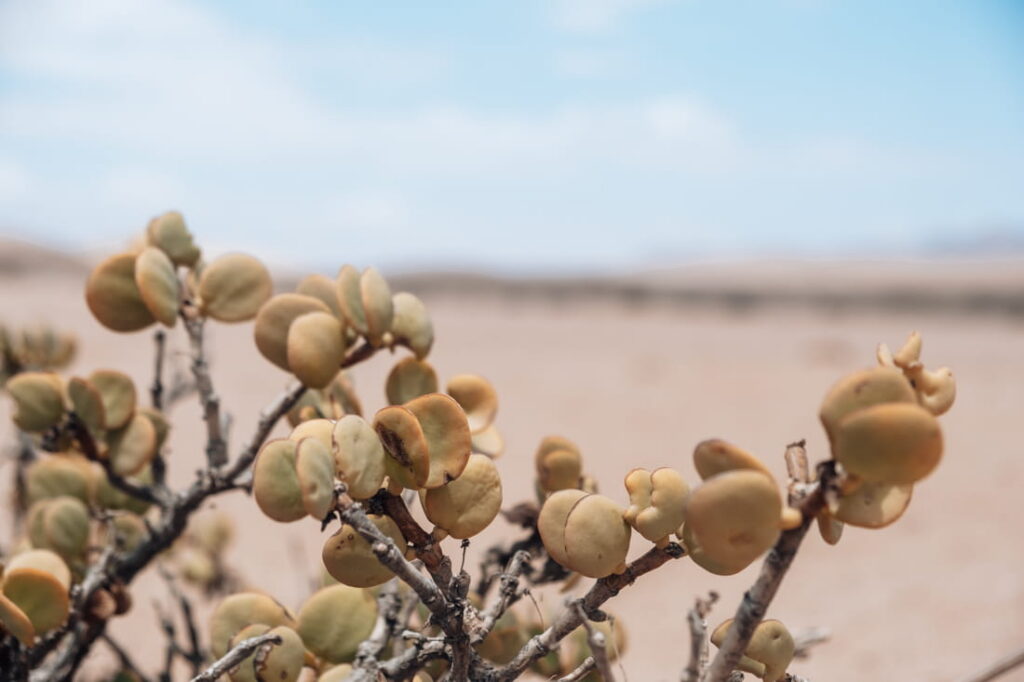
Right from the start, the route introduces you to the desert’s ecosystem. You’ll see small patches of colorful lichen (a combination of algae and fungi that survives purely on coastal fog). Make sure not to step on the lichen: It take decades to grow and even old wagon tracks from over a century ago are still visible because it takes so long to recover. You’ll also spot dollar bushes, named after its coin-shaped leaves.
The surreal moon landscape (stops 4 and 6)
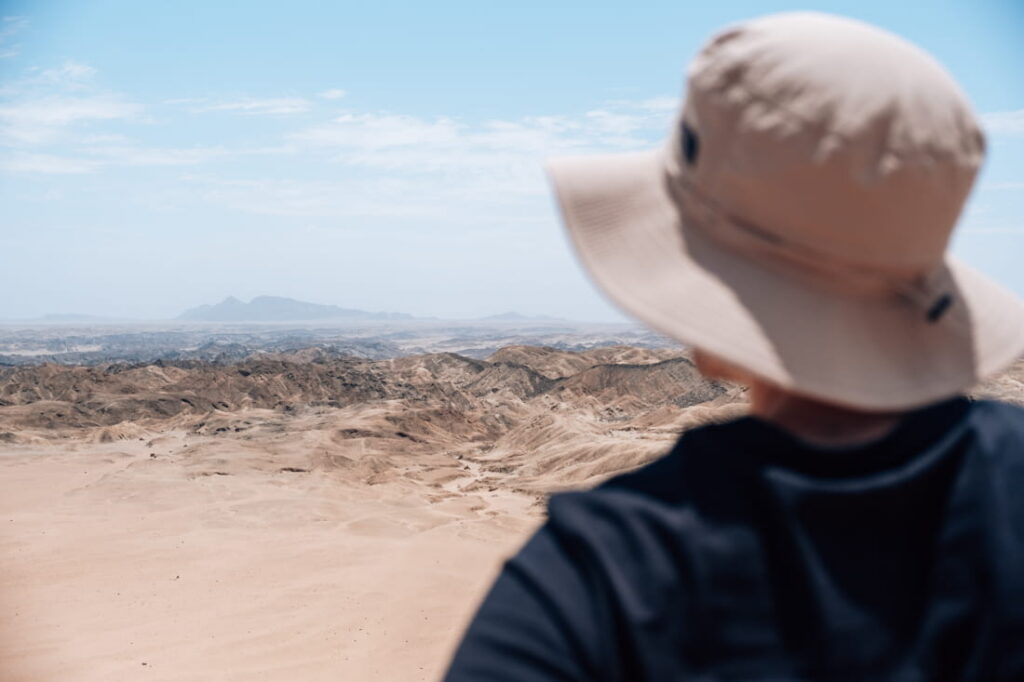
All of the sudden, the terrain transforms completely. The vast, flat gravel plains suddenly drop off into a deep canyon formed millions of years ago by the Swakop River. The viewpoints here offer an incredible panorama of the Moon Valley.

The Dolerite Dyke and the Swakop riverbed (stops 9 and 10)
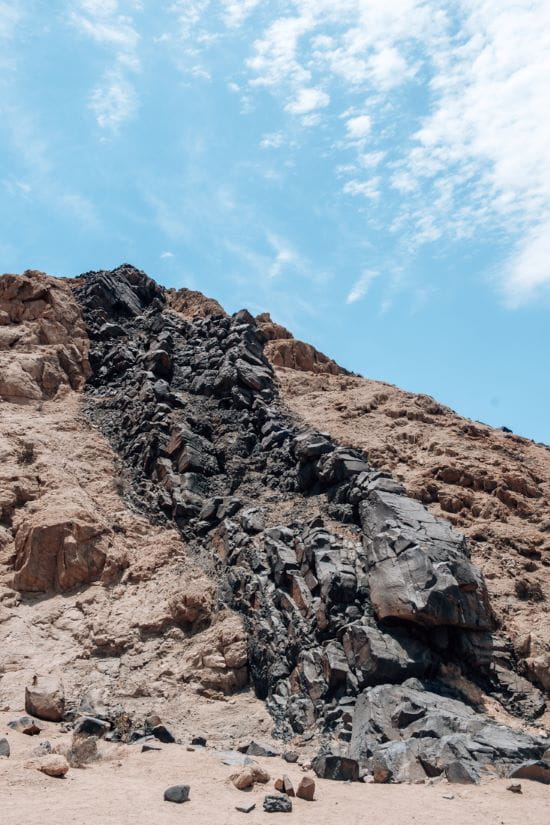
Further along, you’ll pass the Dolerite Dyke. You clearly see a black ridge running along the top of a granite hill. And after that, the road continues into the dry bed of the Swakop River. This is a great spot to pause for a quiet snack or picnic.
Near the riverbed, you can find official camping spots. If you paid for the permit, you can sleep here. If you want to spend two nights here, make sure to mention this when you buy the permit. You will pay a double price and you’ll get a permit for 48 hours. Note that there are no services or reception here. Make sure you only camp at official camp spots, to avoid a fine.
If you want a bit more comfort than wild camping. Or if you simply want a cold drink or a dip in a pool after the dusty gravel, then Goanikontes Oasis Rest Camp is the place to stop. It is the ideal midpoint on the drive, whether you’re stopping only for lunch or spending the night here.
Check availability and prices for Goanikontes Oasis Rest Camp on BOOKING.COM


The giant Welwitschia Mirabilis (stops 11 and 12)
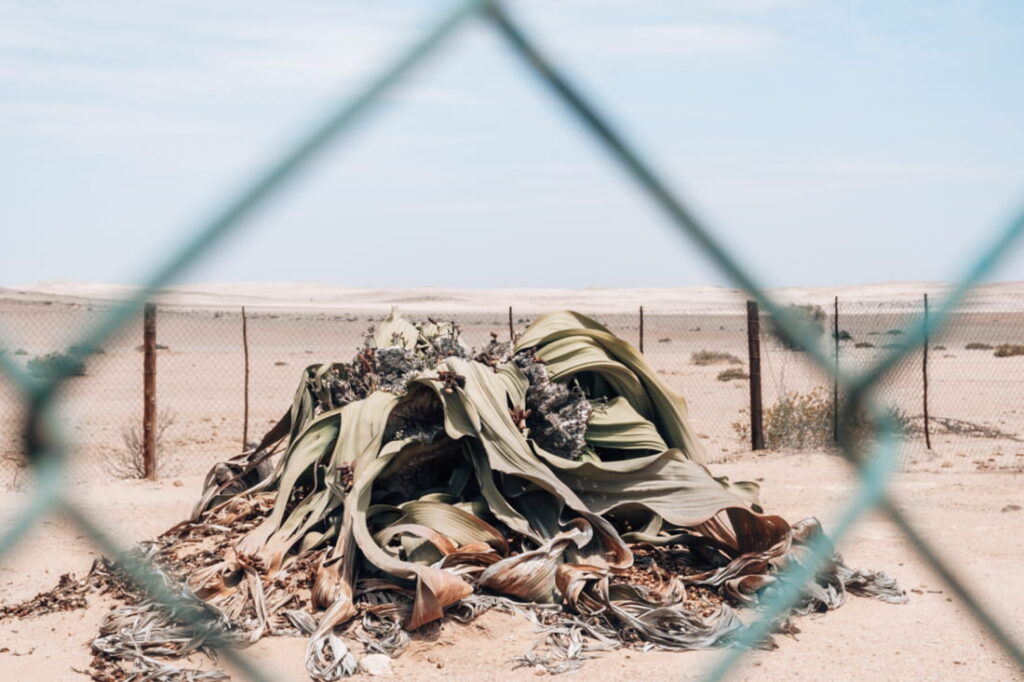
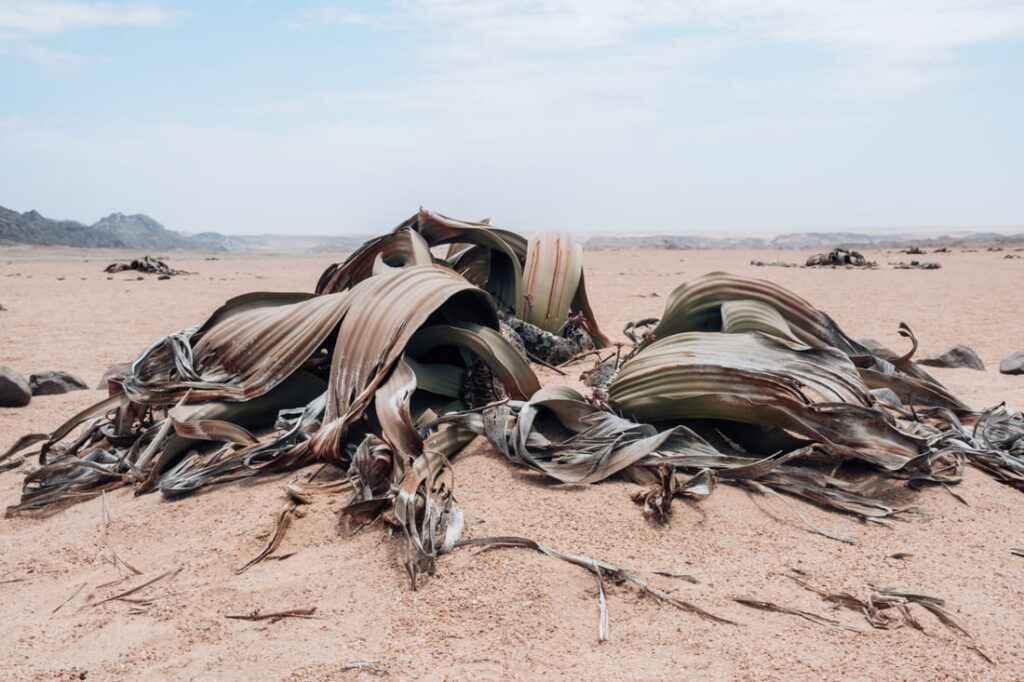
This is the grand finale of the drive. At the Welwitschia Mirabilis plain, you’ll see scattered clusters of Namibia’s most famous plant. Despite looking like a heap of dead leaves, each plant actually has only two leaves that split and tear over centuries in the harsh wind.
Stop 12 brings you to the oldest Welwitschia. Protected by a fence to preserve its fragile root system, this giant living fossil is estimated to be over 1500 years old! Standing in front of such an old plant was a surreal experience.
Our recommended Welwitschia drive essentials
- Offline Maps: cell service disappears quickly once you leave Swakopmund. Make sure to download maps.me or offline Google Maps before leaving town.
- Spare tire: Double-check your rental’s spare tire pressure and jack setup before heading into the park.
- Bring plenty of water: Carry at least 2 liters per person, plus some extra emergency water.
- Snacks or lunch: There are no shops along the route (unless you stop by Goanikontes Oasis). So pack some snacks or a light lunch.
- Insulated water bottle or cooler: It gets hot in the desert. An insulated bottle or cooler will prevent you need to sip desert-cooked water that tastes like a tasteless herbal tea.
- Sunglasses, a hat and sunscreen: Needless to say the sun is scorching in the desert.
- Wet wipes: Essential for Namibia in general. To clear of desert dust. Consider using reusable wet wipes for sustainability.
In conclusion: Is the Welwitschia drive worth it?
Definitely yes! If you want to escape the tourist bustle in Swakopmund and are looking for a day in raw nature and on wide-open gravel roads, the Welwitschia Drive is an absolute must! For us, it was self-driving at its finest: simple, affordable, and absolutely stunning. A proof that Namibia has far more secrets to reveal than just the most visited attractions.
If you have any questions or suggestions, don’t hesitate to send us a message. We’re happy to help!
Happy travels!
M&M
Quick start your holiday with the help of our trusted tools
These are the websites we highly recommend to plan your next trip. We use them all the time to save money and travel freely! Did you know that by purchasing through our links, you support us at no additional cost. Thank you for your support. ♥️
Find hotels: via booking.com
Find a rental car: via discovercars.com
Find cheap flights: via skyscanner.com
Book tours & attractions: via getyourguide.com
Book a bus / train / transfer: via omio.com—