
Introduction
Namibia is one of the easiest countries in Africa for an independent self drive road trip. The infrastructure is adapted to independent travel and the country combines excellent wildlife viewing and unique landscapes.
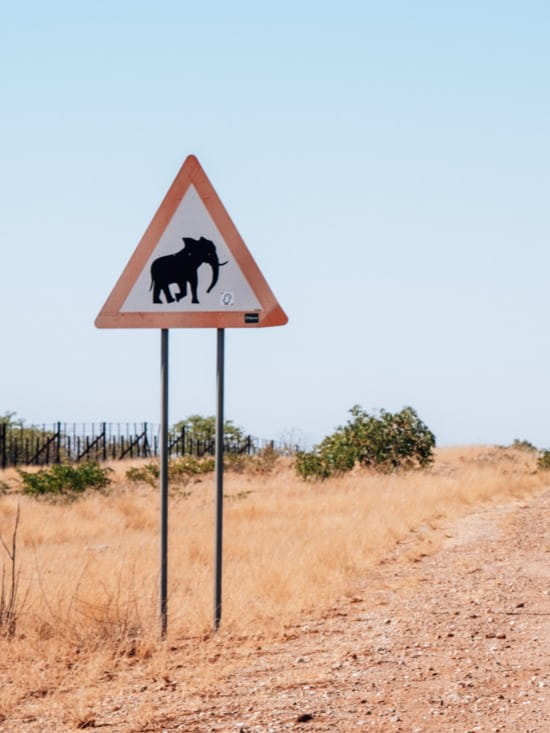
Most standard itineraries follow a highly predictable loop: Windhoek to Etosha, across to Swakopmund, down to Sossusvlei, and back to the capital. We chose to do it a little bit different, based on recommendations we got by friends who traveled a couple of times to Africa. Our 17-day route adds a detour south into the Kalahari and the Kgalagadi Transfrontier Park. This park is famous for its black-maned lions and deep wilderness that most standard tours completely miss. It was the perfect itinerary for us, as it provided us a stunning safari experience both at the beginning and at the end of our time in Namibia.
In this guide, we’ll share a day-by-day breakdown of our route, driving expectations, campsite recommendations, and the required logistics to help you plan your trip. We also added a map with the most important highlights of our trip, so you can easily visualize the route we did in Namibia.
How to use this map / Click on the top left of the map to display the list of locations. You can also click on the locations to display further information. Click on the top right corner of the map to open a larger version of the map in a new tab. Click the star (favorites) next to the name of the map to save to your Google Maps.
The itinerary at a glance
- Total duration: 17 Days
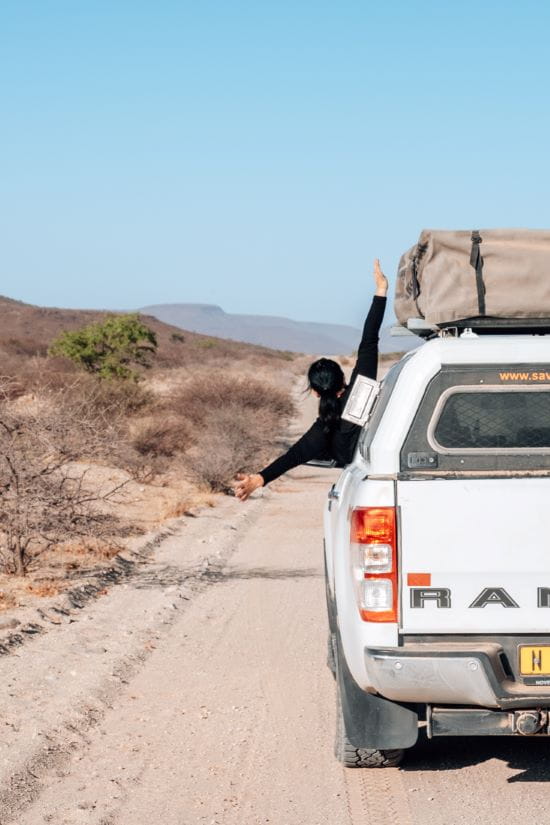
- Required vehicle: 4×4 car (for gravel roads and the sand roads in the Kgalagadi Transfrontier National Park)
- Start and end point: Windhoek
- Total distance: 3.200-3.500 kilometers, depending on how many safari loops you do
- The highlights: Etosha, Spitzkoppe, Swakopmund, Sossusvlei, and the remote Kgalagadi.
- Accommodation: Camping (rooftop tent) or staying at lodges
Some of the links on this blog are affiliate links. This means if you click on a link and purchase, we receive a small commission at no additional cost to you. The affiliate links concern only products and services we appreciated highly and trust. This means the views and opinions expressed in this post are purely our own. For more information, read our privacy and cookie policy.
Table of Contents
Part 1: Start with a self drive safari in Etosha National Park (days 1–4)
Day 1: Arrival in Windhoek and transfer to Etosha
Most international flights land at Hosea Kutako International Airport, which is the primary gateway into Namibia. Upon arrival, our car rental company, Savannah Car Hire, arranged a shuttle service from the airport to their main depot in central Windhoek. At the depot, we tackled the paperwork and underwent a thorough vehicle briefing.
Pack to Life tip: Do not expect a standard 5-minute airport car rental handover. For a fully equipped 4×4 with a rooftop tent, the handover takes roughly 1,5 to 2 hours. The team demonstrated how to pitch and pack the rooftop tent, how to change a tire, how to use the compressor, … If you are arriving late in the afternoon, it is better to spend another night in Windhoek before hitting the road.

Windhoek is also the best and most cost-effective place to stock up on supplies for the next 17 days. There are many large supermarkets to purchase plenty of water, firewood and food.
If you still have time left on the first day, we suggest to start the 4-hour drive north to Etosha National Park. The road is entirely asphalted and well-maintained. Make sure to time your departure carefully to ensure you arrive at the gates before sunset, when the gates officially lock. Spend the night at Okaukuejo camp.
Days 2–4: Self drive safari in Etosha National Park
We suggest to spend three full days of your road trip to explore Africa’s best safari park: Etosha! Managing a self drive safari in Etosha is very easy, and there is an abundance of wildlife to spot.
Read more: Our guide for a self drive safari in Etosha National Park
Our suggested route summary for Etosha
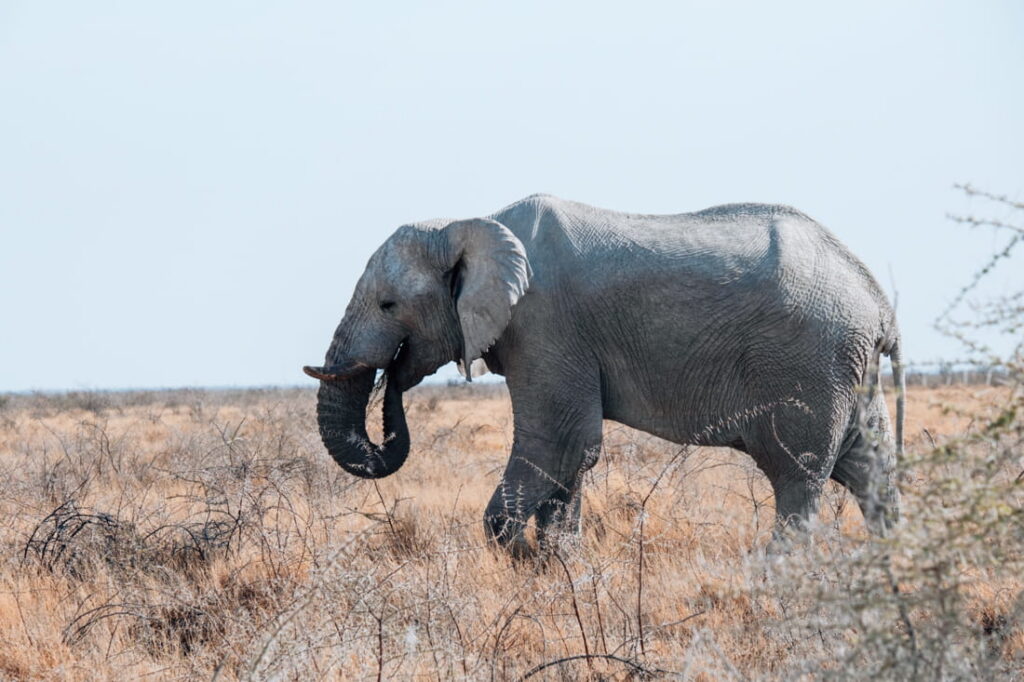
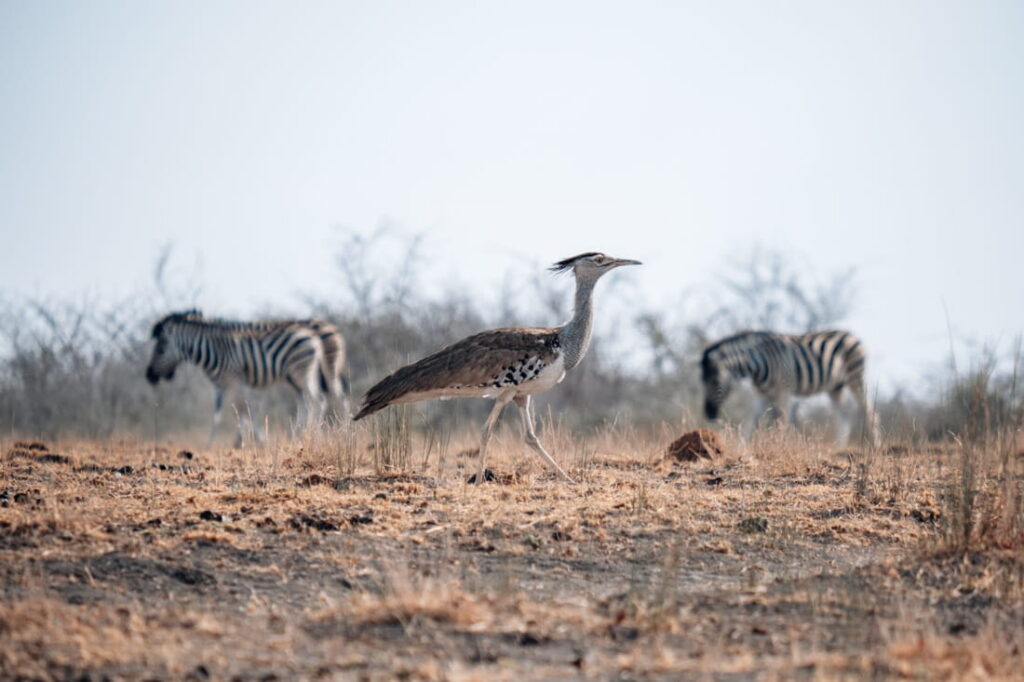
- Days 2-3 – Drive the first day from Okeukuejo to Halali camp and explore the central and eastern sections of the park. We spent our mornings driving the loops around the iconic Etosha Salt Pan, spotting lions, giraffes, and elephants. Our evenings were spent sitting quietly at the camps’ famous floodlit waterholes in the camps, which offer unmatched night viewing of rhinos. On days 2 and 3, we spend the night in Halali camp
- Day 4 – Drive deep into the more rugged western part of Etosha to stay at Olifantsrus Camp. This area feels entirely different and far more remote. The highlight here was spending hours inside the camp’s enclosed, double-decker viewing hide, watching wild elephants drink just meters below us.
On the morning of Day 5, prepare to leave the park boundaries via Galton gate and head towards the dramatic landscapes of Damaraland.
Part 2: Through the mountains of Damaraland To Spitzkoppe (Days 5–7)
Day 5: Driving into the Wilds of Grootberg & Damaraland
Driving time: around 3,5 to 4 hours from Galton Gate in Etosha.
Leaving the flat terrain of western Etosha behind, the landscape shifts dramatically as you enter Damaraland. Instead of rushing through the region, we decided to take it slow and drove straight to Hoada Campsite, part of Grootberg Lodge.
Check availability and prices for Grootberg Lodge on booking.com
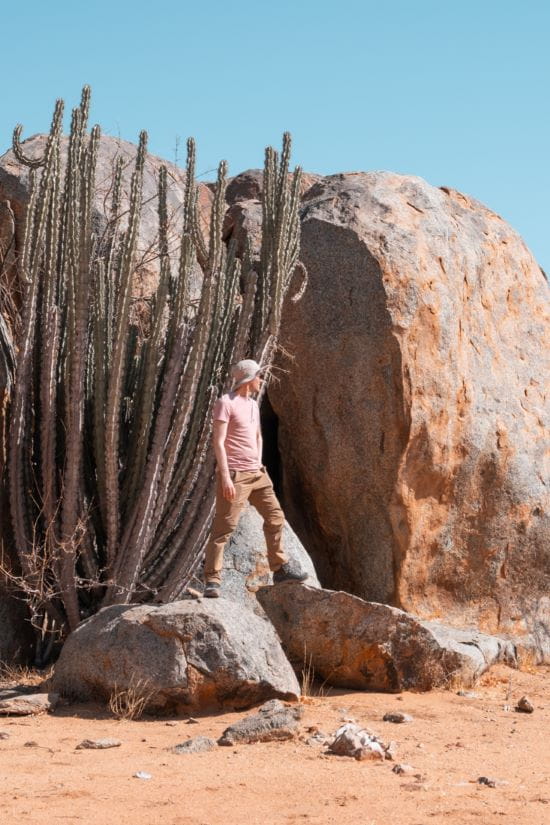
This stunning campsite is tucked away in between massive granite boulders, offering a lot of privacy and a great off-grid atmosphere. We spent the afternoon relaxing at the campsite and the pool, and doing a short, independent hike around the nearby boulders.
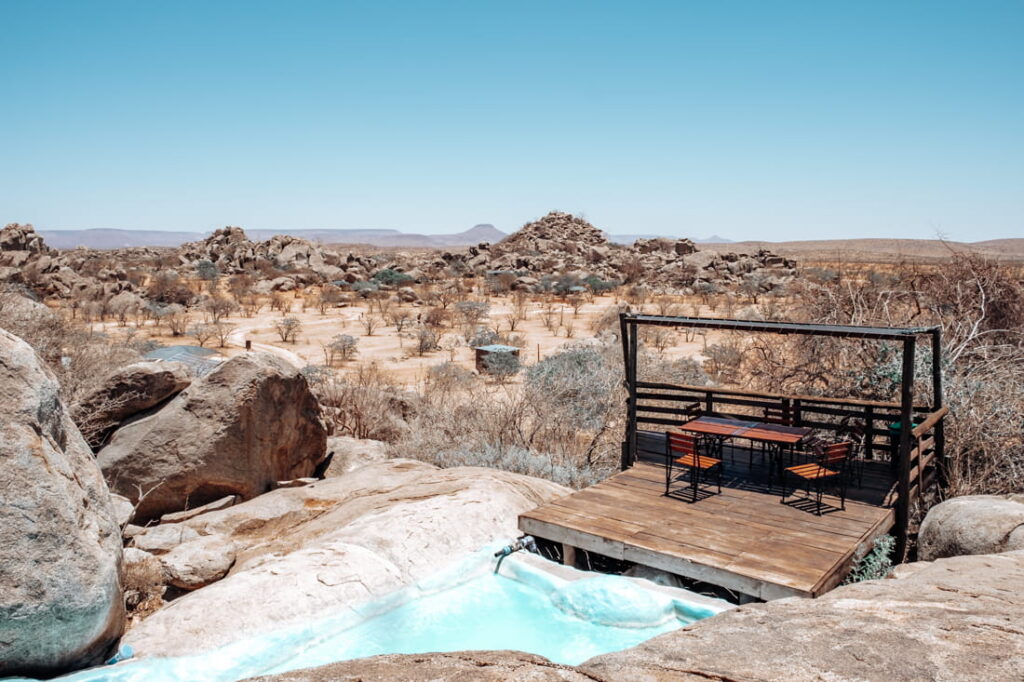
If you prefer a more packed itinerary, you can use this day to book an organized activity. Both Hoada campsite as the Grootberg Lodge offer excellent excursions. The two most popular options are:
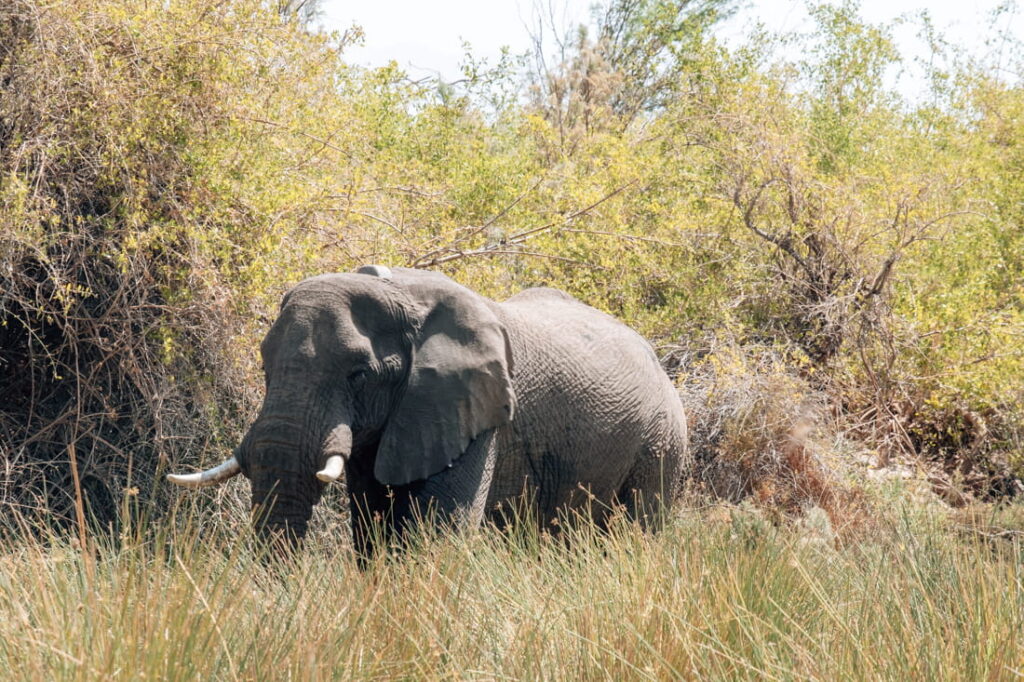
- Desert elephant tracking tour: A guided 4×4 drive down into the dry riverbeds to track the region’s famous desert-adapted elephants. We skipped the organized tour here because we were incredibly lucky to spot these unique elephants on our own later in the road trip.
- Rhino excursion: An excursion to track the endangered black rhinos.

Days 6-7: Twyfelfontein and the road to Spitzkoppe
Driving Time: Approximatley 2,5 hours from Hoada to Twyfelfontein and then 4 hours from Twyfelfontein to Spitzkoppe.
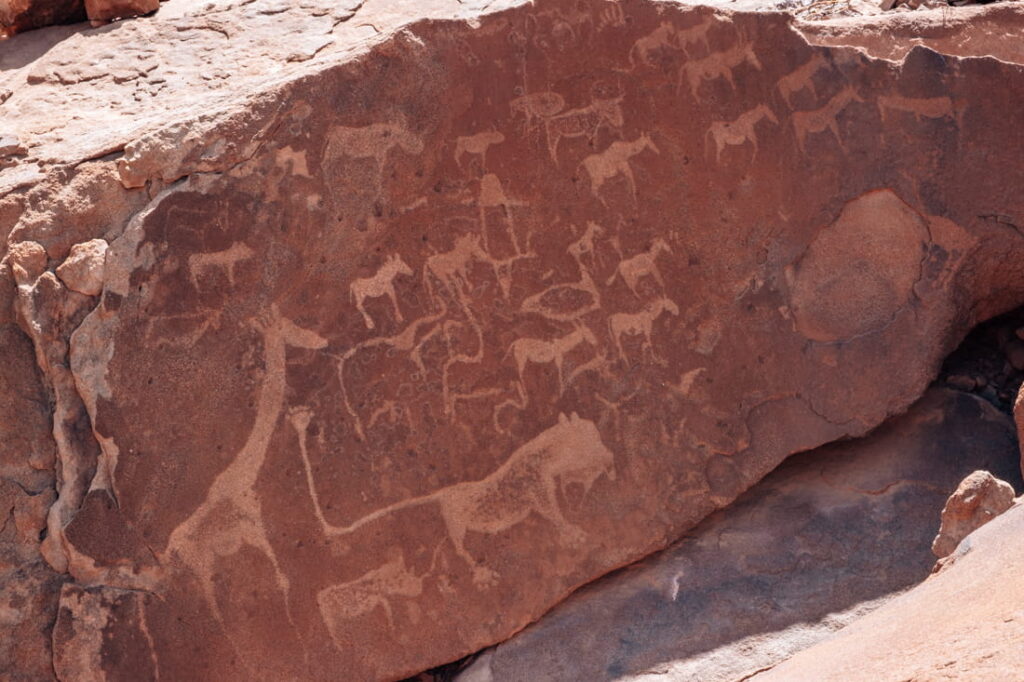
From Damaraland, continue driving to the South to reach Twyfelfontein. This site is Namibia’s first UNESCO World Heritage Site. Here you can take a short, mandatory guided walk to see an open-air gallery of thousands of ancient rock engravings, carved into the red sandstone cliffs by the San people, thousands of years ago. It is a fun and interesting in-between stop that we highly recommend!
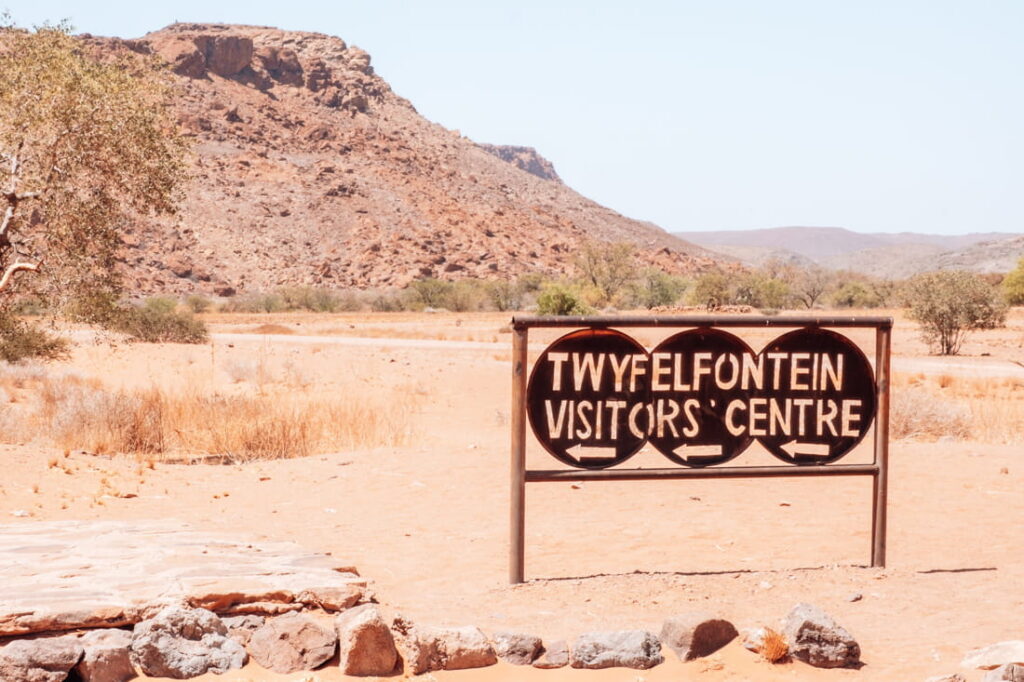
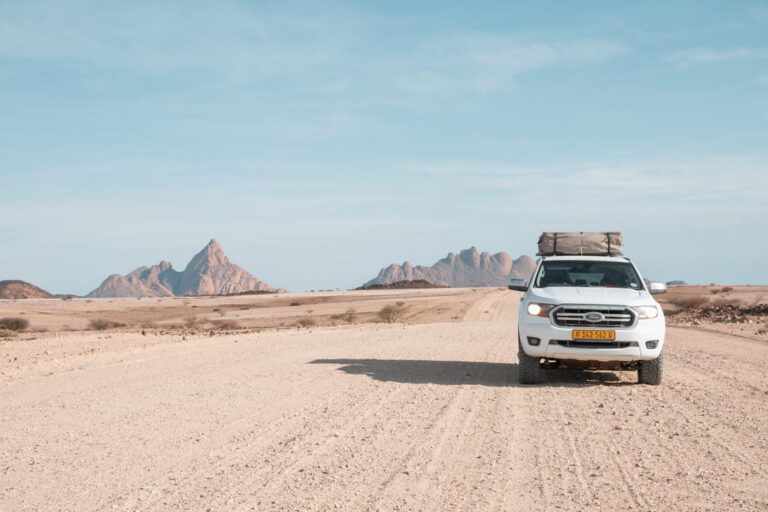
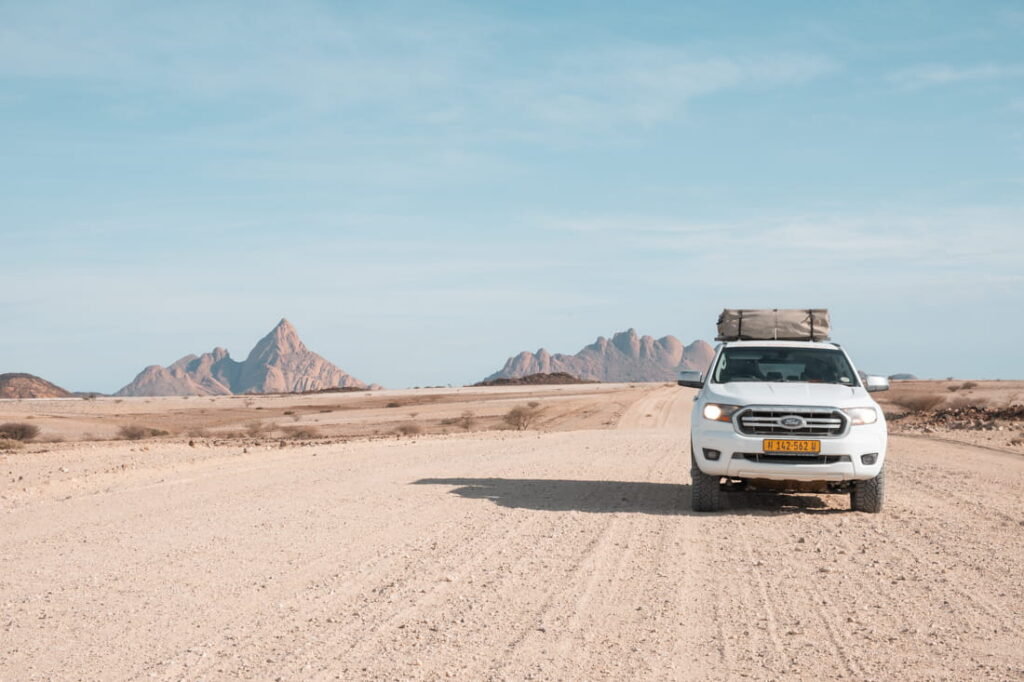
After your visit toTwyfelfontein, head south again to Spitzkoppe. The massive granite peaks of Spitzkoppe (often called the “Matterhorn of Namibia”) rise out of the flat desert floor and are visible from miles away.
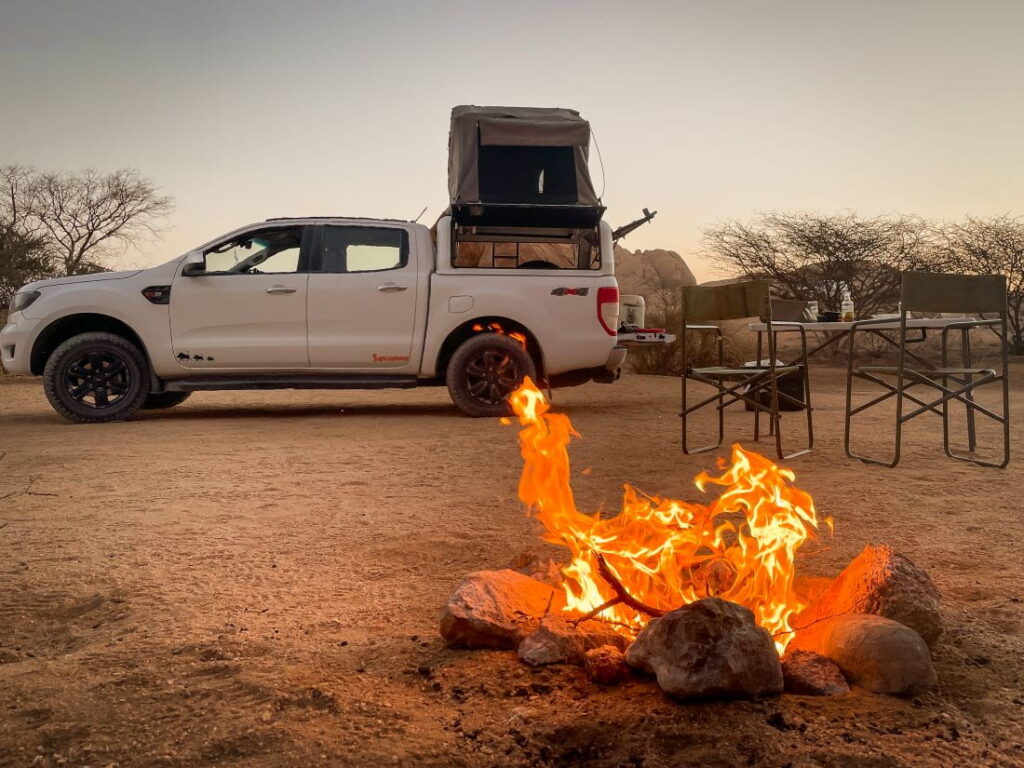
If you are traveling with a 4×4 with rooftop tent, know that Spitzkoppe features one of the best wilderness campsites in the country. The sites are widely spaced and tucked directly against the massive boulders. There is no electricity or running water at the individual sites, but that makes it a completely raw, off-grid camping experience. In the afternoon, you can spend exploring the famous giant stone arch and watch the sun set from one of the granite boulders.
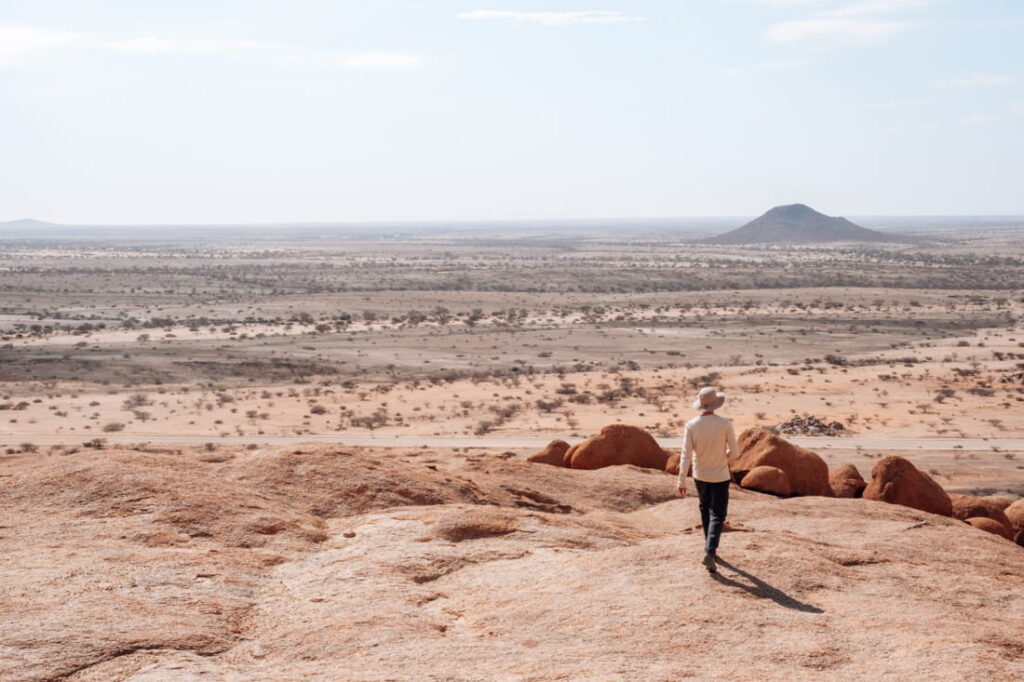
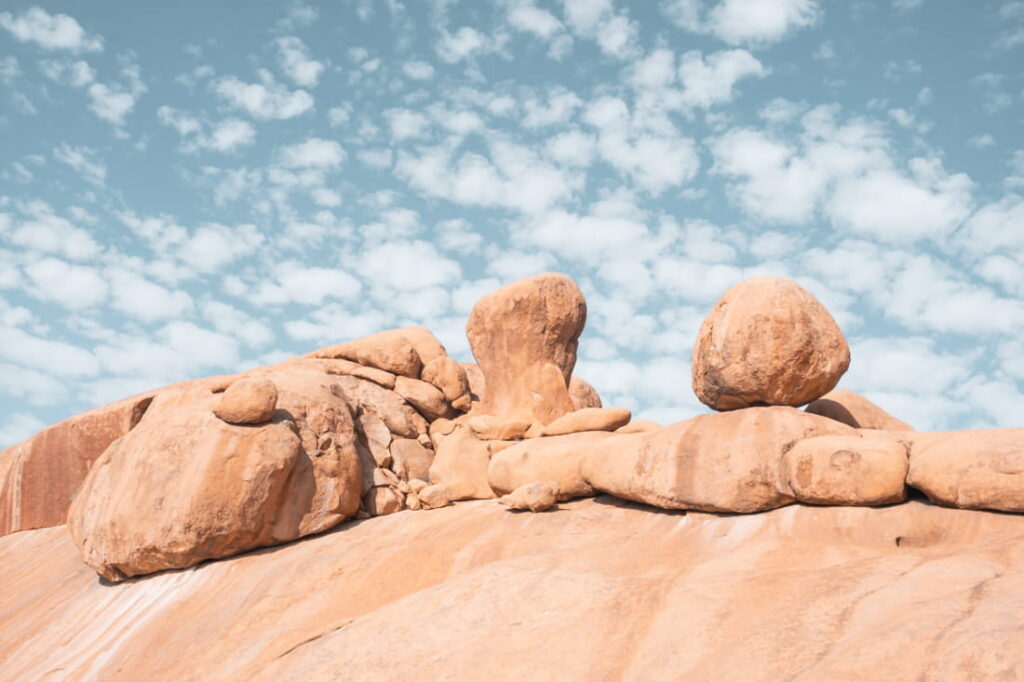
On day 7, spend some more time at Spitzkoppe, for example by joining one of the guided walk (we highly recommend the short hike to Bushman’s Paradise and the Golden Snake).
Part 3: From the coast to the desert (Days 8–11)
Days 8–9: Spending some time at the coast in Swakopmund
Driving time: approximately 4 hours from Spitzkoppe.
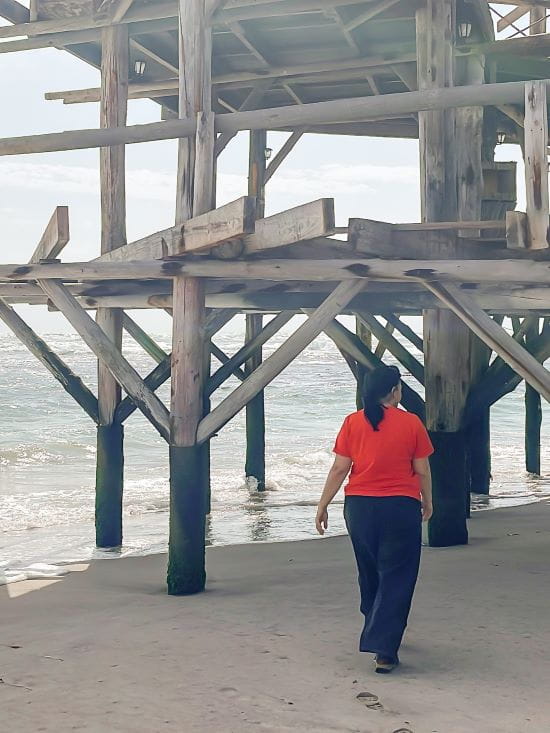
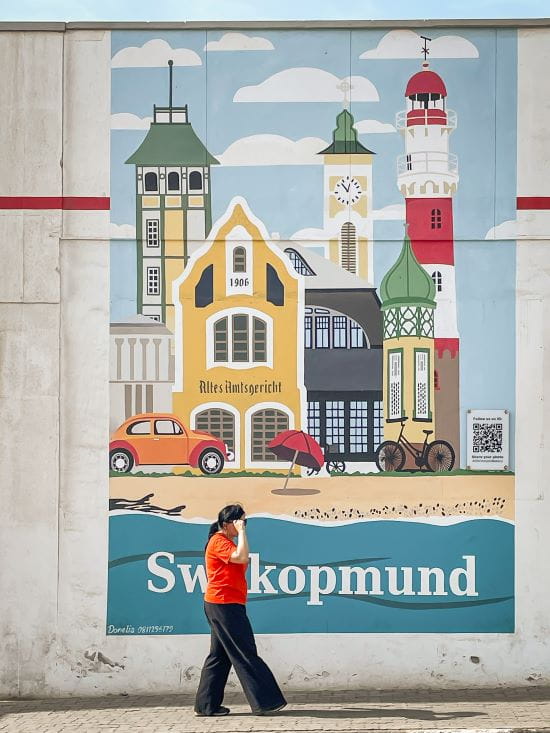
As soon as you are heading southwest, you’ll notice the temperature drops as you approach Swakopmund. This coastal town is directly inbetween the Atlantic Ocean and the Namib Desert dunes. Swakopund is a great inbetween stop before you head further to Sesriem. Here you can stock up on supplies and enjoy the surroundings of Swakopmund.
What to do in Swakopmund:
- Take a break: Swakopmund is highly walkable and there is beautiful German architecture to discover.
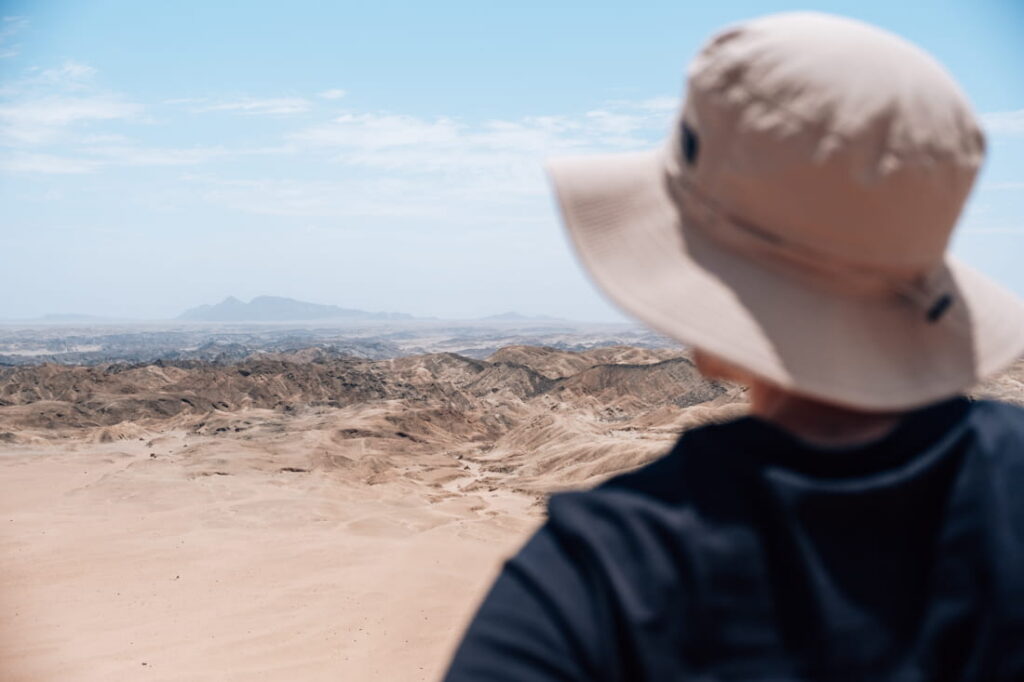
- Undertake the Welwitschia drive: This is a half-day, 160-kilometer self-drive route through the northern section of the Namib-Naukluft National Park. This drive offered us some of the most beautiful landscapes of Namibia.
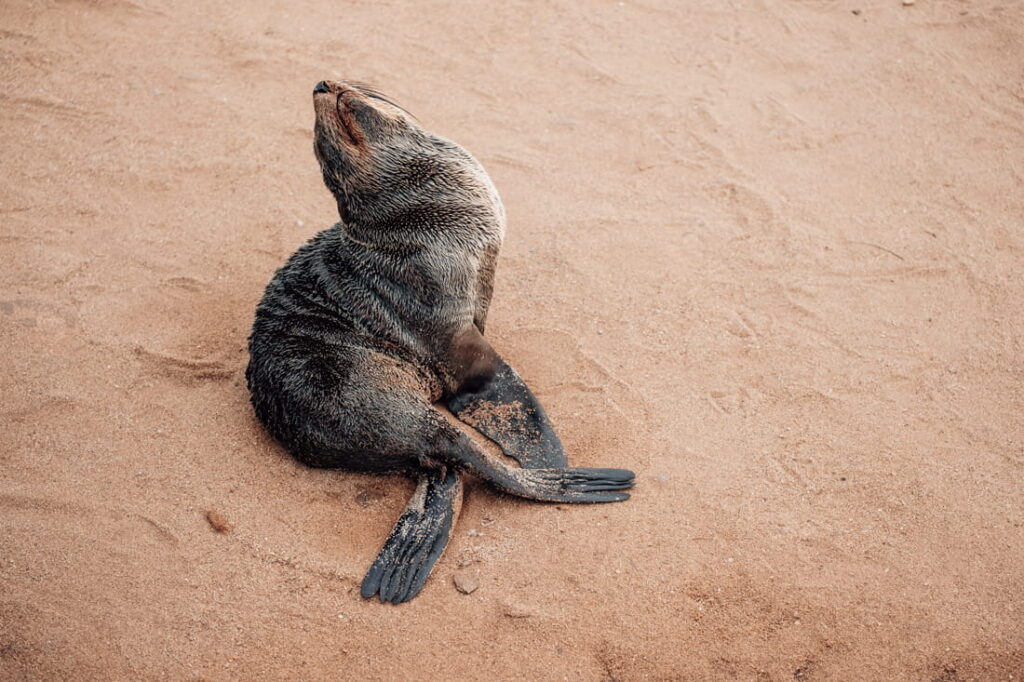
- Head to the Skeleton Coast and see the Cape Cross seals: This is an easy day trip heading north out of Swakopmund along the C34 road. Cape Cross is located roughly 120 kilometers north of Swakopmund (about a 1,5-hour drive each way) and can be accessed with a standard 2WD or 4×4 vehicle. You pay the park entry fee directly at the reserve gate. This reserve is the home to one of the largest breeding colonies of seals in the world, often numbering over 100,000 animals. A wooden boardwalk allows you to walk directly through the colony safely. We can assure you we weren’t prepared for the incredibly strong smell and loud noise! But after seeing the cute baby seals we thought the smell was definitely worth it!
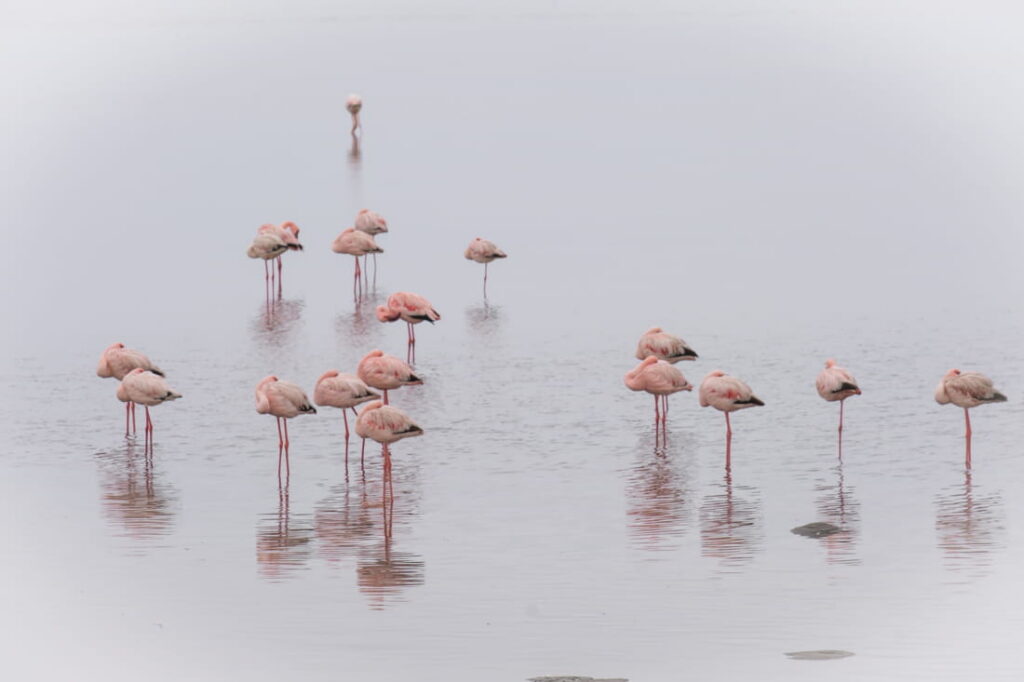
- Take a Sandwich harbour 4×4 dune tour: This tour drives past the pink salt lakes and the Walvis Bay Lagoon (make sure to see the flamingos here) before you hit the massive dunes of the Namib-Naukluft National Park. The absolute highlight is reaching the point where you can see the giant sand dunes drop straight into the Atlantic Ocean. Just a quick note – Even if you have a capable rental 4×4, do not attempt to drive this specific area yourself! Navigating the massive coastal dunes requires expert local knowledge of the changing tides and specialized sand driving skills.
Days 10–11: The dunes at Sossusvlei
Driving time: around 5 to 6 hours from Swakopmund via Walvis Bay.
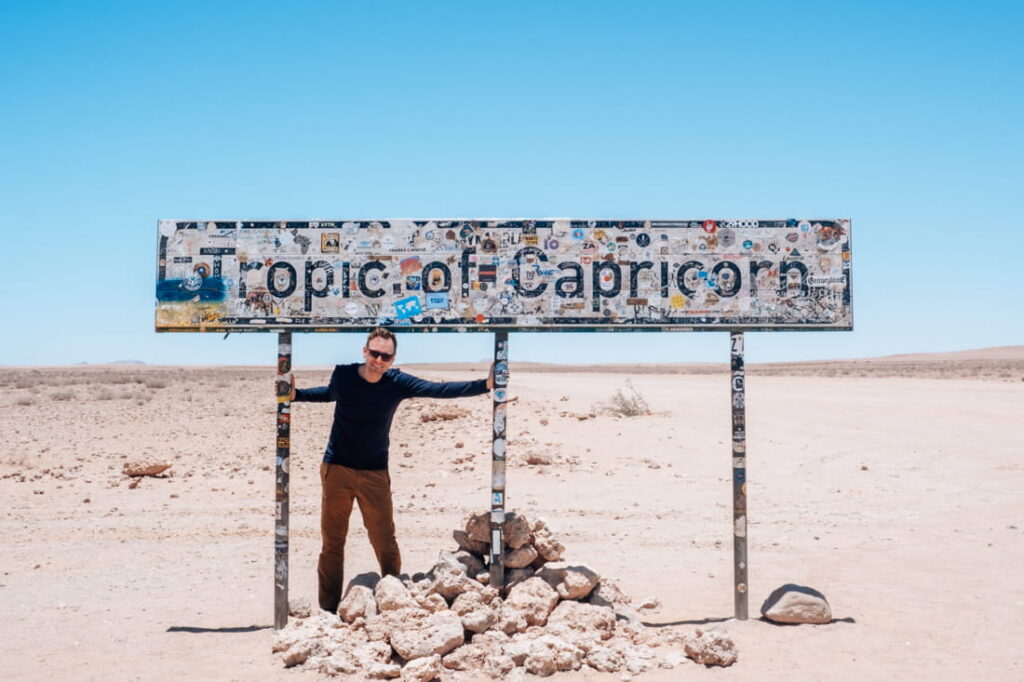
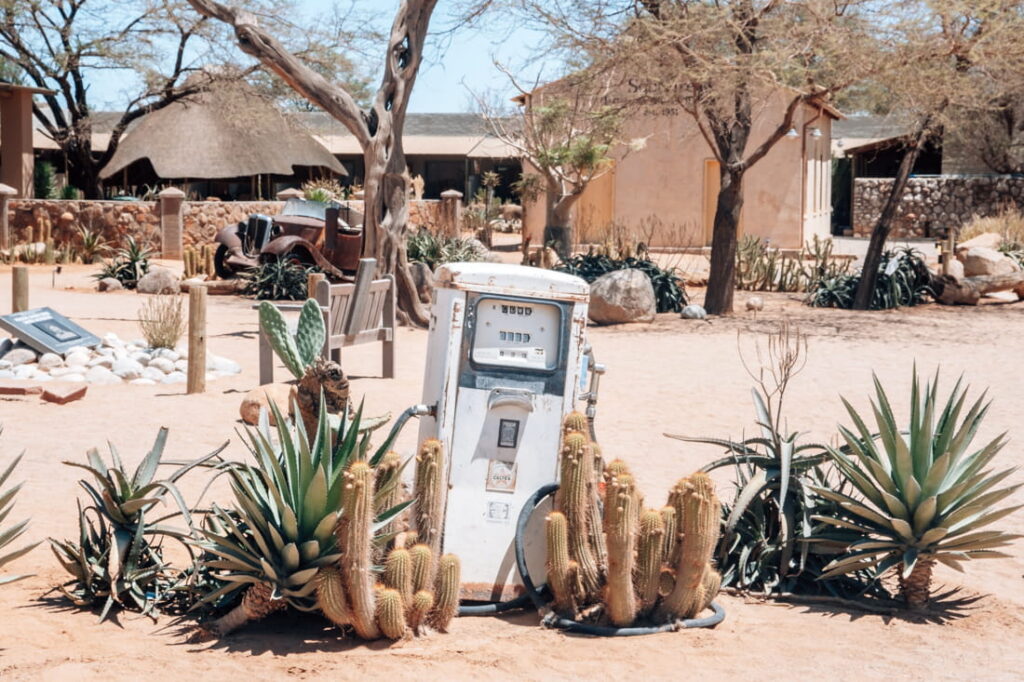
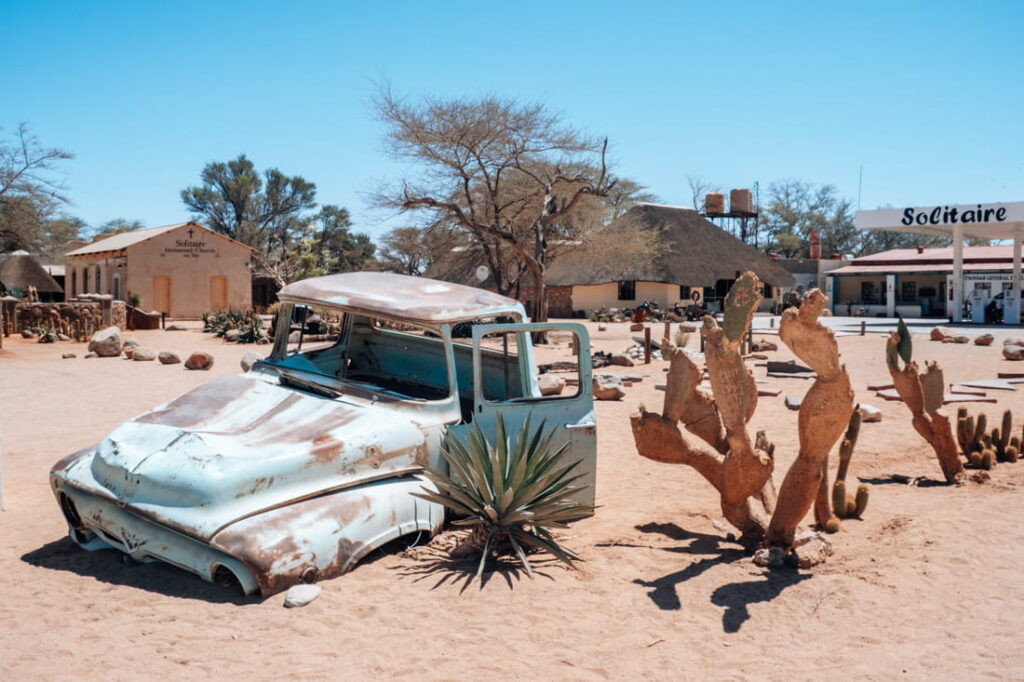
From Swakopmund, drive south past Walvis Bay and cut back inland. You will cross the Tropic of Capricorn. Also make sure to have a stop at Solitaire to get some delicious apple pie in the famous McGregor’s Bakery. Then head further to Sesriem, which is the main entry gate for the Sossusvlei area.
What to do in Sossusvlei
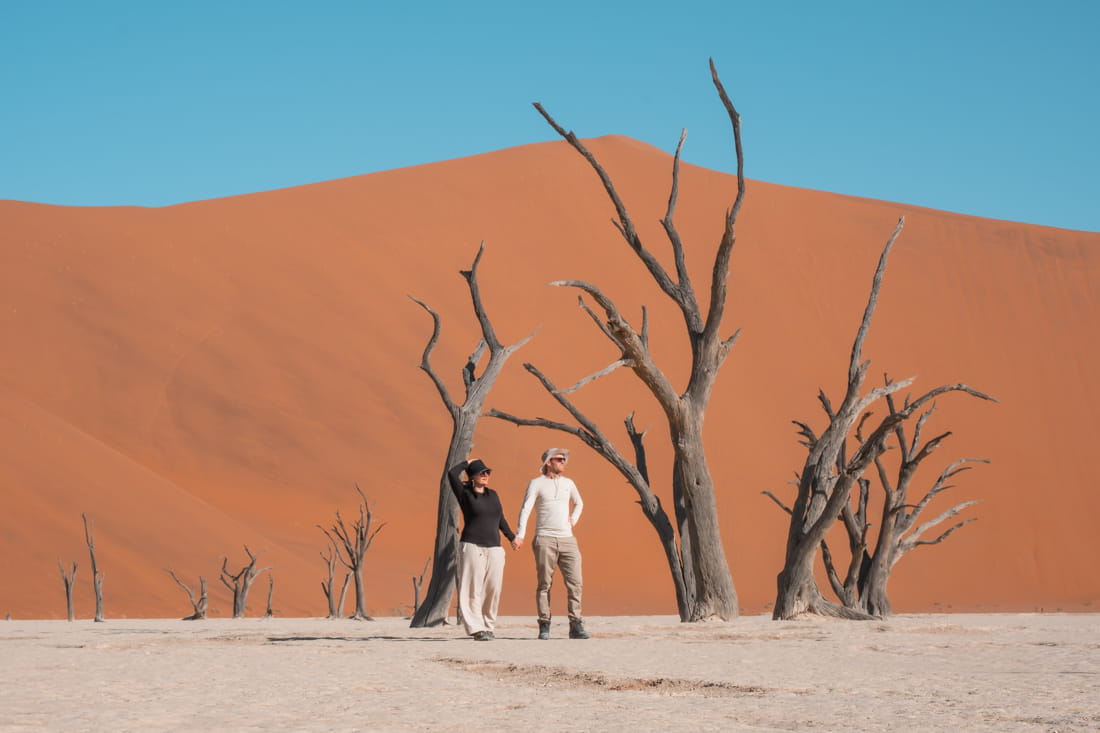
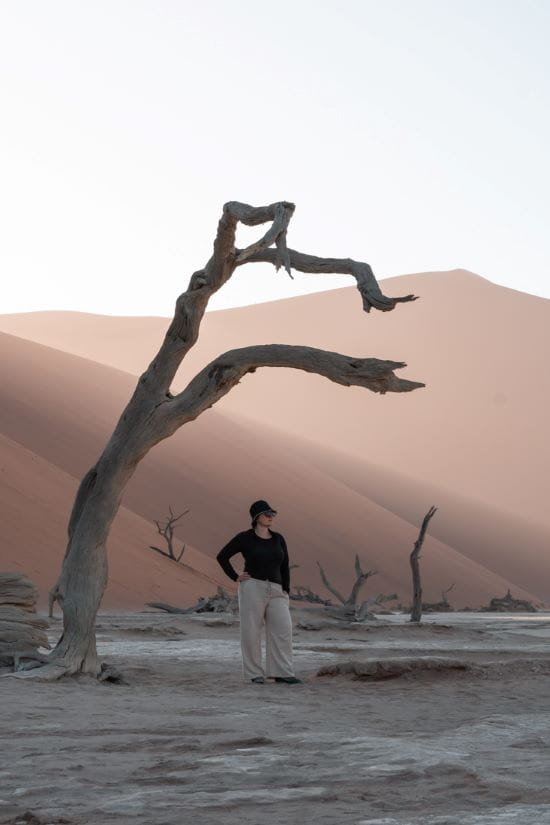
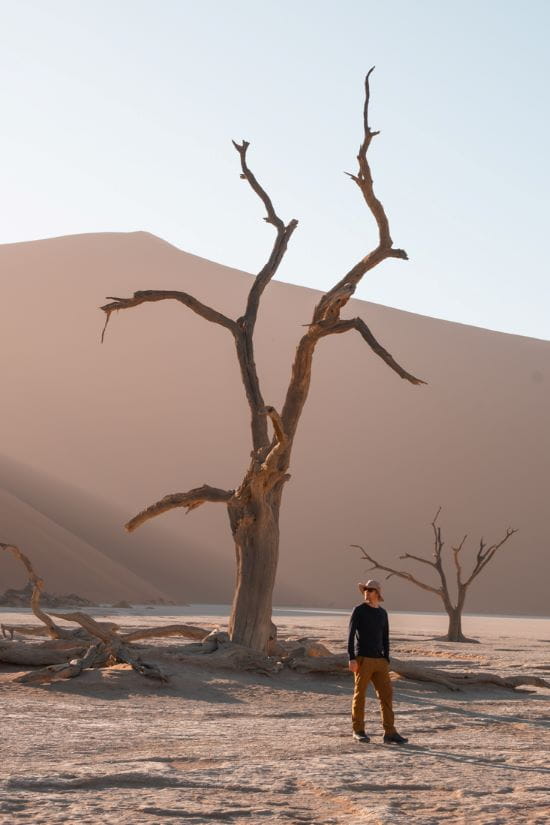
- Head to Deadvlei: Walk across the famous white clay pan to see the iconic, 900-year-old dead camel thorn trees set against giant orange sand dunes.
- catch sunrise and/or sunset from the dunes: Climb the steep ridge of Dune 45 or Big Daddy (the highest dune in the area) to watch the light cast deep shadows across the sand.
- Explore Sesriem canyon: Located right near the main entrance gates, this natural canyon is a great place to escape the sun and hike through narrow rock formations.

Deadvlei self drive update (2026)
If you are planning your trip, you might have read conflicting reports about driving rules. In early 2026, the Ministry of Environment, Forestry, and Tourism (MEFT) announced a complete ban on self-drivers along the final 5 km stretch to Deadvlei, giving exclusive rights to a commercial shuttle service.
Following fierce pushback from the Namibian tourism industry, the government completely reversed the ban. As of mid-2026, self-driving all the way to the 4×4 Deadvlei parking lot remains fully permitted for visitors with capable four-wheel-drive vehicles.
Essential Sossusvlei Tips
- The early gate advantage: We highly recommend booking a campsite inside the park’s boundaries (We stayed at Sesriem Oshana). Guests staying inside get access to the inner park gate one hour before the main outer gate opens to the public.
- The afternoon visit (our secret tip): While hitting the park at sunrise is a classic safari tradition, make sure to head back into the park in the afternoon. By 3:00 PM, the massive morning crowds were dissappeared. Make sure to bring plenty of water and have the entire, landscape of Deadvlei completely to yourself!
- Lower your tire pressure: Before hitting the final 5 km soft sand beyond the 2WD parking lot, stop and deflate your tires to around 1.5 to 1.8 Bar. That way, you don’t get stuck in the loose sand.
- Keep your momentum in the sand: When driving through the deep sand track, engage 4WD high-range, turn off your vehicle’s traction control, stay in the existing tracks, and keep a steady speed. Our most important tip: Never hit the brakes abruptly in soft sand, or you will dig yourself in.
Part 4: The Kalahari and The Kgalagadi Detour (Days 12–16)
We still consider the fourth part of this itinerary as the best way to end your time in Namibia!
Day 12: Relax at Anib Lodge
Driving time: 5 hours from Sossusvlei
This detour requires covering some driving distances. To break up the journey, Anib Lodge serves as a brilliant stopover. We stayed here twice: once on our way down to the Kgalagadi Transfrontier National Park, and again on our way back up to Windhoek.
Check availability and prices for Anib Lodge on booking.com
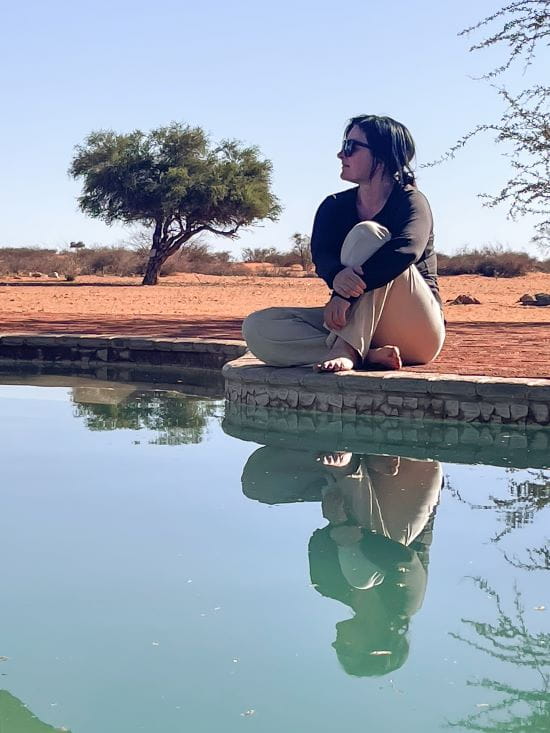
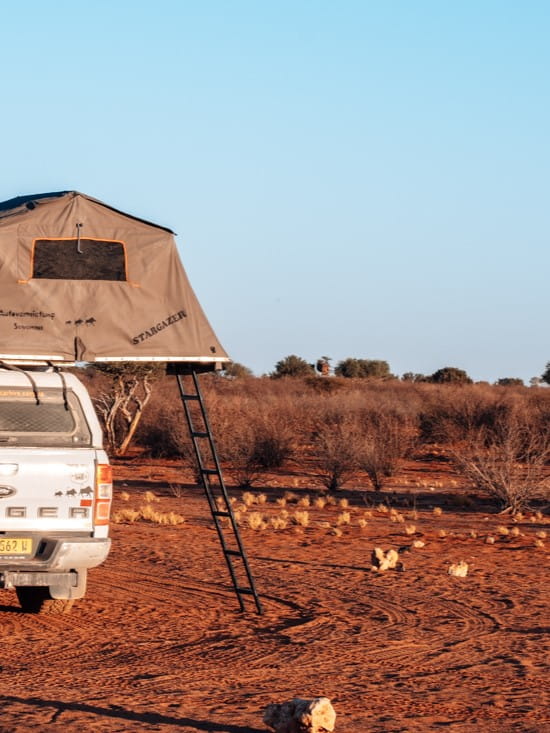
This lodge and its camping sites provides the ultimate relaxation. The property features comfortable green courtyard lawns, refreshing swimming pools and a stunning bar. It is the perfect spot to wash off the desert dust, enjoy a cold drink, and recharge. And the good thing: If you are staying at one of the campings spots, you are welcome to use all the facilities of the lodge as well!
Days 13-16: The Kgalagadi Transfrontier National Park
Driving time: Around 3,5 hours from Anib Lodge to the border.
The Kgalagadi Transfrontier Park is on the border between Namibia, Botswana, and South Africa. Because you will be crossing an international border with a rental vehicle, it is important to plan your paperwork well in advance:
- Cross-border permit: When picking up your vehicle in Windhoek, you must explicitly inform your rental company that you intend to drive into South Africa. They will issue a mandatory cross-border permit and authorization letter.
- The Mata-Mata border post: You will enter the park directly through the Mata-Mata border post on the Namibian side. If you are entering the park and staying only at the camps on the South African side (without officially exiting into South Africa proper), the border logistics are straightforward, but you must still clear immigration at the gate.
- The 2-night rule: To use the Mata-Mata border post to enter or exit the park, visitors are required to spend a minimum of two nights inside the Kgalagadi Transfrontier Park. Keep this in minsd when planniny your trip!
- Make sure to book in time! Kgalagadi camps (especially Mata-Mata) are small and highly sought after by South African overlanders. So make sure to secure your spot in time!
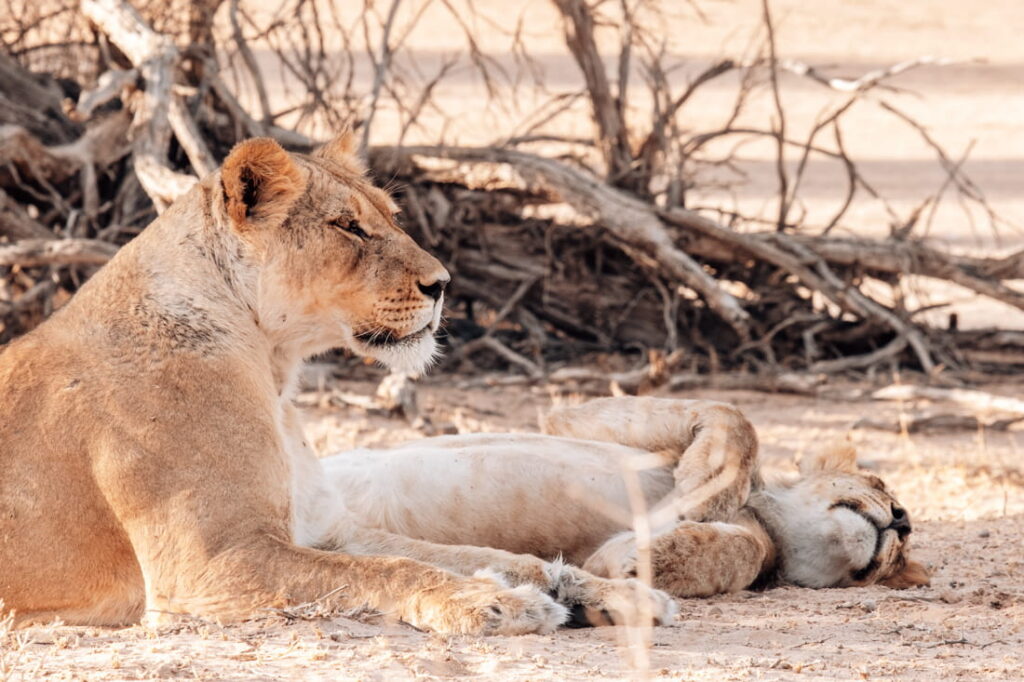
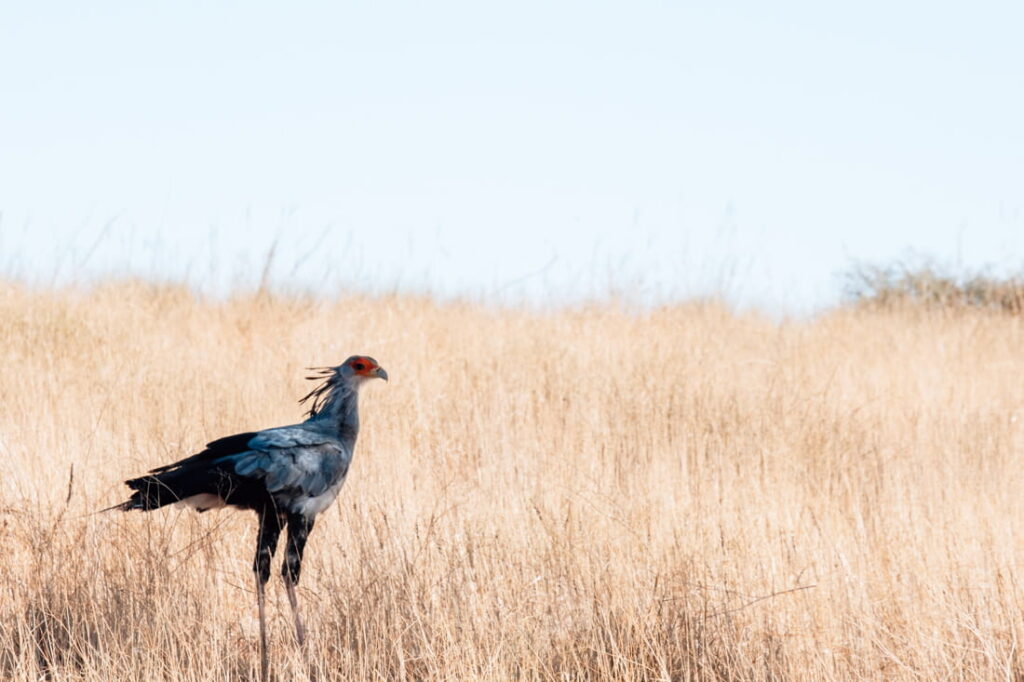
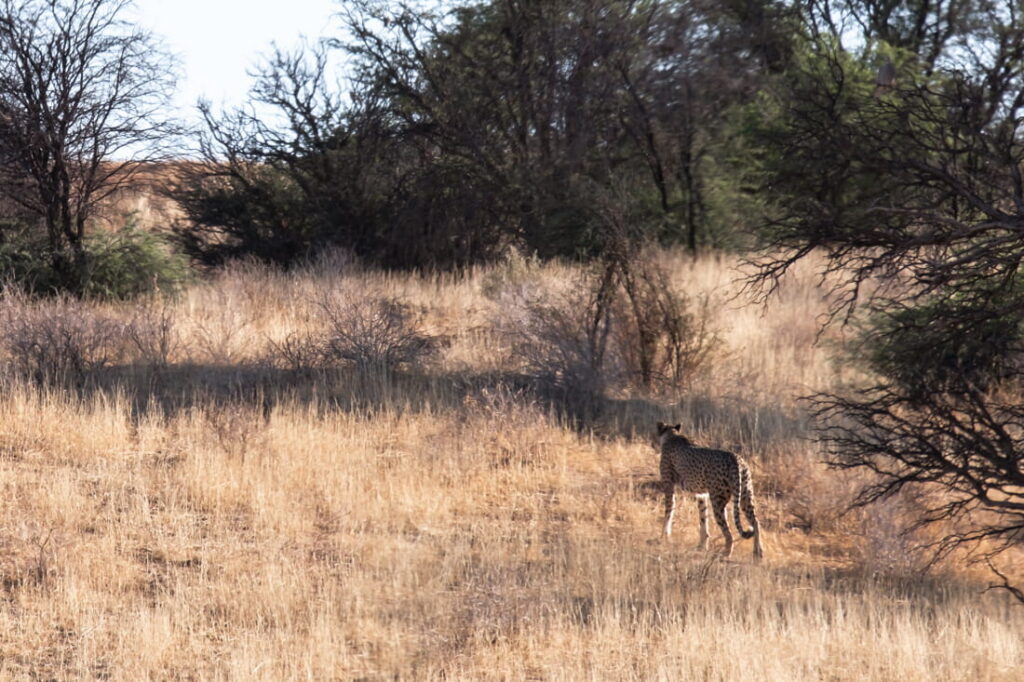
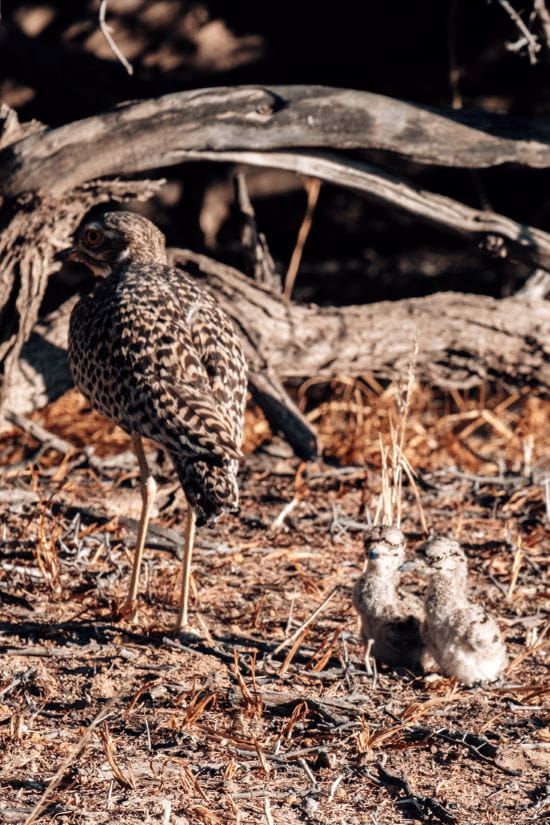
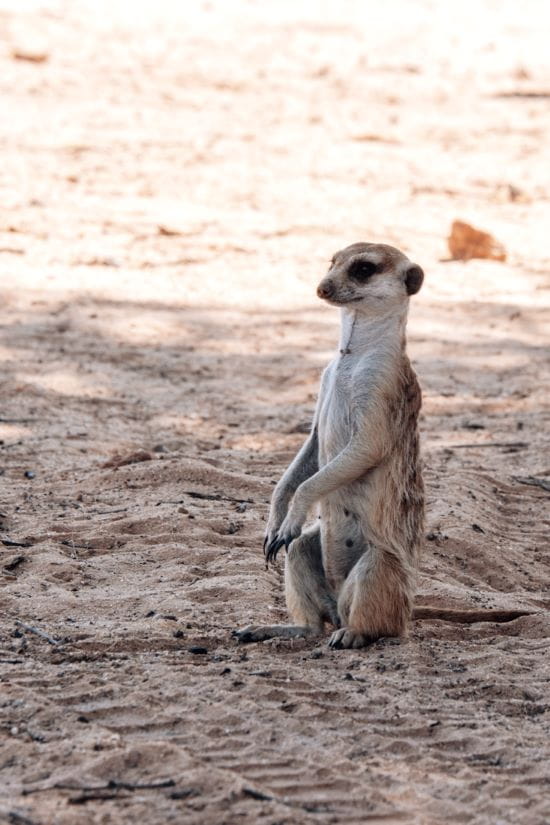
Once you cross the border at Mata-Mata, you are instantly inside the Mata-Mata. We stayed here for three nights and did our safari trips always starting from this camp.
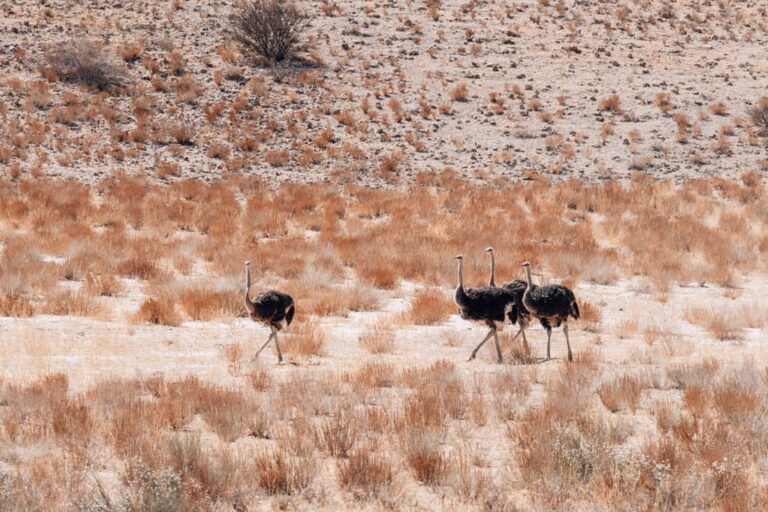
The Kgalagadi offers an entirely different atmosphere than Etosha. The landscape is dominated by red sand dunes and sparse vegetation. The park is world-famous for its cats: lions, cheetahs and leopards. What a way to end your travels in Namibia.
Pack to Life tip: Driving inside the Kgalagadi requires a high-clearance 4×4. The tracks consist of deep, corrugated sand lanes. You must deflate your tires further to successfully handle the soft riverbeds.
On Day 16, we cleared immigration at the camp gate, exited the park back into Namibia and made the easy return drive back to the comforts of Anib Lodge.
Part 5: Returning home (Day 17)
Day 17: The drive back to Windhoek
Driving time: around 3 hours from Anib Lodge.
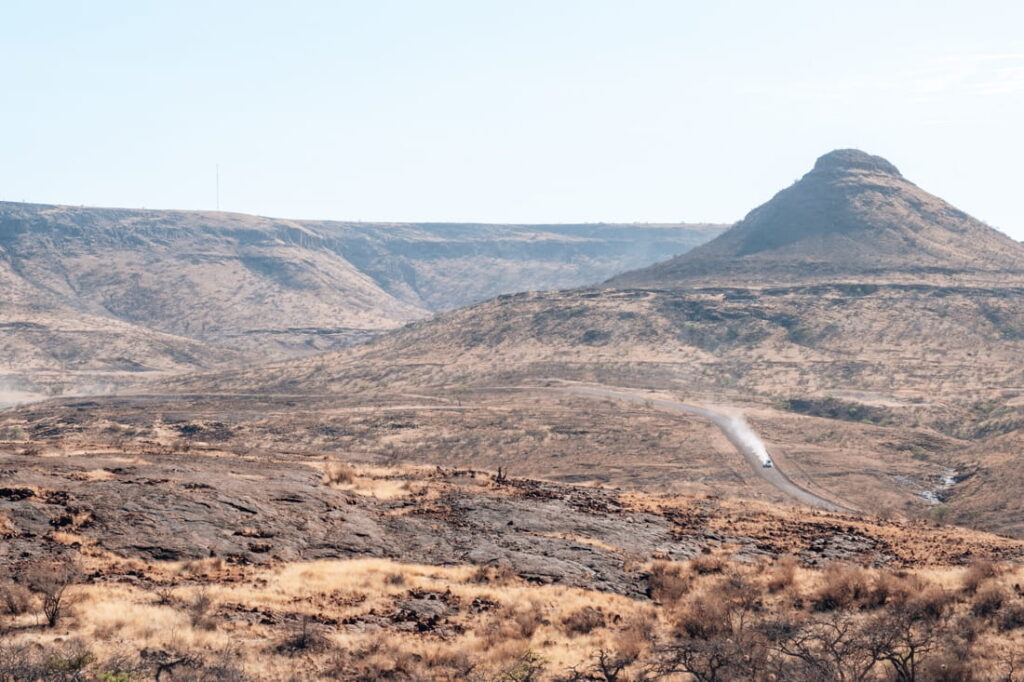
On the final morning, you will leave the red dunes of the Kalahari behind and head straight north back up the B1 highway toward Windhoek. This stretch of road is straightforward and fully paved.
When is the best time for this route?
Namibia is a year-round destination, but because this route includes the deep sands of the Kgalagadi and the wildlife loops of Etosha, the dry winter months (May to October) are by far the best choice.
- May to August (Peak dry season / winter): This is prime time in Naibia. The weather is dry, the skies are perfectly clear, and wildlife viewing in Etosha is unmatched because animals congregate in massive numbers around the remaining waterholes. But keep in mind that the nights get cold. Mae sure to pack layers!
- September and October (The shoulder season): The landscape remains incredibly dry, meaning safari spotting is still excellent. It gets warmer during the night but daytime heat increases as well (often passing 35°C in the dunes).
- November to April (The green season): The desert blooms and birdwatching is world-class. But rain and thunderstorms can make gravel roads difficult and wildlife in Etosha is harder to spot because water is available everywhere.
Ready to hit the road?
Pulling off a 17-day self drive rad trip in Namibia, that connects the wildlife of Etosha, the granite boulders of Damaraland, the towering dunes of Sossusvlei, and the deep desert tracks of the Kgalagadi is an unforgettable journey. It requires careful planning and a reliable vehicle, but the independence of navigating this route yourself is unmatched.
Our recommendations for your tire pressure for a self drive road trip in Namibia
Tar Roads: 2.0 – 2.2 Bar (=standard highway pressure)
Gravel Roads: 1.6 – 1.8 Bar (softens the ride, prevents punctures)
Deep Sand (e.g. Sossusvlei & Kgalagadi): 1.2 – 1.4 Bar (Widens the footprint)
Are you planning a self-drive trip through Namibia? If you have any questions, don’t hesistate so send us a message. We’re happy to help!
Happy travels!
M&M
Quick start your holiday with the help of our trusted tools
These are the websites we highly recommend to plan your next trip. We use them all the time to save money and travel freely! Did you know that by purchasing through our links, you support us at no additional cost. Thank you for your support. ♥️
Find hotels: via booking.com
Find a rental car: via discovercars.com
Find cheap flights: via skyscanner.com
Book tours & attractions: via getyourguide.com
Book a bus / train / transfer: via omio.com—