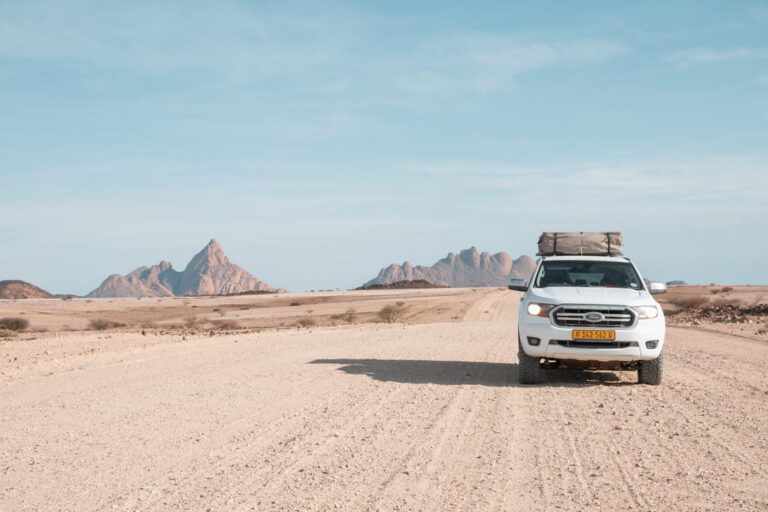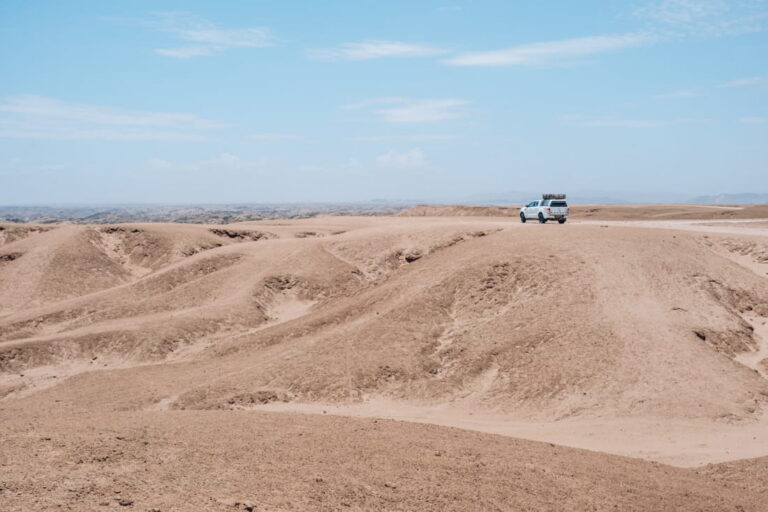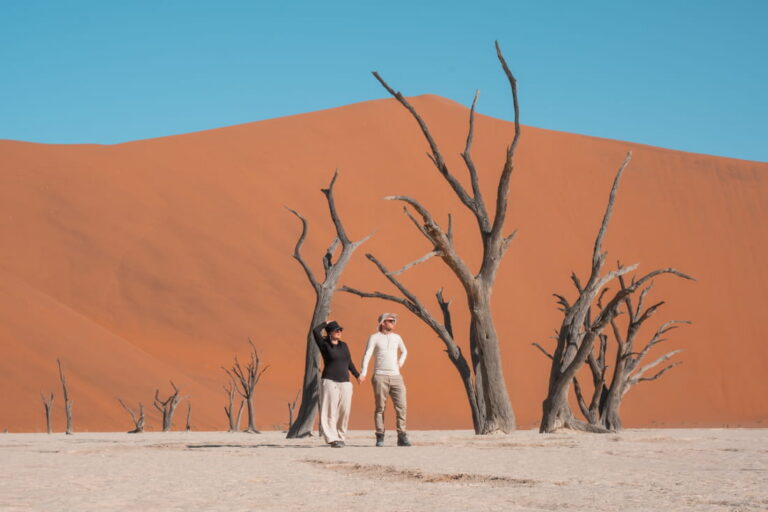

Most road trips through Namibia follow a very similar route: From Windhoek to Sossusvlei, then Swakopmund and ending in Etosha. It is definitely a solid route. But for our trip, we wanted something different and experience a self drive safari both at the beginning and end of our time in Namibia. So instead of sticking to the standard loop, we decided to add a detour to the Kgalagadi Transfrontier National Park.
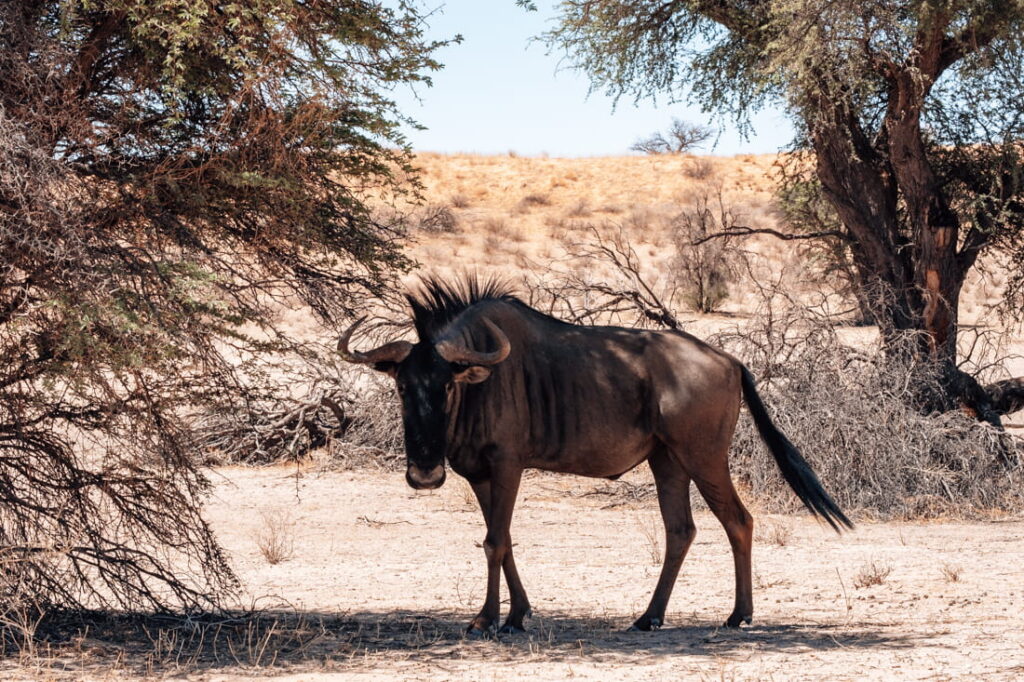
Read more: Our 17-day travel itinerary for Namibia
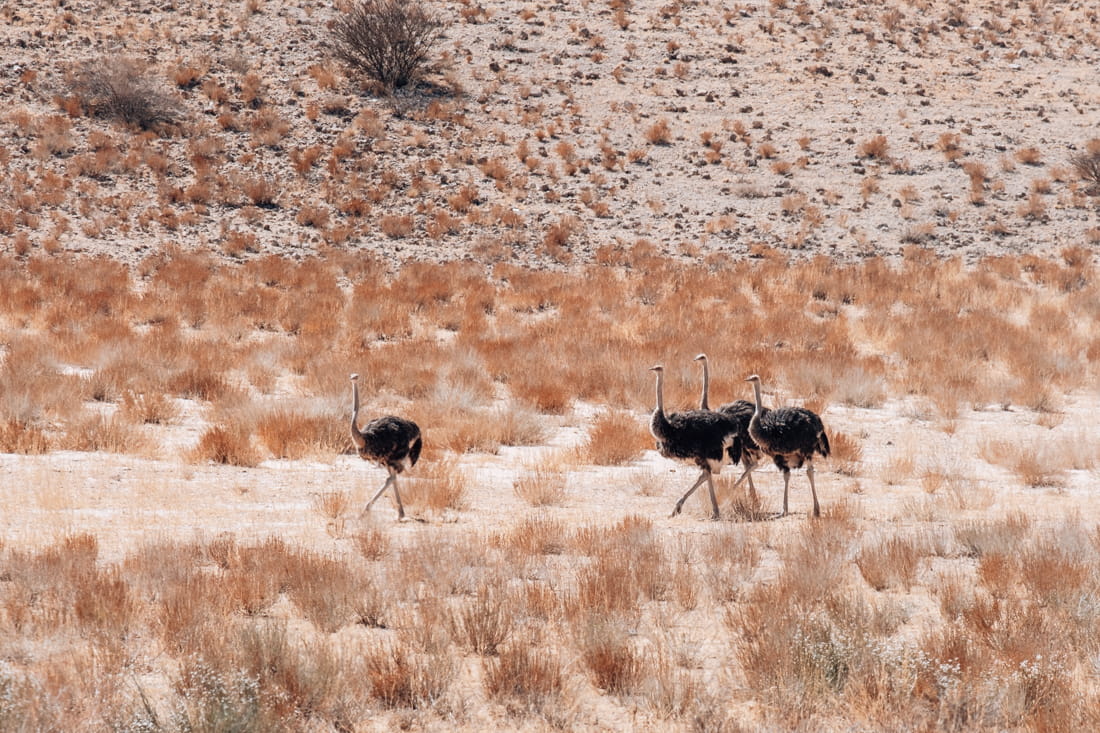
The Kgalagadi lies in between South Africa and Botswana. And it is nothing like Etosha. In fact, if we are completely honest, our first morning drive was a big disappointment. We looked out at the bush, saw absolutely nothing, and wondered if we had made a huge mistake. The landscape felt empty and it was really hard to find wildlife at first.
We quickly realized that the problem wasn’t the park, but it was our mindset. In places like Etosha, the animals are practically handed to you. In the Kgalagadi, you actually have to earn animal encounters. And as soon as we stopped rushing and started paying attention to the smaller details, the Kgalagadi became magical. The desert came alive and we ended up having some of the most private, incredible wildlife moments of our entire trip. We might even like the authentic experience we had in the Kgalagadi even more than our time in Etosha.
In this post, we’ll give you a practical breakdown of how to visit the Kgalagadi, how to handle the border crossing and how to organise your self drive safari.
Some of the links on this blog are affiliate links. This means if you click on a link and purchase, we receive a small commission at no additional cost to you. The affiliate links concern only products and services we appreciated highly and trust. This means the views and opinions expressed in this post are purely our own. For more information, read our privacy and cookie policy.
Table of Contents
To help you plan your trip, we added a map with all the important places in the Kgalagadi Transfrontier below.
How to use this map / Click on the top left of the map to display the list of locations. You can also click on the locations to display further information. Click on the top right corner of the map to open a larger version of the map in a new tab. Click the star (favorites) next to the name of the map to save to your Google Maps.
How to get to the Kgalagadi Transfrontier National Park from Namibia
Reaching the Kgalagadi Transfrontier National Park from Namibia is straightforward. But if you have closer look at the map, you quickly see the long distances.
From Mariental, take the C20 heading east towards Stampriet and Aranos, before joining the C15 straight down to the border. The road is a well-maintained, good gravel road that follows the Auob River bed all the way down to the Mata-Mata gate. While the road condition is definitely good, it is still a remote stretch.
Pack to Life tip: Even with decent roads, driving from Namibia’s main attractions to the Mata-Mata gate is still a long distance. We highly suggest breaking your driving trip in two by spending a night at Kalahari Anib Lodge. This stunning place is located just outside Mariental. Stopping here gives you a comfortable place to recharge before driving the four-hour drive to the park entrance.
Check availability and prices on booking.com
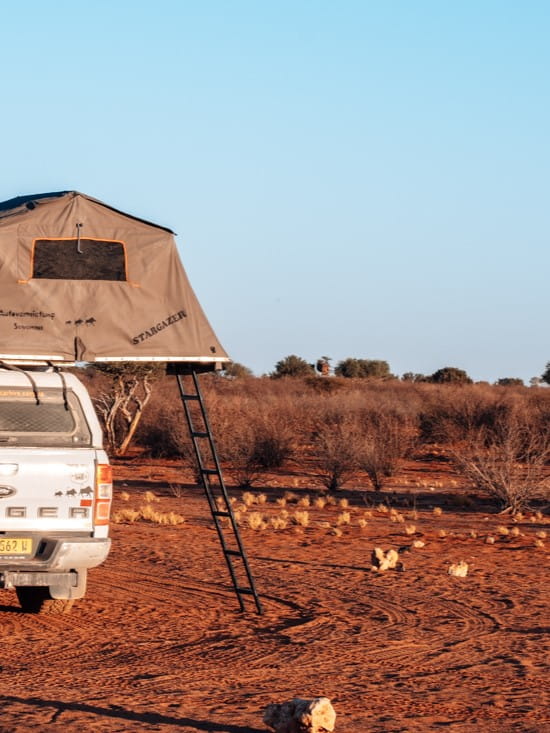
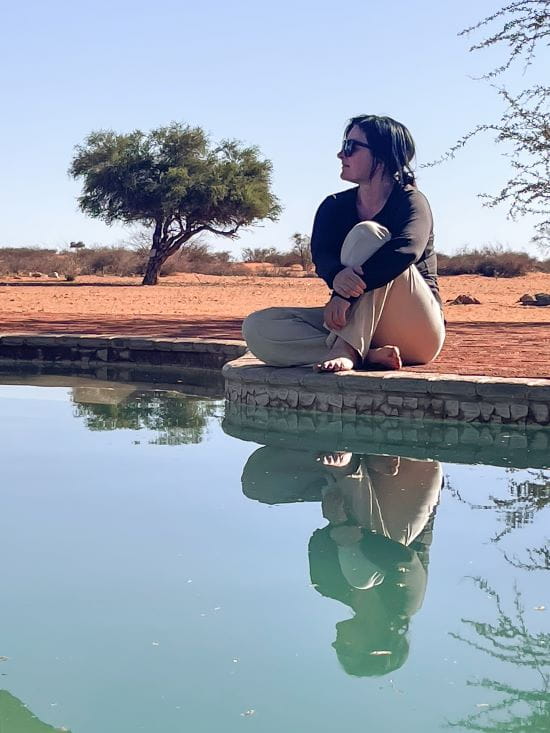
If you want to see the real Kgalagadi before you book, watch our full self-drive video below.
Crossing the border at Mata-Mata
The Kgalagadi Transfrontier Park sits across South Africa and Botswana. Normally, taking a vehicle across international borders requires a mountain of paperwork and cross-border fees. However, if you approach it from Namibia, it is really straightforward.
You can cross the border at the Mata-Mata gate and enter the park without officially registering or clearing immigration into South Africa. There is only one strict catch to make this unique entry work: You must enter and leave through the exact same gate (Mata-Mata).
As long as you return to Namibia via Mata-Mata, you bypass the South African immigration. If you plan to drive all the way through the park and exit into South Africa or Botswana, this loophole closes, and you will need to clear full passport control (which requires a minimum stay of two nights in the park).
An important note: Before you pick up your rental vehicle, you must inform your rental agency that you plan to drive into the Kgalagadi. Even though you technically stay within the park’s boundary loop, you are crossing a geographical border. Most rental companies will require you to carry a cross-border authorization letter, and they usually charge a small extra fee to issue it.
Because the Kgalagadi is a highly protected conservation area, there are strict controls at the Mata-Mata gate.
- Don’t bring fresh meat: Do not stock up on raw meat, poultry, or dairy in Namibia with the intention of braaiing it inside the Kgalagadi. The border officials are strict about preventing the spread of agricultural diseases and will confiscate it. Plan your meals around canned or dry goods or buy your meat directly from the small shops at the main rest camps inside the park.
- Don’t bring firewood: You are not allowed to bring Namibian firewood across the border into the park. When we arrived at Mata-Mata, the guards stopped us and made us leave our Namibian wood right there at the border post. Fun fact: The border guards safely stored our wood at the gate while we spent our three nights in the park. When we finally drove back out and cleared re-entry into Namibia, they gave the firewood back.
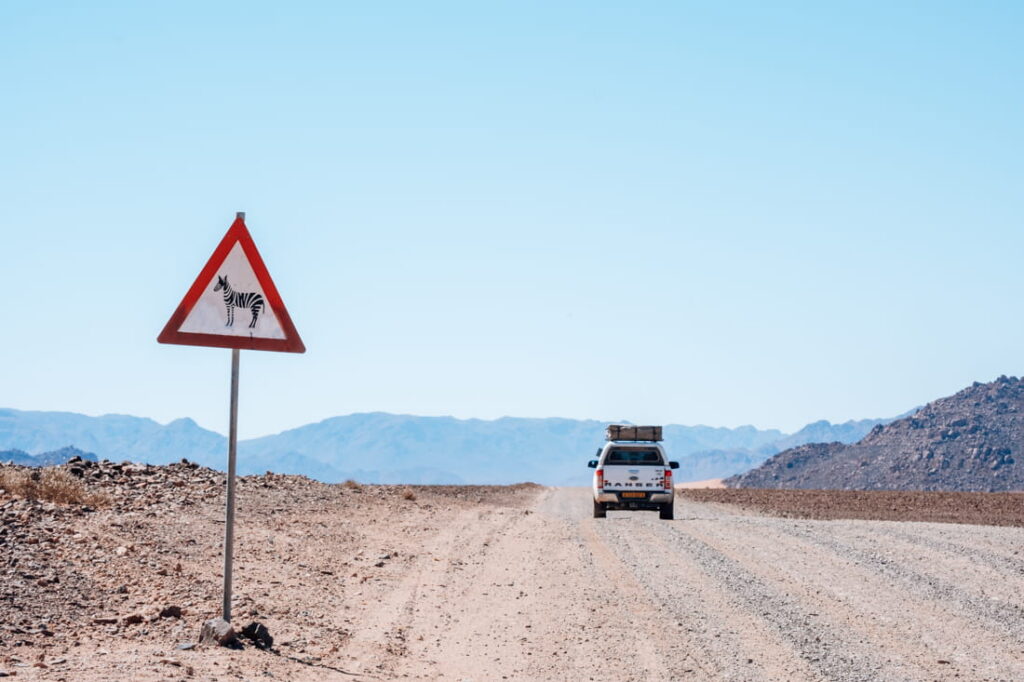
What is the best time to visit the Kgalagadi Transfrontier National Park?
The dry winter (May to August) – This is considered the peak season for wildlife viewing. Because it is the dry season, animals are forced to gather around the permanent waterholes. The days are clear, sunny, and comfortable (around 25°C). At night, it can get cold, so make sure to bring layers.
The transition season (September to November) –This is the season we experienced firsthand. The landscape is at its absolute driest, and the wind can cause dust devils. During these months, the heat builds up and the wildlife has no other choice than to stick close to the waterholes. This period also coincides with the start of the lambing season. Despite the harsh conditions, we saw many young animals.
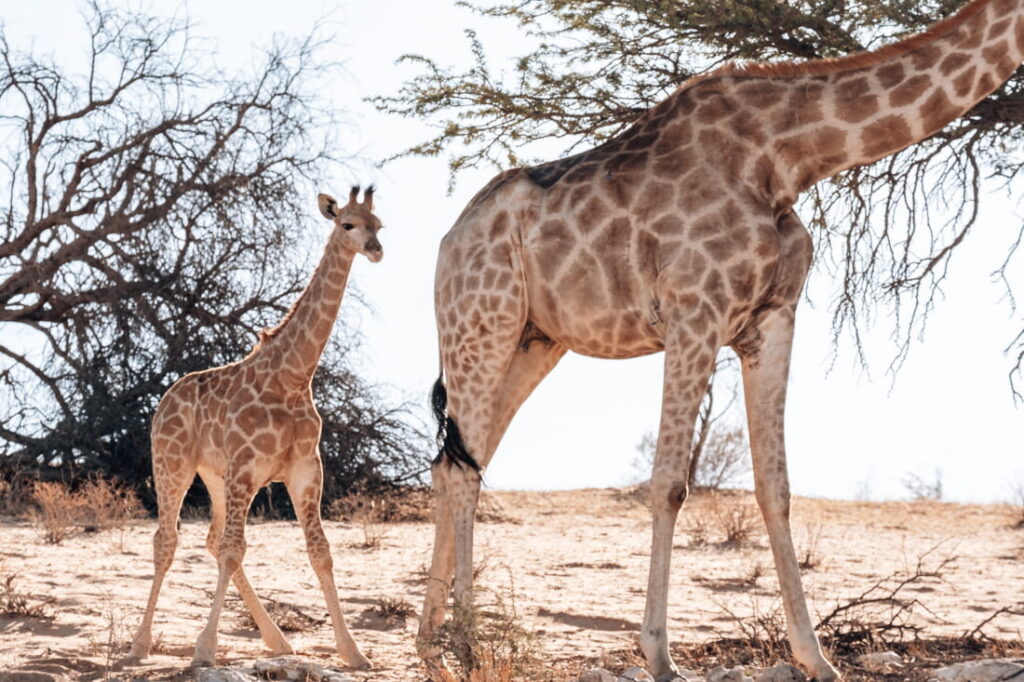
The rainy summer (December to April) – This is the season the desert transforms. Green grass and flowers appear and the landscape looks beautiful. But because water is suddenly everywhere, the wildlife disperses deep into the dunes, meaning it is harder to spot animals. During this period, it gets really hot. If you are a birdwatcher, this should be prime time to go as birds of prey arrive in the park.
Do you need a 4×4 for a self drive safari in the Kgalagadi Transfrontier National Park?
The short answer is no. If you stay on the main roads (routes connecting the principal rest camps on the South African side), a 2WD with high clearance should work. However, if you want to take some smaller loops or head over to the more rugged Botswana side of the park, a 4×4 is mandatory.
But no matter what type of high-clearance vehicle you drive, the most critical factor for survival and comfort in the Kgalagadi is your tyre pressure. So our recommendation is: as soon as you enter the gate, deflate your tyres. Lowering your tyre pressure softens the impact of the corrugated roads and creates a wider surface to keep you from sinking into the loose sand tracks. Ask the rangers at the Mata-Mata gate for the recommended pressure based on your specific vehicle and the current track conditions.
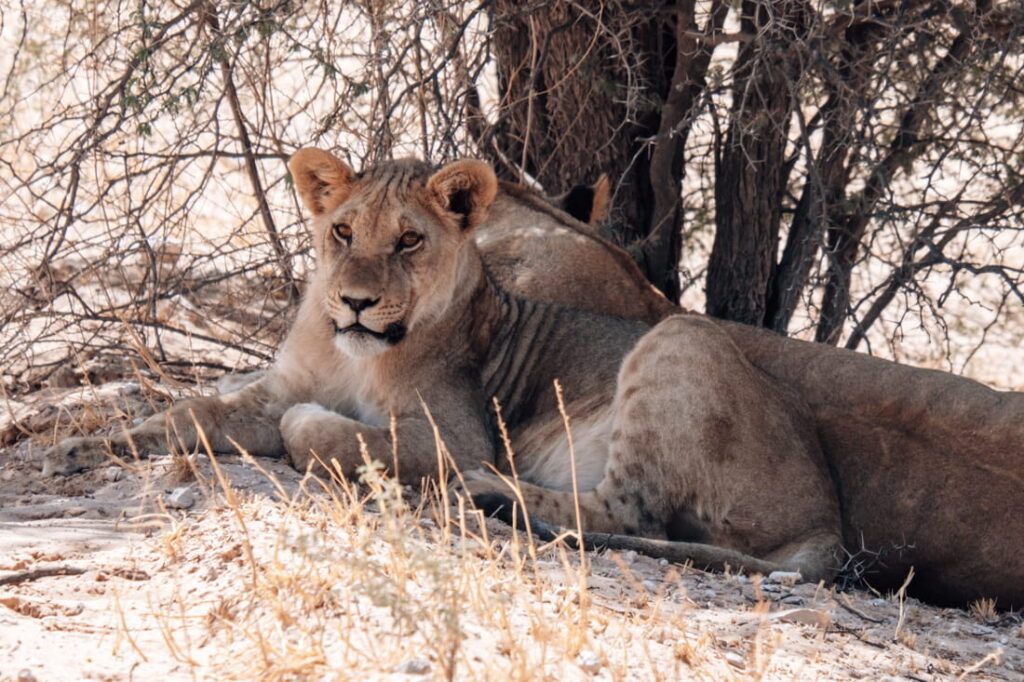
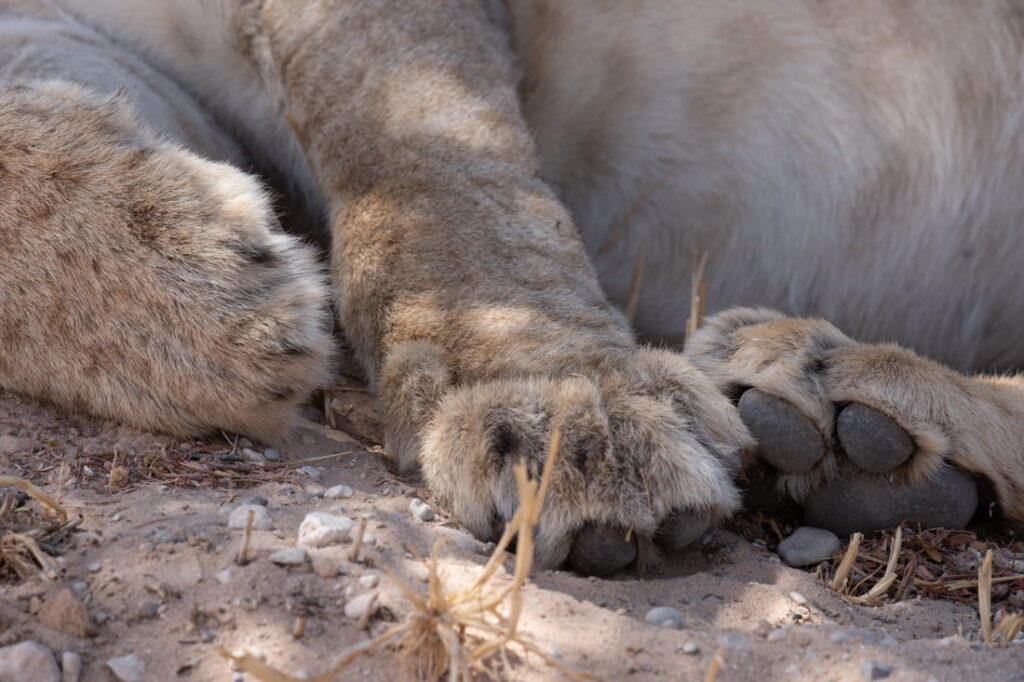

Where to stay when visiting the Kgalagadi Transfrontier National Park
When booking a trip to the Kgalagadi via the Mata-Mata route, you will be staying at the camps managed by SANParks (South African National Parks). There are also isolated unfenced wilderness camps scattered deep in the dunes if you are looking for a remote experience. You can check availability and prices and book your accommodation via the official website. Make sure to book some months upfront as there is only limited capacity.
The three main camps that are fenced, are located along the two main dry riverbeds (the Auob and the Nossob) and offer solid infrastructure, campsites, chalets, shops, and fuel stations.
Mata-Mata rest camp
Because it sits directly at the border gate, Mata-Mata is where most travellers coming from Namibia start. We spent all three nights based here. The campsites are spacious, clean, and well-shaded by large trees and the camp has a very relaxed and intimate feel. There is also a dedicated hide overlooking a floodlit waterhole.
Nossob rest camp
Nossob rest camp is located roughly 4 hours driving northeast of Mata-Mata and is located along the dry Nossob River bed. Just like Mata-Mata, Nossib rest camp offers a mix of camping and chalets, a petrol station and a basic shop. It also features a famous hide that places you right at eye-level with the waterhole. Nossob feels more remote and wild and is famous for its high concentration of large predators, particularly the park’s iconic black-maned Kalahari lions and leopards.
Logistics note: Because of the corrugated roads, driving from Mata-Mata to Nossob takes a solid chunk of the day. If you want to explore this side of the park, you’ll want to pack up camp and book at least a night or two directly at Nossob rather than trying to do a round-trip in a single day.
Twee Rivieren rest camp
Twee Rivieren rest camp is the park’s largest camp and also houses the administrative headquarters. It is located at the southern side of the park, where the Auob and Nossob rivers meet. This is the most modern and commercial camp in the park and it felt less intimate than the other two rest camps. It features a reception desk, a larger shop, a restaurant, petrol station and a swimming pool. If you are strictly doing the Mata-Mata out-and-back loop from Namibia, we would recommend not to stay here, but it serves as a good turning point or a lunchtime stop.
The best self drive safari itineraries in the Kgalagadi Transfrontier
Unlike other safari parks, where you can get lost in a web of intersecting tracks, the Kgalagadi Transfrontier main road network is structured around two dry ancient riverbeds: the Auob River and the Nossob River. That means navigating in this park is not difficult at all.
The Auob river road (from Mata-Mata to Twee Rivieren)
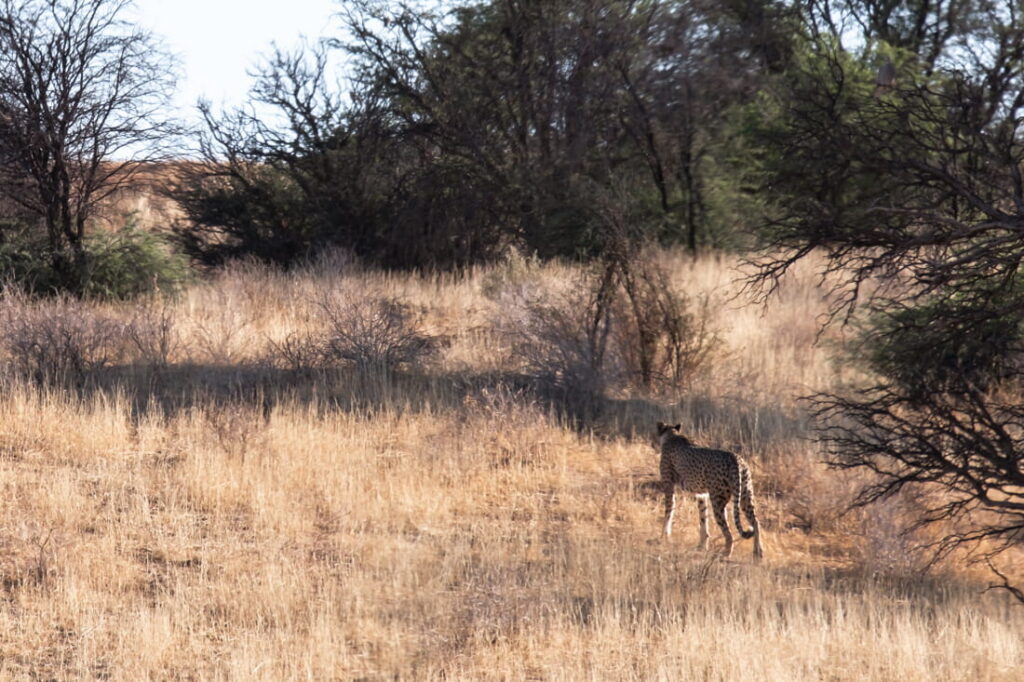
This is the main route stretching southeast from the Mata-Mata gate towards Twee Rivieren rest camp. This road lies along the sandy bed of the dry Auob River and on both sides, there are red Kalahari sand dunes. To see wildlife, your drive is essentially connecting the dots between the artificial, solar-powered waterholes scattered every few kilometers along the track. You will drive from one waterhole to the next, trying to spot the wildlife. This valley is for its high concentration of cheetahs. And it is the place where we spotted our first cheetah, early in the morning, at Sitsas waterhole.
The Nossob river road (from Twee Rivieren to Nossob)
The Nossob River Road stretches from Twee Rivieren up to Nossob rest camp. Make sure not to underestime this route. This is a 160-kilometer stretch of gravel and sand that tracks the border of South Africa and Botswana. There is a lot of corrugation so make sure you have properly deflated your tyres before driving here. We didn’t drive the entire road, but took the road from Twee Rivieren in the direction of Nossob and made a left turn when we intersected on of the dune roads back to Mata-Mata camp.

The dune roads that connect the main roads
If you want to vary your scenery, there are two distinct dune tracks that cut directly through the interior sand dunes.
- The Kamqua dune road: Located roughly halfway down the Auob road from Mata-Mata, this track cuts straight across the dune fields to the Nossob side.
- The Upper dune road (dune road north of Kieliekrankie): Another scenic connecting option further south.
We loved these roads as they gave us views over the majestic landscape and were less visited than the two main roads of the park.
Our best tips to spot wildlife in the Kgalagadi Transfrontier
Let’s be completely honest. As we mentioned before, our first morning drive in the Kgalagadi was a total letdown. Coming straight from places like Etosha, where herds of elephants and other animals gather in dozens by the waterholes, the Kgalagadi initially felt completely empty.
So our first advice: Take it as it is and adjust your mindset.
Somer other Pack to Life tips for spotting animals
- Be patience at the waterholes: Don’t just drive from point A to point B. Pick a solar-powered waterhole along the dry riverbed, put down the engine, sit and watch.In such a dry landscape, the animals eventually have to come to you.
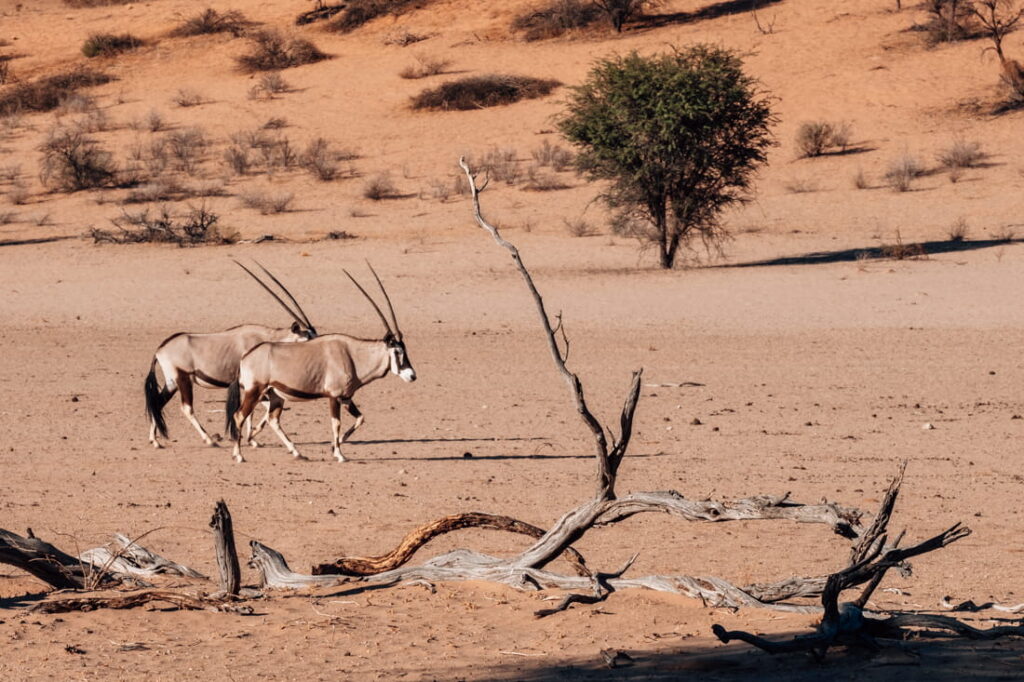
- Look for the small animals first: When you stop being obsessed over finding a lion, you notice the real life of the desert. Look for the weaver bird nests hanging from the camelthorn trees or watch the ground squirrels and meerkats darting through the red sand
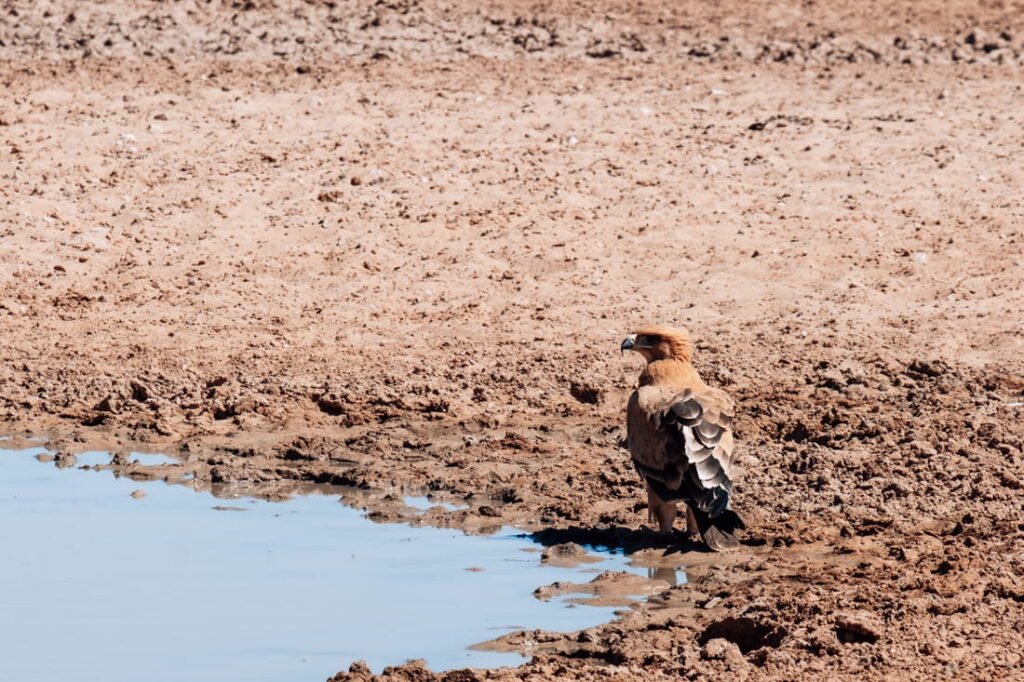
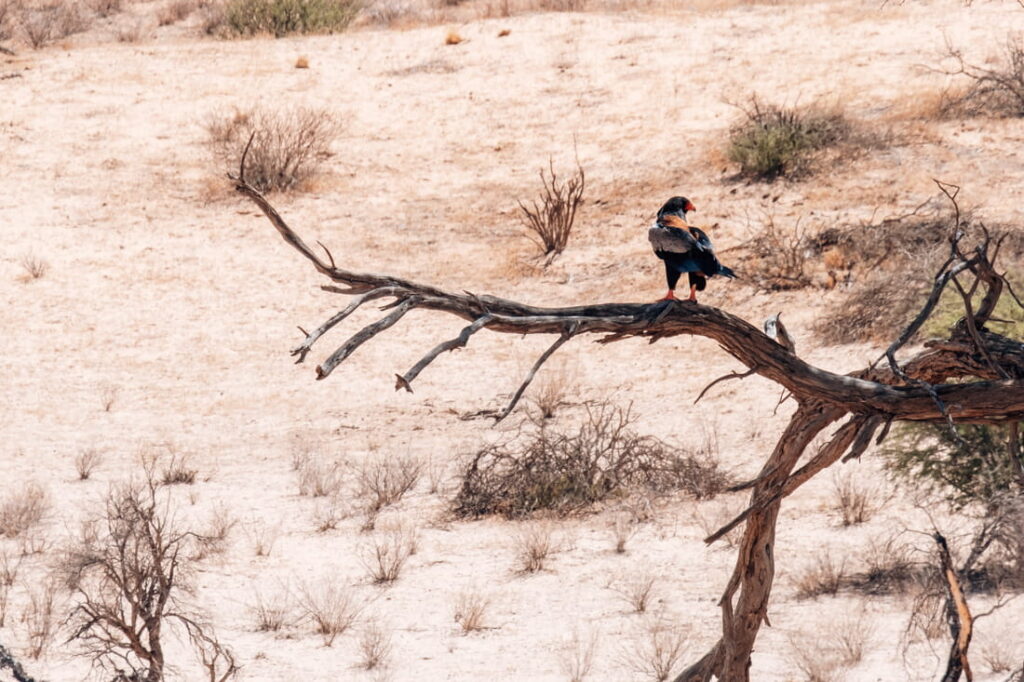
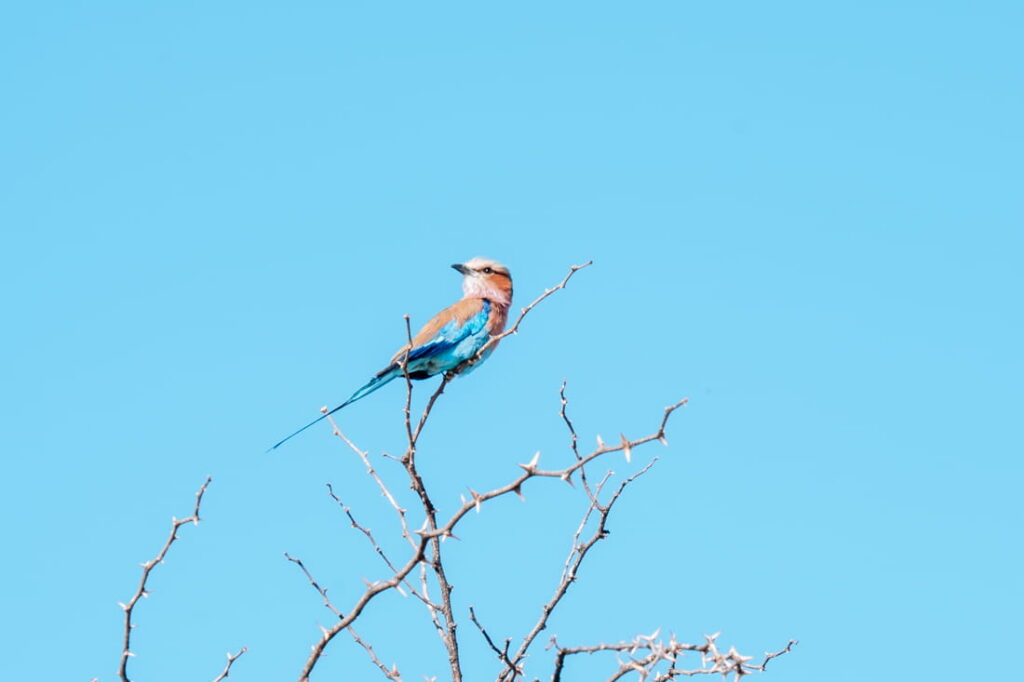
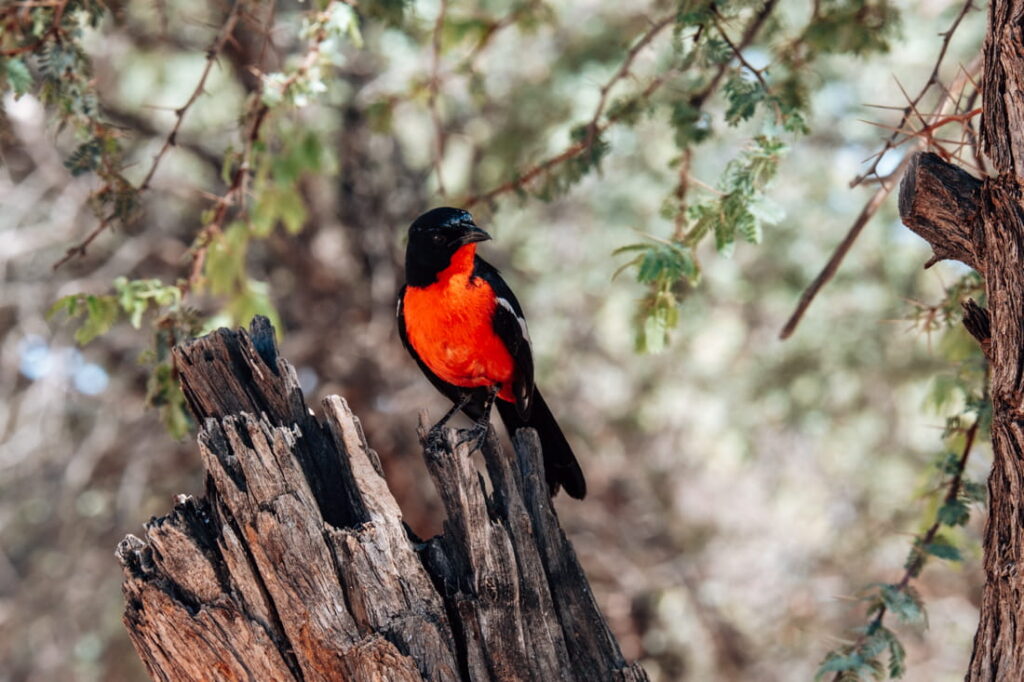
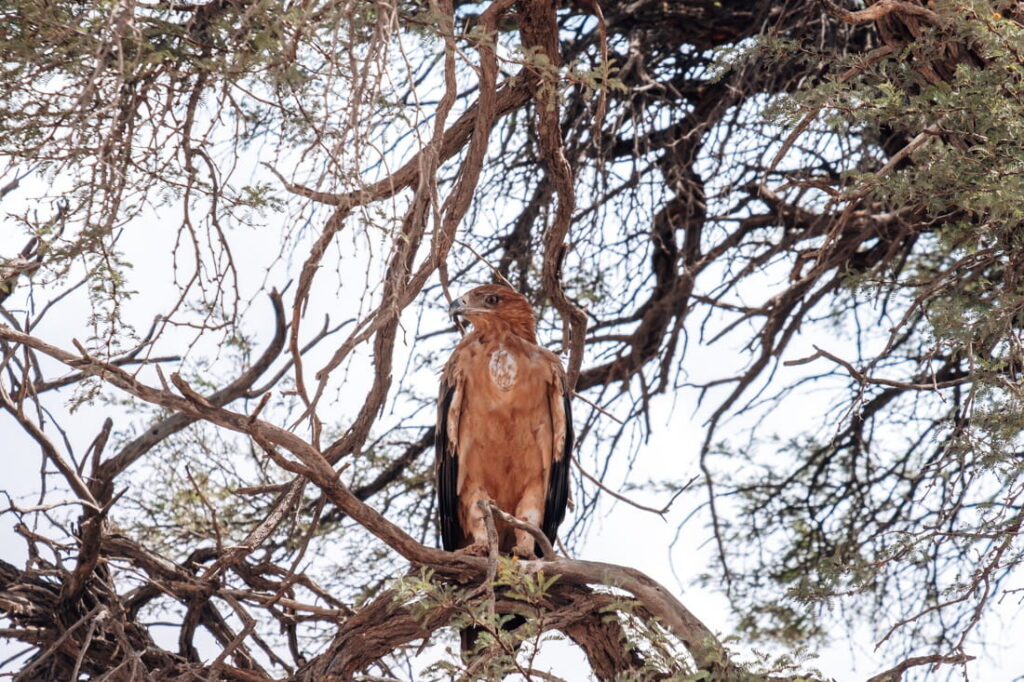
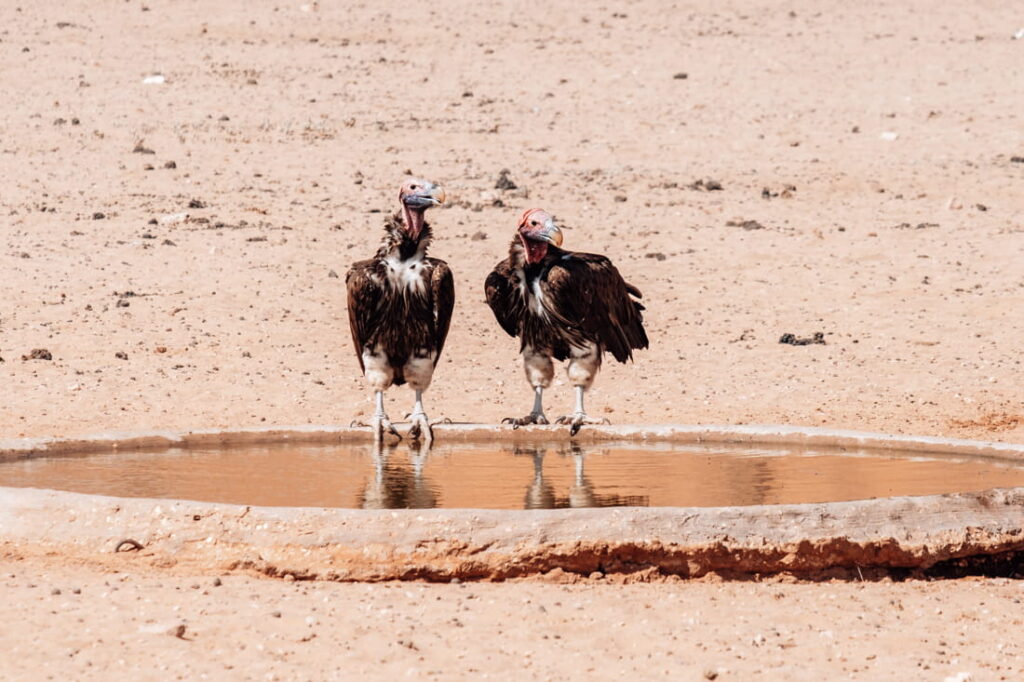
- Look up: The Kgalagadi is an absolute haven for birds of prey. Scanning the branches of the trees will often lead you to an incredible sighting (or even a well-camouflaged leopard resting in the shade)
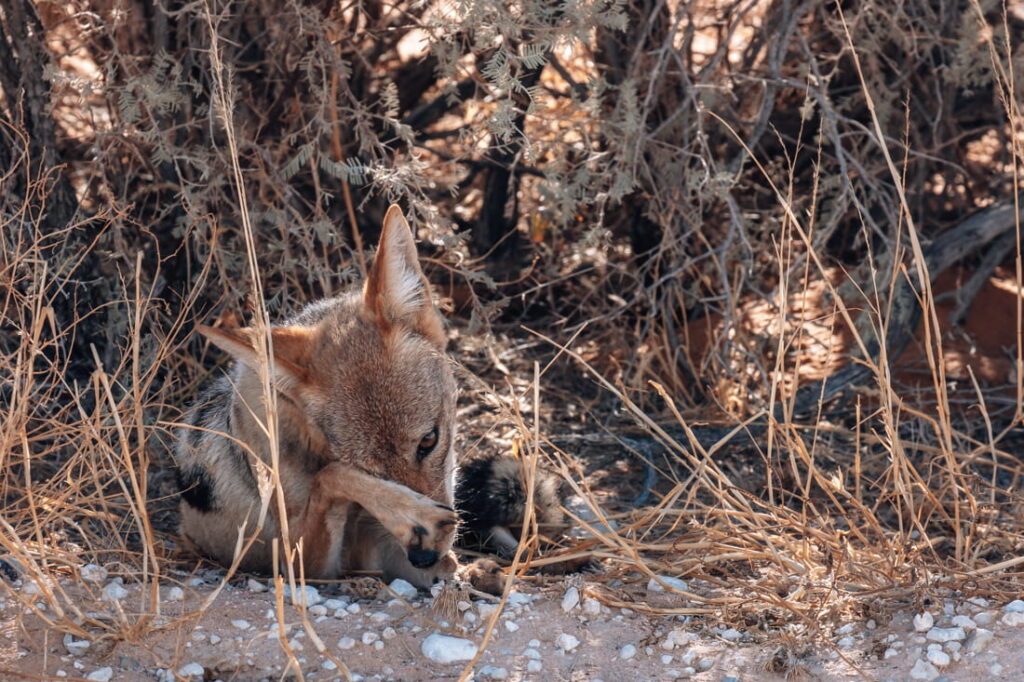
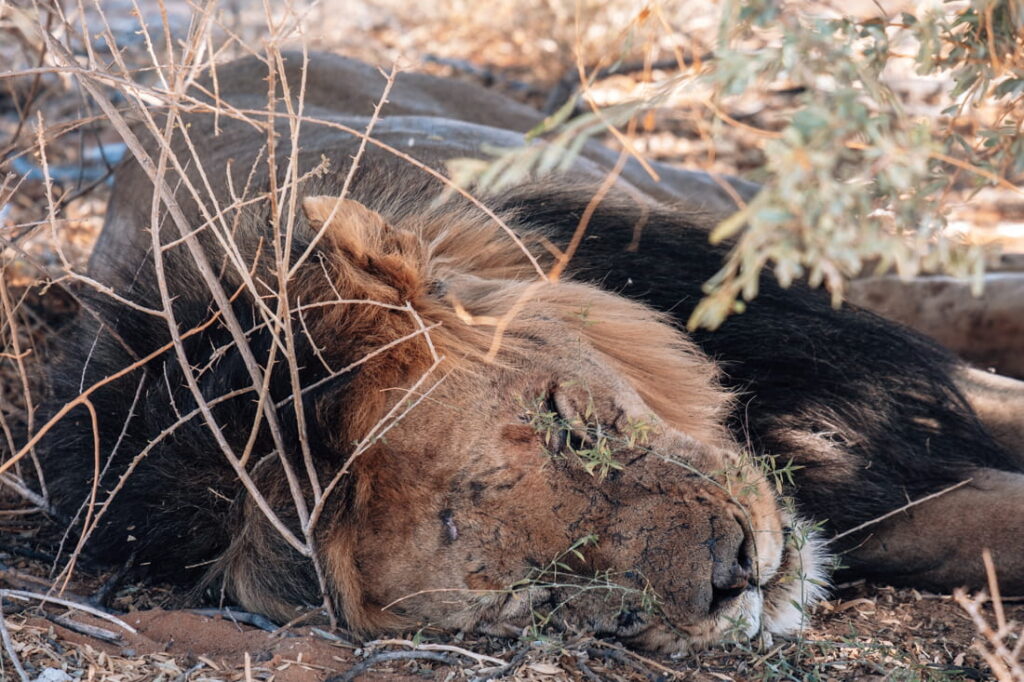
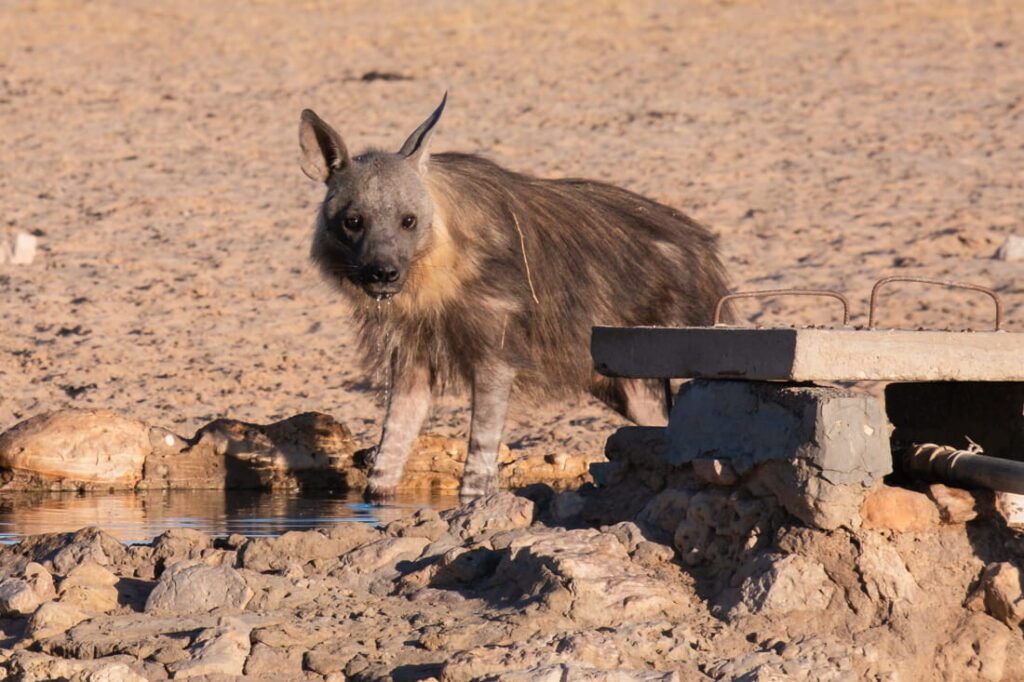
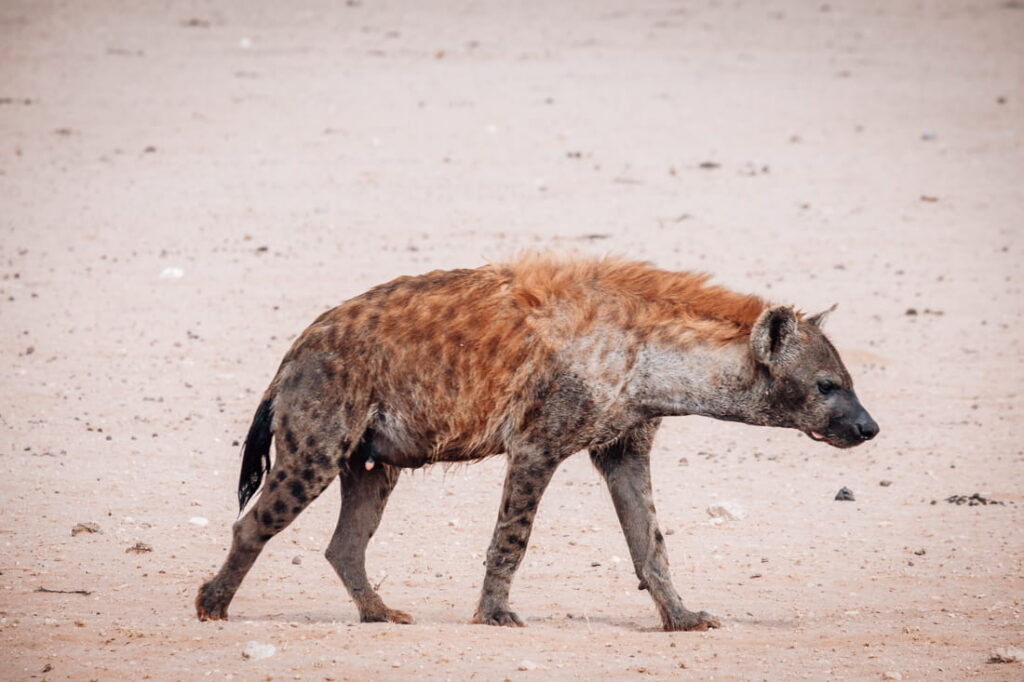
- Be patient: We once drove for miles seeing absolutely nothing, only to find a massive male lion sleeping right beside the road. Another time, we stumbled upon a rare brown hyena walking completely solo through the dust
- Check the camp sighting boards: Every morning before you roll out past the camp gates, check the physical sighting board at the reception or shop. Travelers pin color-coded magnets to map out exactly where they spotted lions, cheetahs, leopards, or other species the day before. It gives you a strategy for which direction to drive.
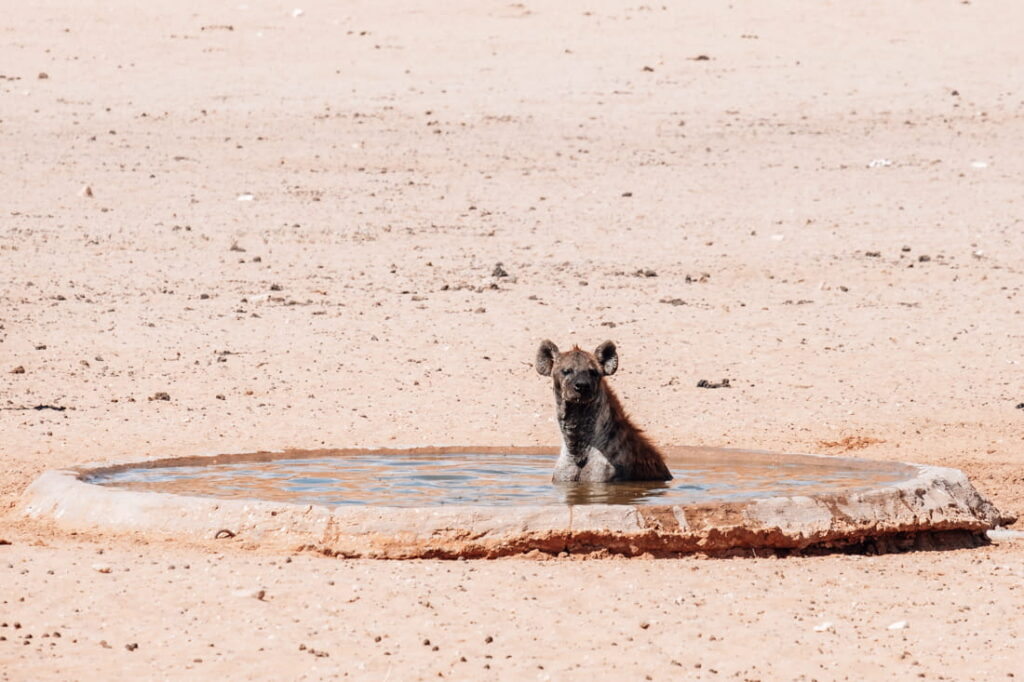
- Talk and listen to other travelers: When passing another car on a quiet track, roll down your window, ask what they have seen and actually listen to their tips. That is exactly how we found our favorite memory of the entire trip. Another traveler stopped us and mentioned a sighting of a hyena. We drove in that direction and that led us straight to the hilarious image of a spotted hyena completely taking over a waterhole.

Some final practicalities
Stay inside the vehicle
Let’s start with a golden rule. The Kgalagadi is apex predator territory. So it is strictly forbidden from stepping out of your vehicle anywhere in the park, except inside the main fenced rest camps or at designated unfenced picnic sites/ rest areas.
Fortunately, the rest areas along the river roads are exceptionally well-maintained. Even out in the middle of nowhere, you’ll find picnic tables in the shade, a proper braai (barbecue) if you want to cook lunch, running water and toilet facilities.
When you stop at these unfenced spots, please keep your eyes open. You are entirely unprotected, so scan the immediate trees and bushes before walking to the toilets.
Conservation fees (entrance fees)
Because the South African side of the park is managed by SANParks, you are required to pay a daily conservation fee for every night you stay.
- International Visitors: The standard daily conservation fee applies per adult, per day (576 Rand ~ € 30,5)
- The Wild Card Option: If you plan on staying in the Kgalagadi for more than a few days, or if you plan to visit other South African national parks later in your trip, look into buying an international SANParks Wild Card. It covers your entry for a full year and often works out significantly cheaper than paying the daily rate individual times.
Some desert essentials
Don’t rely on the small camp shops to have everything. They stock basic canned goods, firewood, ice, water, and fuel, but the selection is limited.
- Water: Carry a minimum of 5 liters of drinking water per person, per day, in your vehicle at all times. The desert heat can be relentless.
- A tire pressure gauge and compressor: Since deflating your tires is mandatory for navigating the corrugation and sand, you need a reliable gauge to check your pressures and a 12V compressor to pump them back up when you exit the park.
- Binoculars: Because you cannot leave the roads and wildlife can be far out in the riverbeds or up on the dune ridges. That means a good pair of binoculars essential.
- A headlamp: The rest camps turn off their main generators late at night. If you are camping at Mata-Mata and want to walk down to the waterhole after dark, a headlamp is essential.

Some final thoughts
Adding the Kgalagadi Transfrontier National Park to our Namibia itinerary was not the easiest choice, but we are so happy we decided to add it to our road trip through Namibia. It turned out to be one of our best memories of the entire trip!
If you are already planning a road trip down through southern Namibia, don’t just stick to the standard loop but slip through the Mata-Mata loophole. If you have any questions about the Kgalagadi Transfrontier National Park, don’t hesitate to send us a message.
Happy travels!
M&M
Quick start your holiday with the help of our trusted tools
These are the websites we highly recommend to plan your next trip. We use them all the time to save money and travel freely! Did you know that by purchasing through our links, you support us at no additional cost. Thank you for your support. ♥️
Find hotels: via booking.com
Find a rental car: via discovercars.com
Find cheap flights: via skyscanner.com
Book tours & attractions: via getyourguide.com
Book a bus / train / transfer: via omio.com—