

Visiting Teide National Park was at the top of our list for our week in Tenerife, but we quickly learned that it is the volcano who decides when it is ready for visitors. We had to be patient: for the first five days of our trip, all access roads to the national park were strictly closed due to heavy snow and ice.
Down at sea level, the sky remained gray and cloudy for a couple of days and we began to wonder if we would miss the Teide entirely. But as soon as the word came that the roads had reopened, we were on our way. The drive felt like a breakthrough: as we climbed higher, we suddenly drove through the thick layer of clouds into a world of sunshine. And then suddenly, there it was: the majestic Mount Teide!
Some of the links on this blog are affiliate links. This means if you click on a link and purchase, we receive a small commission at no additional cost to you. The affiliate links concern only products and services we appreciated highly and trust. This means the views and opinions expressed in this post are purely our own. For more information, read our privacy and cookie policy.
In this post, you’ll find all the information you need to plan your trip to Teide National Park. We’ve broken down the logistics and we included a comprehensive map with every viewpoint, trail, and snack stop we mention.
How to use this map / Click on the top left of the map to display the list of locations. You can also click on the locations to display further information. Click on the top right corner of the map to open a larger version of the map in a new tab. Click the star (favorites) next to the name of the map to save to your Google Maps.
Whether you are looking to conquer the iconic Roques de García loop, find the quiet volcanic sands of the Samara trail, or need information about the new 2026 permit and rules, we’ve got you covered!
Table of Contents
Some stats about Teide National Park
Before we dive into the trails, here is a bit of context to help you understand the scale of this national park
- Mount Teide is Spain’s highest peak. The summit sits at 3.718 meters above sea level. This extreme elevation is exactly why you’ll see so many incredibly fit people on two wheels. The park is a world-famous training ground for professional cyclists. Teams come here specifically for altitude training, sleeping at the Parador to increase their red blood cell count before major races like the Tour de France.
- Mount Teide is a global giant: If you measure from the ocean floor, Mount Teide is the third-tallest volcanic structure in the world, rising a staggering 7.500 meters from its base!
- It is world heritage: The national park has been a UNESCO World Heritage site since 2007.
- It is often cited as one of the most visited national parks in Europe, attracting 3-4 million people a year. Although there is a lot of infrastructure to welcome tourists, you’ll notice that parking spots fill up very quickly.
Read more: Discover more nature on Tenerife: Our post about Anaga Rural Park
The best things to do in Teide National Park
When you think of a national park, you mainly think about hiking. But don’t be mistaken! Teide National Park has plenty of other things to do! Below, we give you an overview of the must-do’s in the park.
El Portillo Visitor Center
If you are coming from Puerto de la Cruz and Orotava, the El Portillo Visitor Center is the first place you’ll encounter on your way to Teide National Park. Make sure you have a quick stop here. It’s more than just a place for getting a map of the area. The visitor center also houses a beautifully designed museum that sets the stage for everything you are about to see.
Also make sure to check the weather forecast here and double-check if any trails have been closed.
The viewpoints and the rock formations
If you aren’t up for a long hike or don’t have a lot of time, you can still see the best of the park via the many roadside viewpoints (or “miradores” as it is called in Spanish). There are many, but below, we’ll share our favorites

- Minas de San José: We don’t know why, but we love landscapes that look like you are standing in a desert on the moon. The sand here is a strange pale yellow and it was used as a filming location for several “space” movies.
- Los Azulejos: Look for the greenish-blue rocks near the Parador. These were formed by hydrothermal activity and look like oxidized copper against the red earth.
- Mirador El Tabonal Negro: Again a personal favorite of ours because it provides the ultimate sense of scale. We had seen so many photos of the Roques de García, but from here, you can see them from a distance, standing like tiny objects in a massive landscape. It’s also the best place to see the field of dark, glassy lava, that creates a stunning contrast against the orange and red soil.
- Zapato de la Reina (The Queen’s Shoe): This rock formation shows the power of erosion. Located just a short walk from the main road, this rock has been carved into the perfect shape of a giant high-heeled shoe. It’s a fun, quick stop for a photo.

Have a coffee (and cake) with a breathtaking view
If you want to soak in the scenery, stop at Portillo Alto. There’s a small cluster of restaurants here, but the real draw is the outdoor terrace.
We sat here for a bit and the view over Mount Teide is absolutely breathtaking. It’s the kind of spot where you realize just how high up you are. While we were there, we noticed a lot of hikers and travelers ordered some seriously delicious-looking homemade cakes. Apparently, it is a bit of a “hiker’s tradition” in the park and after seeing those cakes, we totally understood why!

Take the cable car to the crater
If you want to experience the thinning air and the absolute best views of the island without doing a six-hour long trek, the Teleférico del Teide is the way to go. This cable car takes you from the base station at 2.356 meters to the upper station, La Rambleta at 3.555 meters, in just eight minutes. A ticket costs €23.50 per person.
From the upper station, you have three main paths to choose from:
- Pico Viejo Lookout (Trail 12): This is a relatively easy walk that leads you to a view of the massive 800-meter-wide Pico Viejo crater.
- La Fortaleza Lookout (Trail 11): This path offers incredible views over the northern side of Tenerife and the lush Orotava Valley.
- Telesforo Bravo (Trail 10): This is the path to the actual summit and the crater of Mount Teide. But to do this trail, you need a summit permit (see further for more details on how to book this permit).
Keep in mind that decent footwear is mandatory. The staff is very strict and if you are wearing sandals, flip-flops, or sometimes even “city” sneakers with flat soles, they will not let you board the cable car. You need sturdy shoes with grip.
Also be aware for altitude sickness. Because you ascend 1200 meters so quickly, some people feel dizzy or get a headache. Walk slowly, breathe deeply, and stay hydrated.
Due to the risk of altitude sickness, the cable car is not allowed for pregnant women, children under 3, or people with heart or respiratory problems.
Go hiking
There are many trails in the Teide National Park and making choices was difficult. We choose for an iconic trail, the Roques de García Loop and a more quiet hike at the western border of the park, the Samara trail. If you have more time than us, we do recommend to do some other hikes as well, as the best way to experience the park is with your hiking boots on the ground.
1. Roques de García Loop (Trail 3)
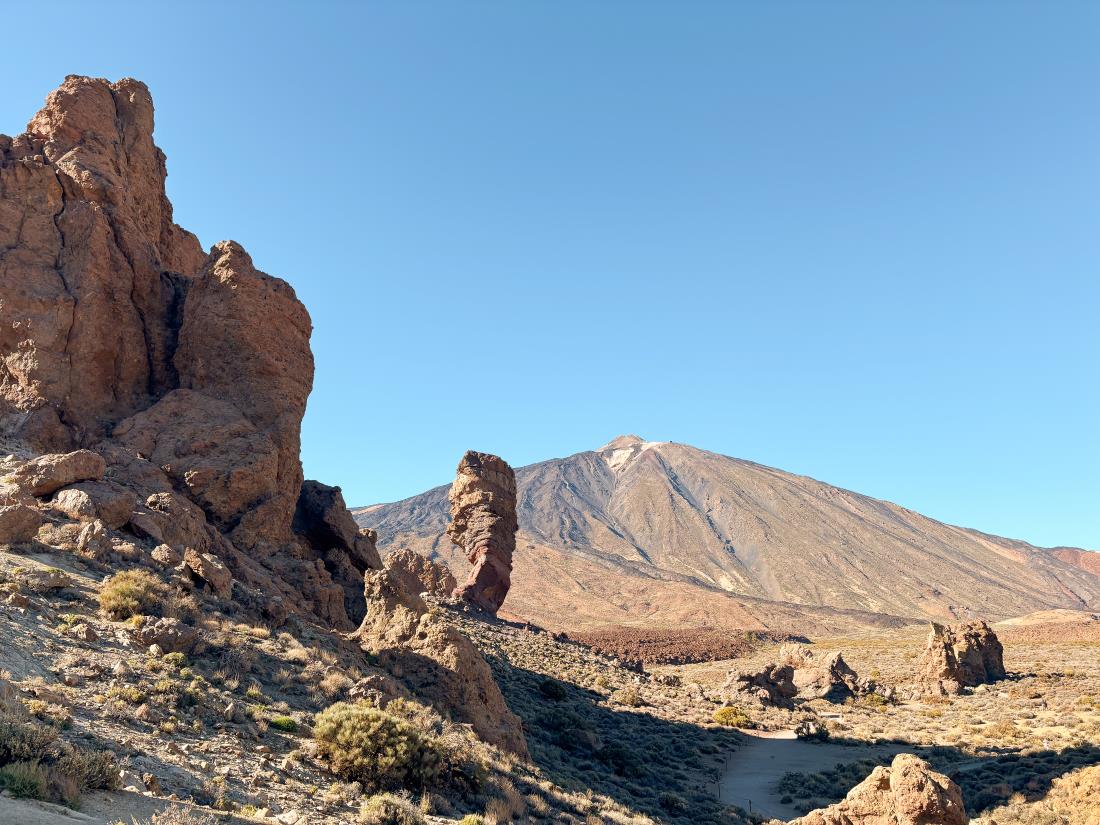
This is a “classic” Teide experience and most likely the most photographed spot in the park. The loop takes you around a series of towering volcanic pillars that have been sculpted by millions of years of erosion.
We started at the famous Roque Cinchado (the “Finger of God”). While the viewpoint at the beginning was packed with bus tours, we found that once we walked just ten minutes into the trail, the crowds disappeared. The path eventually dropped down into the Llano de Ucanca, a massive, flat plain that looks exactly like the surface of Mars. It’s a 3.5 km loop that takes about 1.5 hours. It’s mostly flat and easy, but be warned: the very last section is a short, steep climb back up to the parking lot. During this climb, we immediately felt we were at a high altitude!

2. The Sámara Loop (Trail 13, we combined it with trail 38 and back via trail 32)
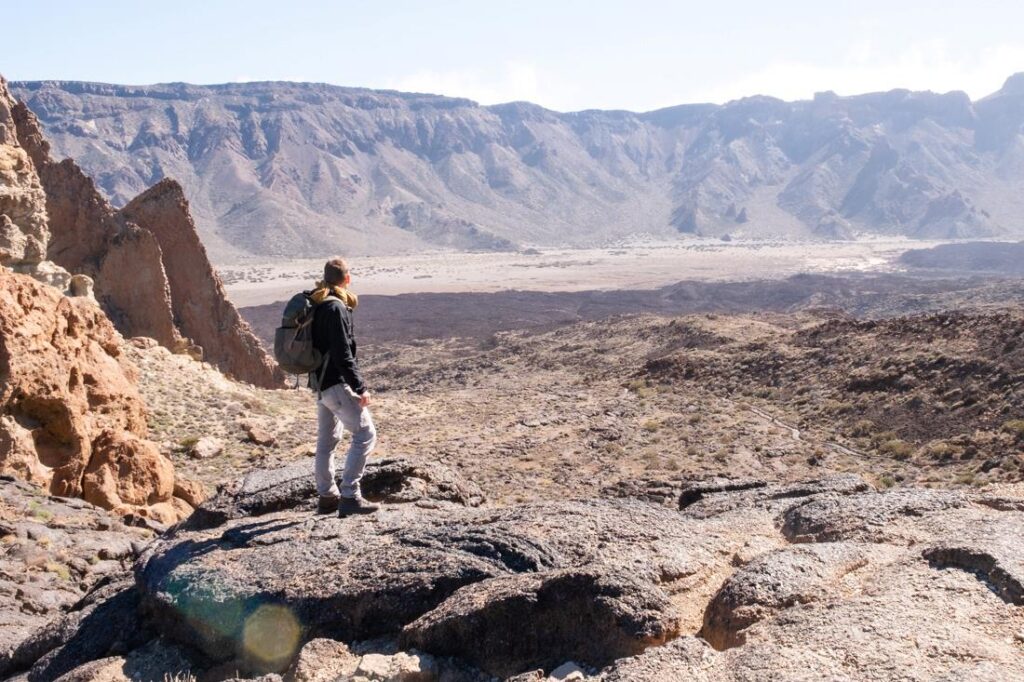
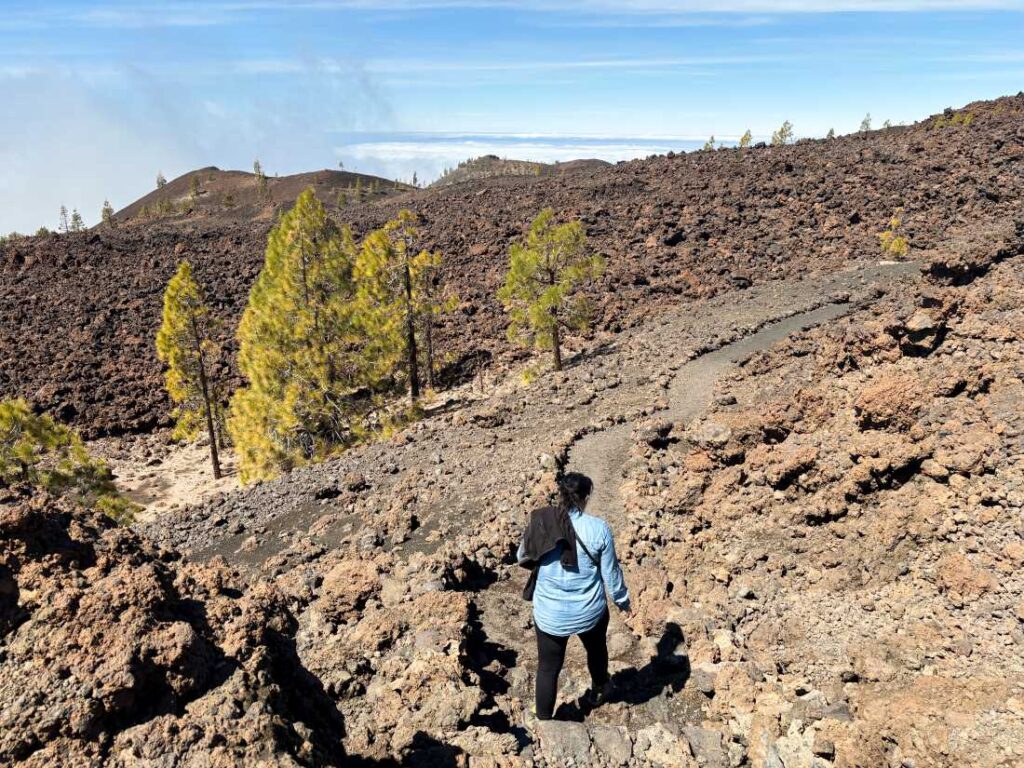
This is a way less crowded place that the Roques de García, but we enjoyed this hike a lot! The starting point of this hike is located on the western side of the park and feels much more remote. Instead of orange rocks, we were now walking on deep black volcanic ash (called lapilli) and were surrounded by the bright, resilient green of Canary Island Pines.


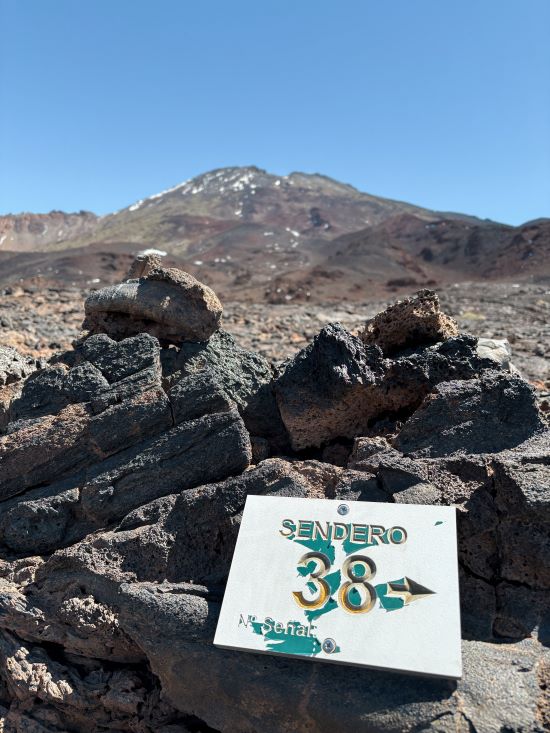
We first followed Trail 13 (Sámara), branched onto Trail 38 (Cuevas Negras) and finally looped back via Trail 32 (Abeque). Combining these trails took us through “Cuevas Negras”, an area of dark, twisted lava flows and hidden caves that felt incredibly remote.
This extended loop is about 8-9 km and took us roughly 3 hours. It’s relatively gentle, but walking on the loose volcanic gravel feels a bit like walking on sand. It turned out to be a great workout for the calves! By adding Trails 38 and 32, we escaped the few people who stay on the main Sámara path. For long stretches, we were completely alone in this stunning volcanic landscape.
Keep in mind that this area is very exposed. Even if it’s chilly when you start, the sun can get intense. Bring plenty of water and don’t forget your sunscreen and a hat, as there is almost no shade out here. Luckily we had some snowy parts along the way to keep us cool.
Stargazing at the Teide
Teide National Park is one of the top three places on the planet for stargazing. It’s a certified starlight destination, meaning the sky is legally protected from light pollution. On a clear night, you can see 83 of the 88 officially recognized constellations.
While we would have loved to experience a Teide night, we ultimately decided to skip the late-night stargazing during this trip. Because the roads had been closed for five days due to snow and ice, we were unsure of the conditions. Even when the roads opened, the clouds remained unpredictable and we wanted to prevent us from being stuck inside a thick, freezing fog where you can barely see anything.
But if you have better luck with the weather than we did, we think you absolutely should go. Even during our daytime visit, we could imagine how incredibly dark and silent the park must become at night. You have three different options:
- DIY Stargazing: You don’t need a tour. You can simply drive to a viewpoint, pull over, and look up. The silence of the volcanic crater at night is supposed to be incredible.
- Professional tours: If you want the full experience, there are tours that include a sunset toast with cava, followed by a professional guide using long-range telescopes.
- The science approach: You can also visit the Teide Observatory (Izaña), one of the world’s most important solar observatories, which offers afternoon tours that transition into night viewing.
If you visit Teide National Park at night, make sure to bring everything warm you have. Even in the summer, nighttime temperatures in the park can drop to near freezing!
Book an excellent stargazing tour at Teide National Park
How to book a permit for trails in Teide National Park?
Since January 2026, you need a permit to walk on certain trails in the National Park, like the PNT 07, the PNT 09, the PNT 10, the PNT 23 and the PNT 28. More information can be found on the official website. Unlike the Pijaral hike, that was completely free during our visit, some hikes require you to pay an “ecotasa” (eco-tax). A permit for the PNT 10, that takes you from the cable car to the volcano costs € 15 per person (without a guide).
Make sure to book way in advance: Permits are extremely limited. They often sell out months in advance.
The practicalities
How to get to Teide National Park
There are different options to get to Teide National Park. Below we give you an overview:
Getting to Teide by car (our recommendation)
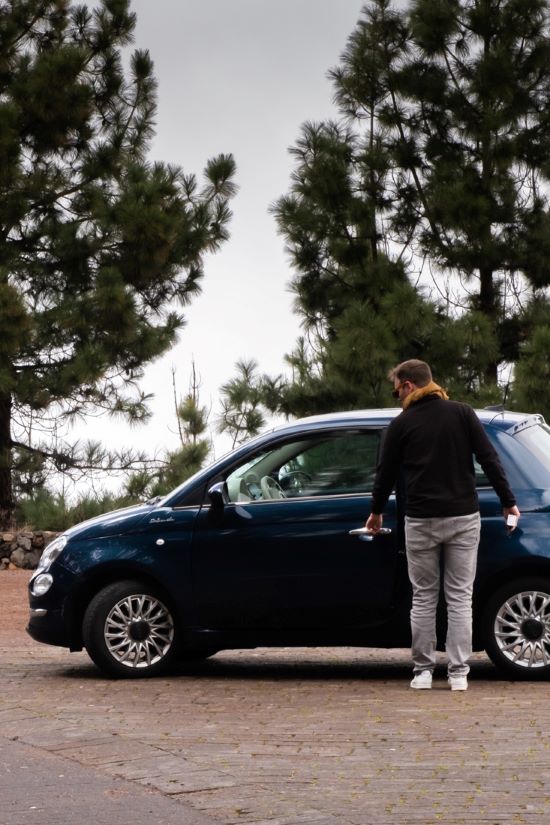
This is how we explored the park. In our opinion, it’s the only way to truly experience it at your own pace. Having your own car means you can pull over at every mirador that catches your eye. And there will be many! Renting a car in Tenerife is affordable and convenient. We always book our rental cars through discovercars.com with free cancellation and insurance included. Discovercars provide excellent service and the sharpest price.

Check prices and book a rental car for Tenerife.
There are four main access roads: TF-21 (from the North/La Orotava or South/Vilaflor), TF-24 (from La Laguna/La Esperanza), and TF-38 (from the West/Chío). The roads are excellently paved but very windy. But compared to the road to Masca and the Teno mountains, driving here was less stressful.
There are many parking lots and parking is free. But at popular spots like the Cable Car and Roques de García and during peak hours (10:00 AM – 2:00 PM) parking space can become limited. So our advice is to go early or late. Also keep in mind that there are no gas stations inside the national park. Make sure to fill up your tank before you start the climb.
Getting to Teide by bus
If you don’t want to drive the mountain hairpins, the bus is a reliable and very cheap alternative.
- Route 348: Departs from Puerto de la Cruz once a day (usually around 9:15 AM) and returns in the afternoon.
- Route 342: Departs from Costa Adeje / Los Cristianos once a day (around 9:00 AM) and returns in the afternoon.
The catch is that you only have one bus in and one bus out. This gives you about 5 hours in the park, but it doesn’t give you much flexibility to see different viewpoints.
Taking a guided tour to Teide National Park
If you want someone else to handle the logistics, the 2026 permit rules, and the history of the volcano, a tour is the way to go. You have different options to choose from. Make sure to always check what is included in your tour. As the 2026 permit system can be a bit confusing, many tour operators now bundle the permit fees and “eco-taxes” into their price.
Getting to Teide National Park by bike
If you see people looking incredibly fit in lycra while you’re driving up, don’t be surprised. Teide is a legendary “bucket list” climb for cyclists worldwide. Because you can go from sea level to over 2.000 meters in a single continuous climb, it is one of the premier high-altitude training grounds for Tour de France professionals.
Most riders start from Costa Adeje or Los Cristianos (in the South) or Puerto de la Cruz (in the North). If you aren’t a pro, you can join an organized e-bike tour. These are incredibly popular now. They usually bring you up to the park, let you cruise through the volcanic landscape with electric assistance, and then guide you on the epic downhill back toward the coast.
What is the best time to visit Teide National Park
Timing is everything! Because the park is at such a high altitude, the weather can be completely different from the sunny beaches just an hour away.
The “sweet spot”
- Spring (April – June): This is definitely the most beautiful time to visit. The weather is stable, and you might see the typical flower (Red Bugloss) in bloom.
- Autumn (September – November): The summer heat has faded, but the winter snow hasn’t arrived yet. The visibility is usually at its peak, with clear views over the neighboring islands.

Winter warnings (our experience!)
If you visit between December and March, you may need a “Plan B.” As we found out, even if it’s 20°C on the coast, the National Park can be closed due to snow and ice. When the roads are closed, they are strictly closed. Always check the official Tenerife Highway Information or the park’s social media before you start your drive.
Check the webcams
We recommend to check the Teide live webcams. If the coast is cloudy, don’t despair. We experienced that Teide is often above the clouds. But if the webcams show foggy conditions at the cable car station, it’s better to try again tomorrow.


Avoid the crowds
If you arrive before 9:00 AM, you’ll be able to secure a parking spot at the Roques de García and enjoy the trails before the big tour buses arrive at 10:30 AM. Another option is to arrive after 4:00 PM. That time, the “day-trippers” are heading back to their hotels and the golden hour sets in.
Where to stay when visiting Teide National Park?
Choosing where to stay depends on whether you want to wake up in a volcanic crater or return to the lively energy of the coast. According to us, here are the two best ways to experience the island during your Teide adventure:
Stay in the Heart of the Park: Parador de Las Cañadas del Teide
For an unforgettable experience, there is only one option: the Parador. This cozy hotel sits at 2.152 meters in the heart of the national park. It offers views that make you feel like you’ve moved to a different planet.Once the day-trippers leave, the park becomes silent. Staying here allows you to enjoy the “golden hour” and the sunrise in total peace. Because you are already inside the park, you also don’t have to worry about nighttime driving or road closures. You can simply step outside and see the Milky Way with incredible clarity.
Check prices and availability on booking.com
The Parador is also the preferred base for professional cyclists. It’s common to see world-class teams in the dining room or preparing their gear on the parking lot, taking advantage of the high-altitude sleeping conditions.
Stay by the sea: Puerto de la Cruz
This was our base and we loved the contrast of exploring the rugged volcano by day and returning to the colorful, tropical streets of the north in the evening.

Check prices and availability for Puerto de la Cruz on booking.com
From Puerto de la Cruz you can drive up via the Orotava Valley (TF-21) to the national park. It is a spectacular road. Staying in Puerto also gives you a “Plan B.” If the mountain roads are closed due to weather (like they were for us), you still have the botanical gardens, beaches, and historic sites of the north to enjoy.
We hope this guide helps you navigate the majestic Mount Teide! Don’t forget to save our custom map to see exactly where all the trails, viewpoints, and cake stops are located!
Happy travels!
M&M
Quick start your holiday with the help of our trusted tools
These are the websites we highly recommend to plan your next trip. We use them all the time to save money and travel freely! Did you know that by purchasing through our links, you support us at no additional cost. Thank you for your support. ♥️
Find hotels: via booking.com
Find a rental car: via discovercars.com
Find cheap flights: via skyscanner.com
Book tours & attractions: via getyourguide.com
Book a bus / train / transfer: via omio.com—


