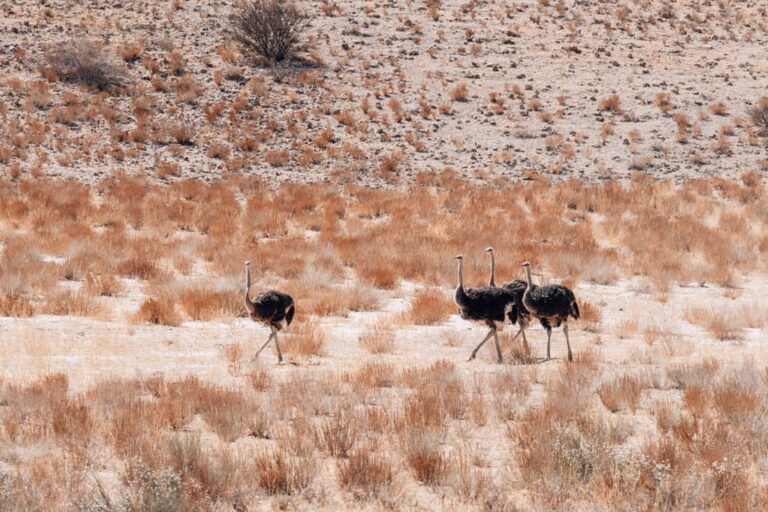

Let’s get straight to the point: Our self drive safari in Etosha was an absolute highlight of our trip through Namibia!
In local language, Etosha translates to “great white place”. This refers to the massive salt pan that covers a quarter of the park. It is one of the largest salt pans in Africa and it can even be seen from space. But Etosha is also said to be one of the best safari parks in Africa. Needless to say our expectations of this park were extremely high. And let us tell you, Etosha completely delivered! We saw an abundance of wildlife, a variety of landscapes and spend the night at spectacular campsites.
And the best part? Organizing a self drive safari in Etosha is very straightforward. In this guide, we’re sharing all the practical information, itineraries, and insider tips you need to plan your own Namibian safari adventure.
Some of the links on this blog are affiliate links. This means if you click on a link and purchase, we receive a small commission at no additional cost to you. The affiliate links concern only products and services we appreciated highly and trust. This means the views and opinions expressed in this post are purely our own. For more information, read our privacy and cookie policy.
Read more: Our 17-day itinerary for Namibia
Prefer watching over reading? To get you completely in the safari mood, we captured our absolute favorite moments, close-up lion encounters, and epic campsite sunsets in a cinematic travel video. Press play below to join us on the dusty roads of Etosha and see why a self-drive adventure here is an absolute must for your bucket list!
Table of Contents
Below you can find a map with the most important locations in Etosha National Park, to make your planning as easy as possible.
Why we recommend a self drive in Etosha?
A self drive safari in Etosha National Park in Namibia is, without a doubt, the best way to experience this spectacular park. It gives a level of freedom that organized tours cannot match:
- Flexibility: A self drive safari gives you the opportunity to explore the park at your own pace. You aren’t restriced to the hours of the game drives, meaning you can decide how much time you would like to spend at certain sightings.
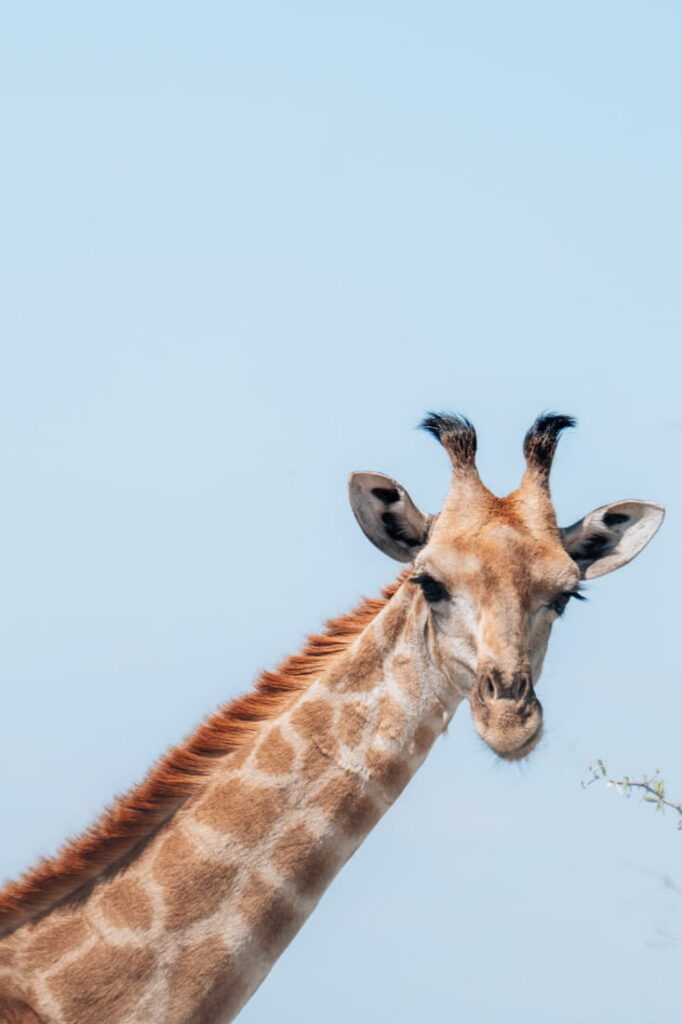
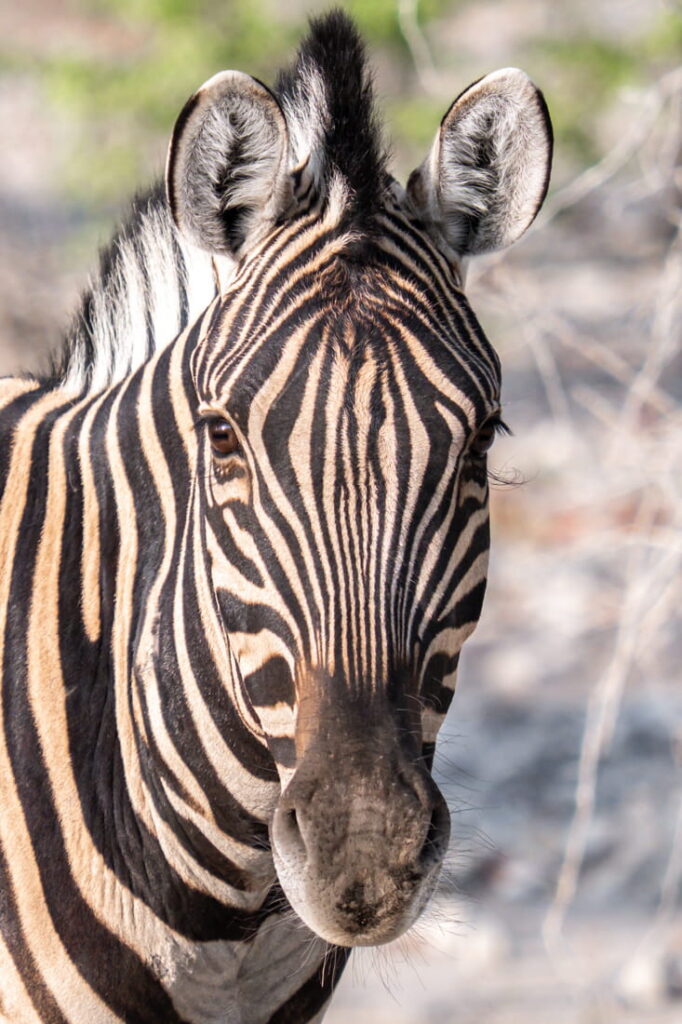
- Effortless wildlife spotting: There live many animals inside Etosha and, especially at dry season, the animals gather at the many waterholes. It makes spotting animals relatively easy, meaning you don’t need to be a professional tracker to see the wildlife.
- Excellent infrastructure: The park has good facilities and the roads are in good shape, making driving in the park not difficult at all.
- The thrill: A self drive safari is an adventure. The fun of driving your own vehicle, scanning the horizon, and being the first to spot a specific animal is unmatched.
How many days do you need in Etosha?
We spend four nights and three entire days in the park. For us, that felt like the sweet spot. It gave us plenty of time to visit different campsites and different areas of the national park.
Pack to Life tip: We highly recommend a minimum of two full days in the park. This ensures you have enough time to visit multiple waterholes and maximize your chances of seeing different wildlife.
How to get to Etosha?
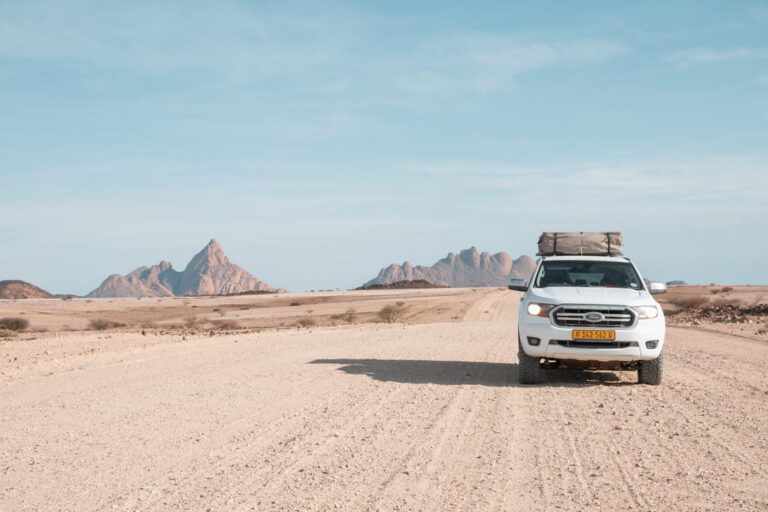
We highly recommend that you have your own car when traveling in Namibia. We picked up our 4×4 car with rooftop tent in Windhoek and kicked off our road trip from the capital. Our first stop was Etosha National Park.
Do you need a 4×4 for Etosha?
The short answer is ‘no’. The main roads, connecting the major rest camps, are wide and well-maintained gravel roads. During the dry season, you will see standard sedans and 2WD compact cars driving through the park without any issues. However, if you want to explore the smaller loops and detours leading to the best waterholes, or visit the western part of Etosha, the roads get severely corrugated, rocky, and dusty.
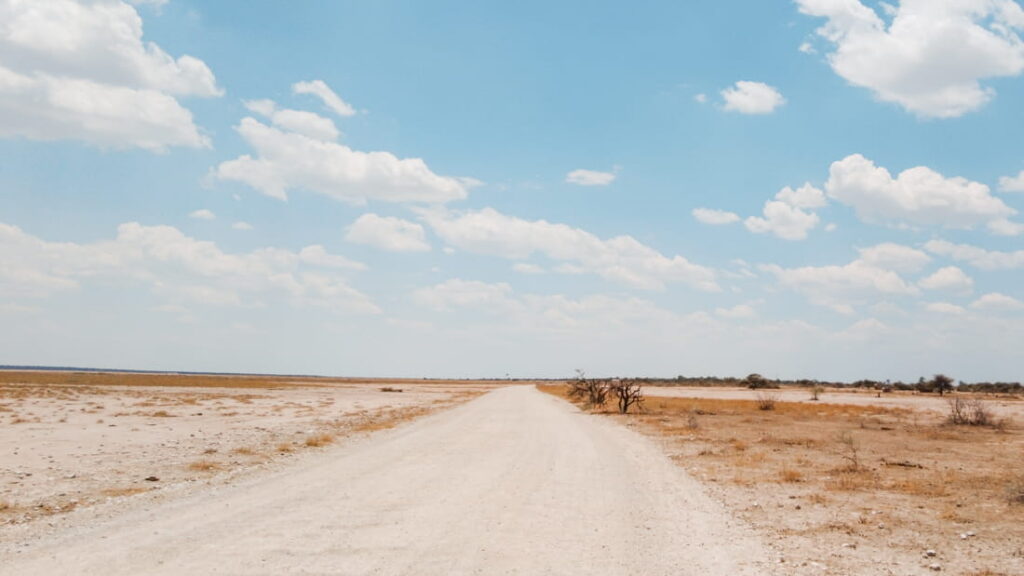
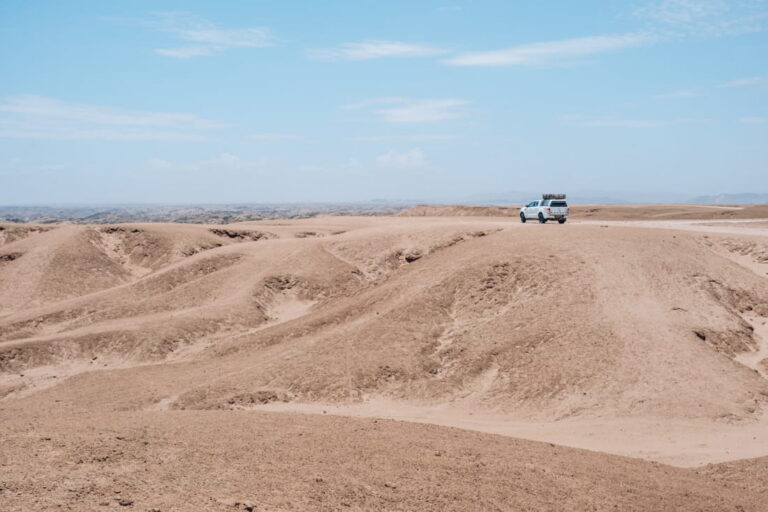
Our recommendation is to rent a high-clearance vehicle, like a SUV. Or if you like camping, rent a 4×4 with a rooftop tent. You don’t necessarily need the 4×4 capability, but the extra ground clearance means you won’t scrape the bottom of your car on rough loops. And as a bonus, sitting higher up gives you a better vantage point over the low bushes to spot lions and leopards.
Rent a 2WD vehicle without any stress through our preferred partner: Discovery cars
The road to Etosha
The drive from Windhoek to Etosha takes roughly 4 hours. The road is fully asphalted and well-signposted. Depending on your itinerary, you will likely choose one of two primary routes from the capital:
- To Anderson’s Gate (South): Head north out of Windhoek on the A1, which smoothly transitions into the B1. Follow this until you reach the town of Outjo. From there, take the C38 straight up to the southern entrance of the park.
- To Von Lindequist Gate (East): Stay on the A1 and B1 heading north past Otavi and Tsumeb. Continue along the B1 until you reach the junction for the C38, which leads directly to the eastern entrance.
The 4 gates of Etosha National Park
There are four different gates to enter Etosha National Park:
- Anderson’s Gate (Okaukuejo) is located in the south of the park and is the most popular entry for travellers coming from Windhoek.
- The Von Lindequist Gate (near Namutoni) lies in the east of the park.
- Galton Gate lies on the south-western end of the park. The closest camps are Dolomite and Olifantsrus camp.
- King Nehale Lya Mpingana Gate is in the northern end of the park. The closest camps are Onkoshi and Namutoni camp.
You can enter and exit Etosha National Park through different gates. Because we were driving up from Windhoek and heading out towards Damaraland afterwards, we entered via Anderson’s Gate in the south and traversed the entire park to exit through Galton Gate in the west.
The camps in Etosha
There are six official camps managed by Namibia Wildlife Resorts (NWR) inside Etosha. Choosing where to stay depends entirely on your travel style and whether you are pitching a tent or looking for more luxury. Here is the complete breakdown of every camp to help you map out your self drive safari in Etosha:
1. Okaukuejo Camp
This is the most famous and busiest camp in the park, situated right by Anderson’s Gate. It is the starting point for most of the travelers to Etosha.
- Accommodations: Chalets, double rooms and standard campsites.
- Amenities: Swimming pool, bar, restaurant, tourist shop, petrol station.
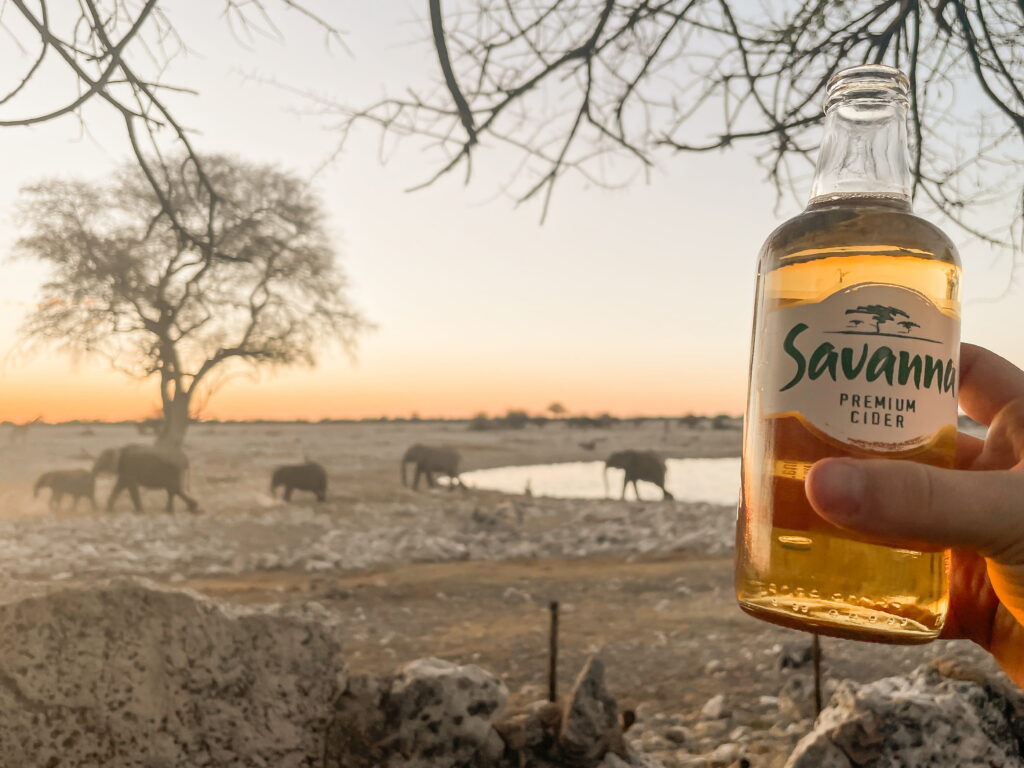
- Our experience: It gets very busy, but spending at least one night here is mandatory. The main reason for that? The floodlit waterhole. Minutes after pulling into our campsite, a herd of elephants marched right past us towards the water, joined by giraffes and springbok.
- Bonus: You can see the magic from home! There is a live 24/7 webcam stream pointing directly at the waterhole on YouTube.
2. Halali Camp
This camp is located right in the center of the park, halfway between Namutoni and Okaukuejo camp.
- Accommodations: Chalets, double rooms, and campsites.
- Amenities: Swimming pool, restaurant, bar, and petrol station.
- Our experience: This camp has a more intimate and relaxed vibe than Okaukuejo, which is why we chose to base ourselves here for two nights. As in Okaukuejo, there is a spectacular floodlit waterhole just a short walk from the camping area.
3. Olifantsrus Camp
Located in the more remote, western section of the park, this camp was our absolute favorite!
- Accommodations: Campsites only (no chalets or rooms available).
- Amenities: Communal kitchen facilities, and a small kiosk.
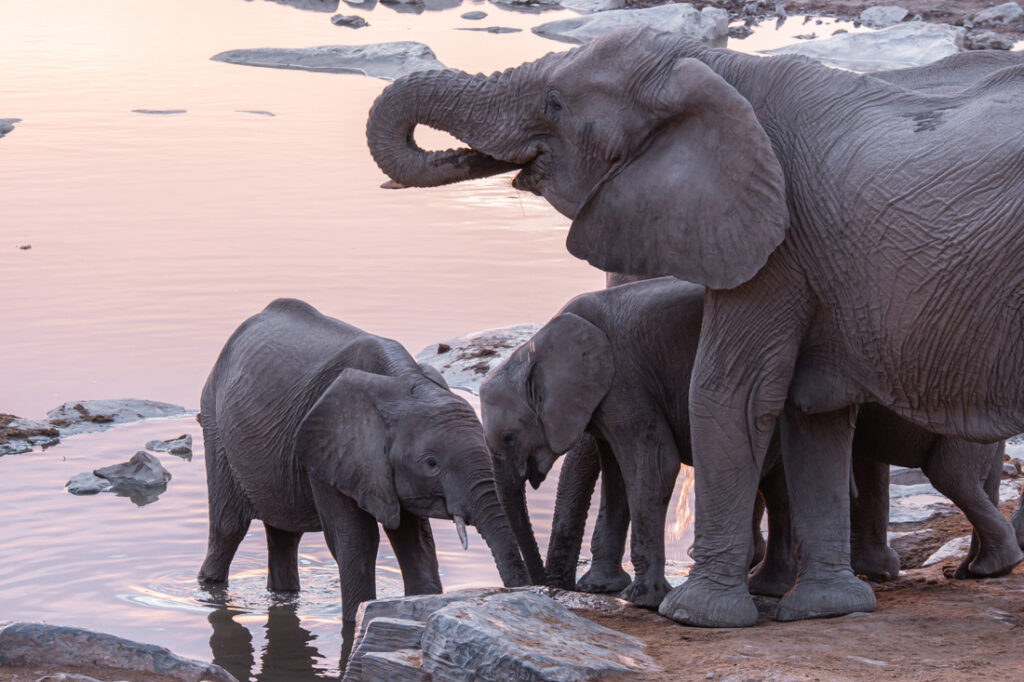
- Our experience: Because it caters purely to campers, Olifantsrus feels wild and close to nature. The best thing about Olifantsrus is the two-story enclosed viewing hide that overlooks a waterhole. It got us closer to wild elephants than anywhere else in Etosha!
4. Namutoni Camp
Located on the eastern side of the park near the Von Lindequist Gate, this camp is built into an old German fort.
- Accommodations: Chalets, double rooms, and campsites.
- Amenities: Swimming pool, restaurant, bar, grocery shop, petrol station.
- Our experience: We didn’t feel the same magic here as we did in the other camps. The waterhole was a bit quiet during our visit. We stopped here to stretch our legs and grab an ice cream, but we recommend to spend a night at Halali for your overnight stay instead.
5. Dolomite Camp
An exclusive, luxury camp located on a hill in the western area of the park.
- Accommodations: Luxury permanent safari tents (no camping allowed).
- Amenities: Swimming pool, restaurant and cocktail bar.
6. Onkoshi Camp
An ultra-exclusive camp right on the edge of the Etosha Salt Pan in the far northeast.
- Accommodations: Luxury chalets on stilts (no camping allowed).
- Amenities: Solar-powered facilities, restaurant and infinity pool.
You can check official rates and secure your spots directly through the Namibia Wildlife Resorts website. Because a self drive safari in Etosha is popular, accommodations sell out months in advance. Be sure to book your nights the moment your travel dates are locked in.
Note: All camps can also be accessed as a day visitor if you just want to stop by to use the pool, buy fuel, or check the local sightings book.
The best self drive itinerary for Etosha
To experience the diversity of the landscapes and to maximize wildlife sightings, we recommend spending four nights and three full days navigating the park from east to west (or vice versa).
Here is the exact route we took, which perfectly balanced classic safari viewings with the more remote west of Etosha:
Arrival Day: Enter through Anderson’s Gate in the late afternoon, check into Okaukuejo Camp, and spend your first evening at the famous floodlit waterhole.
DAY 1 | Okaukuejo to Halali
Driving distance: Around 70 km (direct), but closer to 120 km with loops.
On this first safari day, you will head east towards the center of the park. Even though the direct distance between the two camps is short, leave right at sunrise. You will need the entire day because you’ll want to go off the main road to explore the smaller waterhole loops.
Our favorite waterhole stops for day 1:
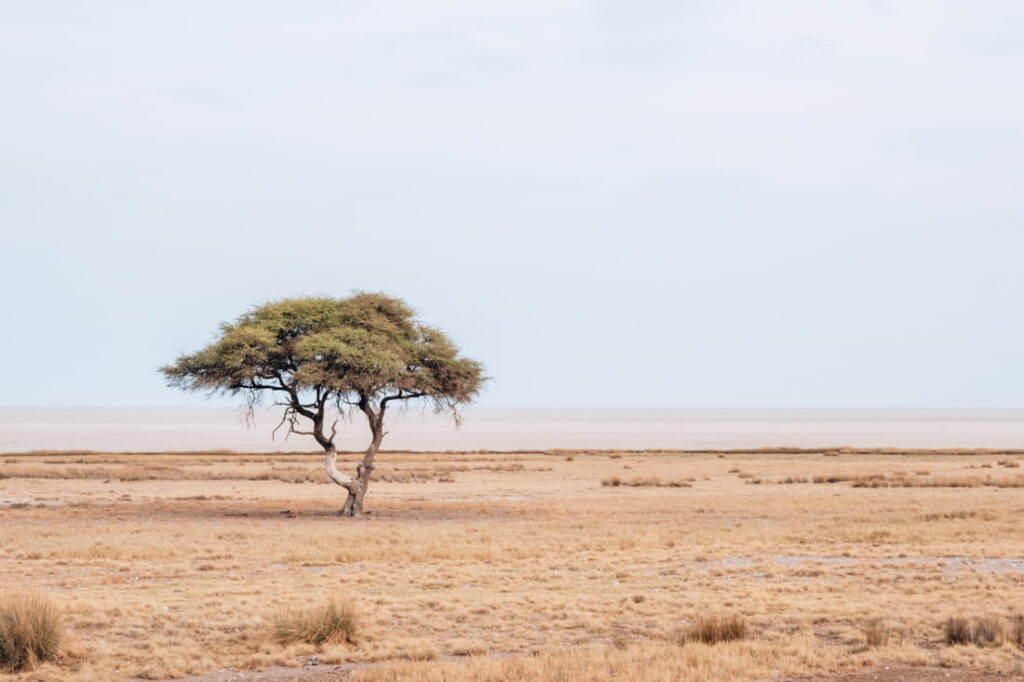
- Etosha Pan Lookout: A detour that takes you to the edge of the salt pan. It feels like standing on the edge of the earth.
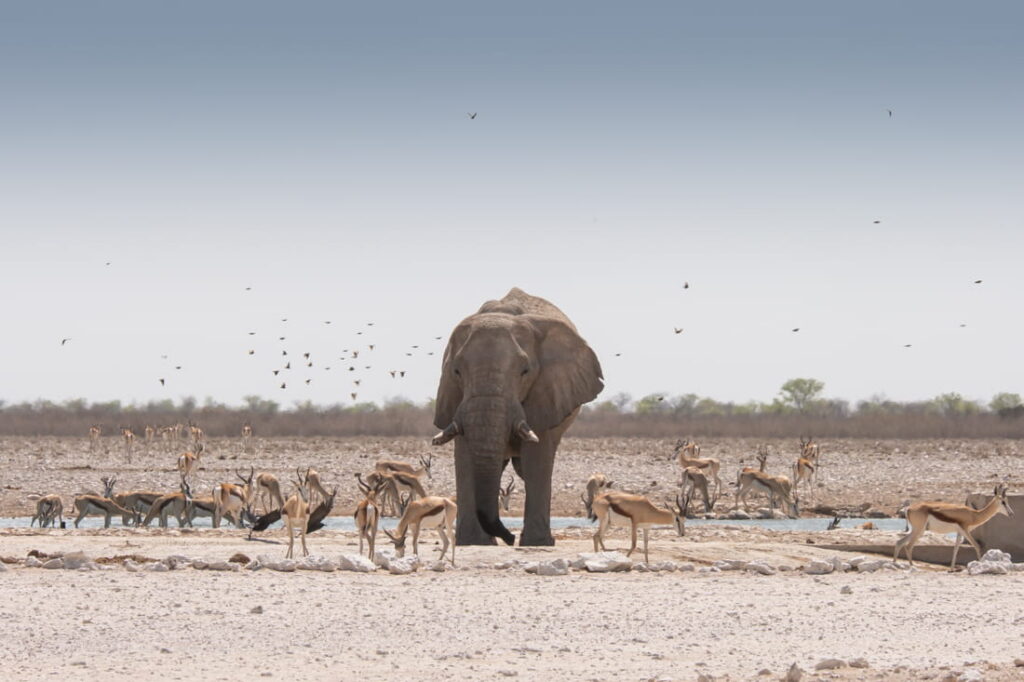
- Gemsbokvlakte: A brilliant waterhole where we saw a solitary bull elephant share the water with springbok.
- Salvadora: The absolute highlight of our day. This was the spot where we had our first lion encounter
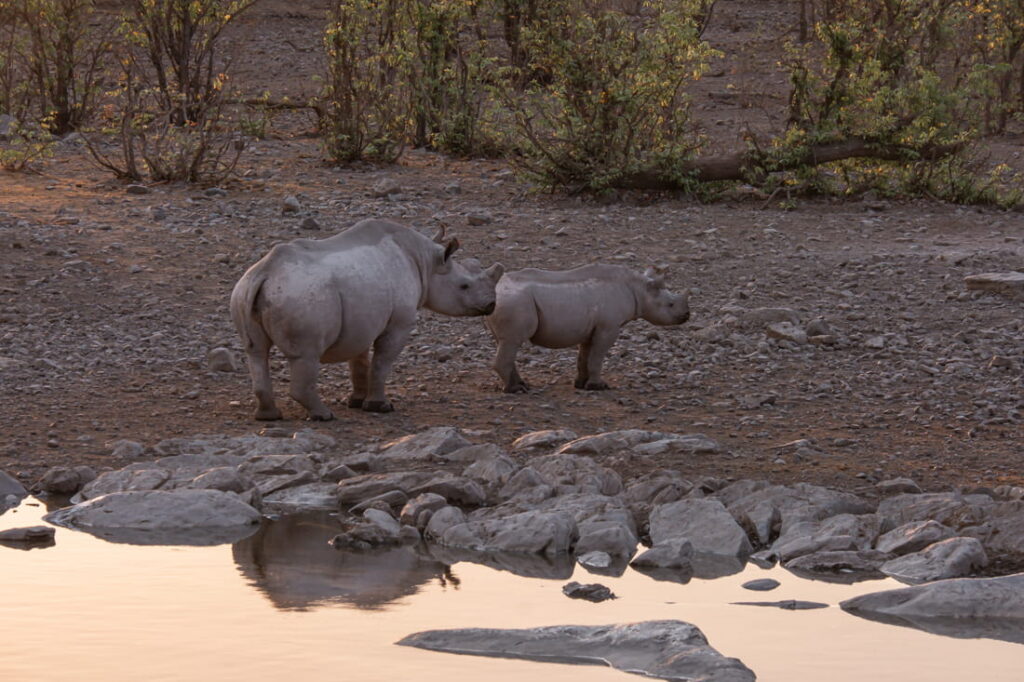
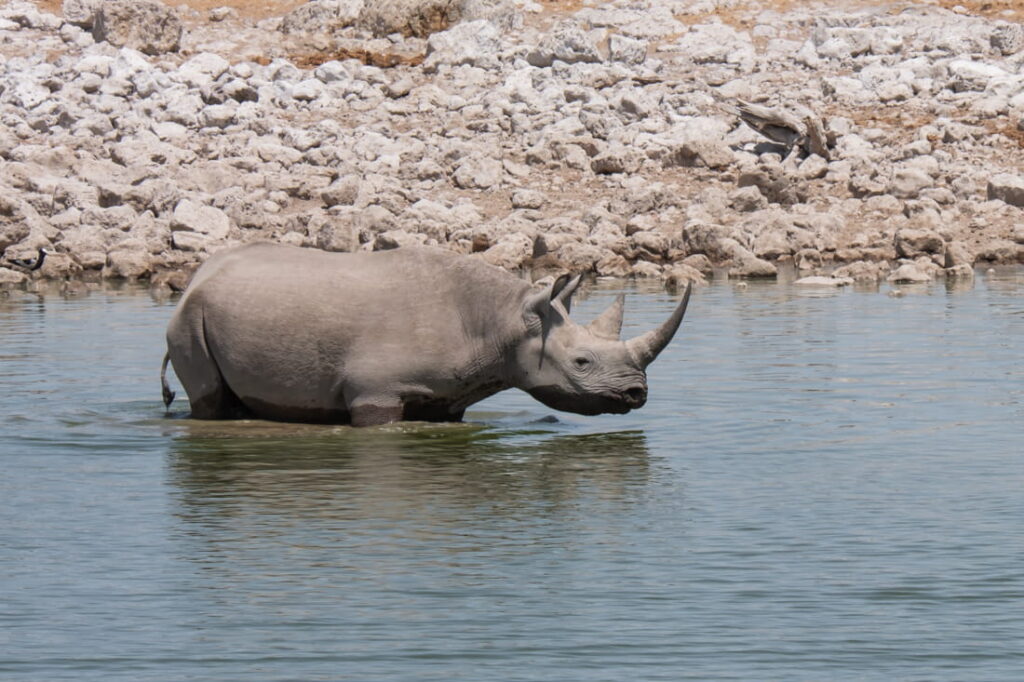
We arrived into Halali Camp just in time to catch a gorgeous African sunset at the camp’s waterhole, followed by an evening of incredible rhino sightings.
DAY 2 | Exploring the East (Halali to Namutoni Loop)
Driving distance: around 150 km round-trip.
On day two, use Halali as your base and spend the day exploring the eastern side of the park toward Namutoni and bacK
Our favorite waterhole stops for day 2:
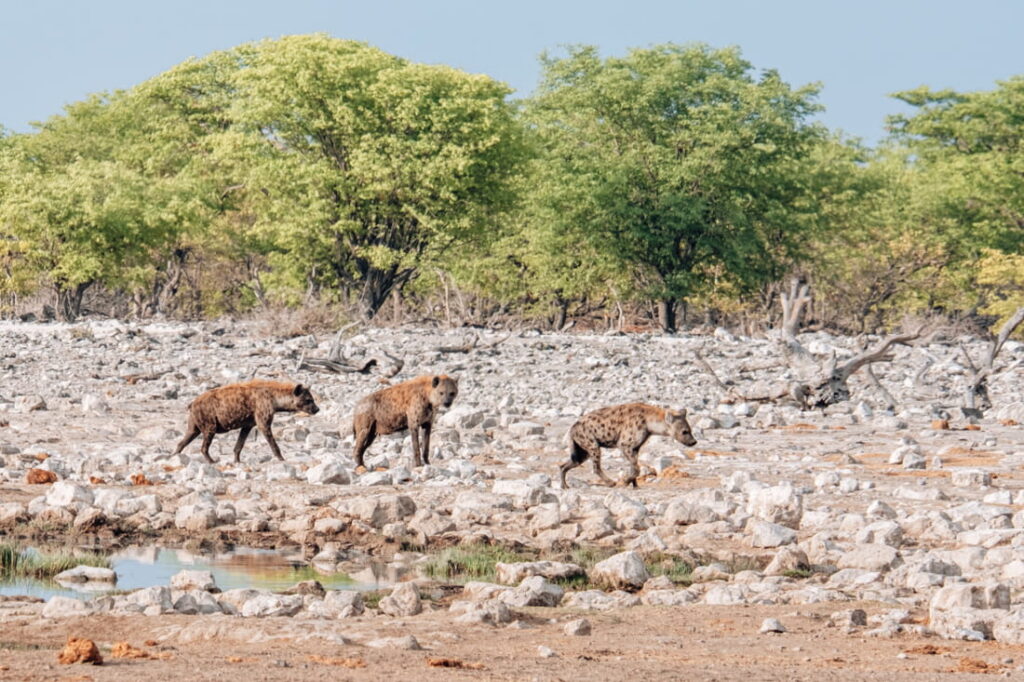
- Klein Namutoni: A beautiful hideout where we saw our first clan of spotted hyenas.
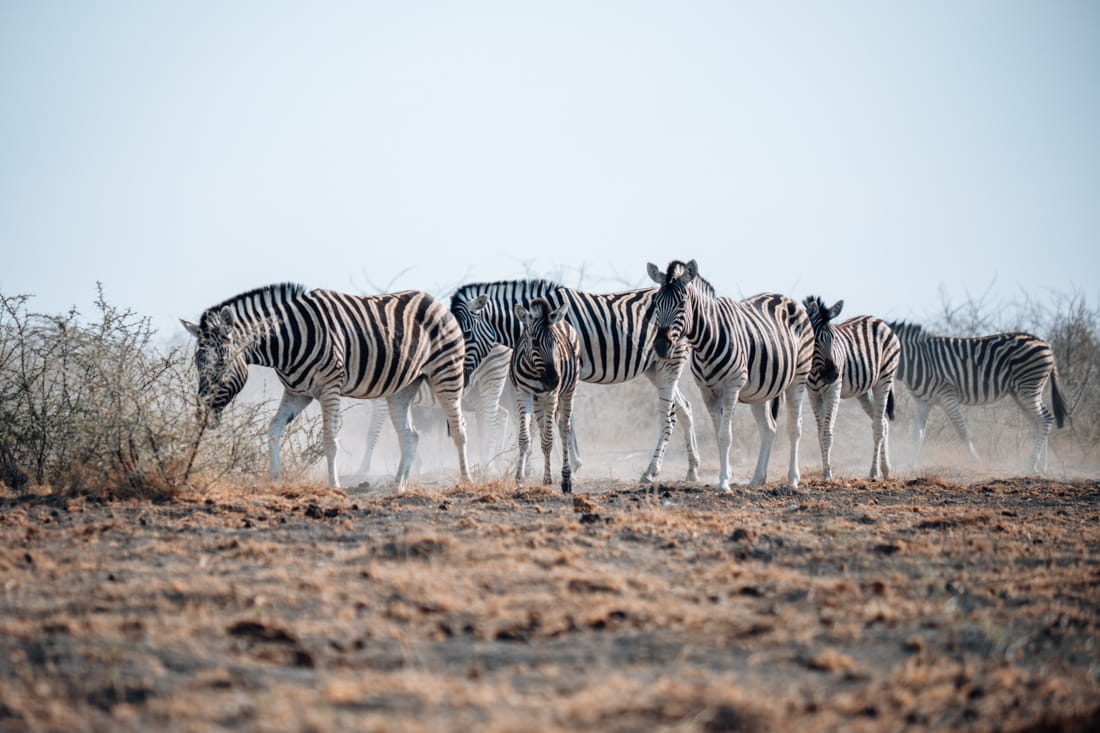
- Chudop & Kalkheuwel: Excellent waterholes on the eastern loops that are often packed with elegant giraffes, zebras, and wildebeest.
In the afternoon, we made a pit stop at Namutoni Camp to stretch our legs, check their local wildlife sightings book, and grab a refreshing ice cream before tracking back to Halali for our third night.
DAY 3 | Deep into the Wild West (Halali to Olifantsrus)
Driving distance: around 180 km.
This was, without a doubt, the favorite day of our entire itinerary. The western side of Etosha is a completely different world compared to the heavily frequented eastern plains. It feels raw and wild.
Start early at sunrise from Halali, driving straight past Okaukuejo to top off your fuel tank. From Okaukuejo drive further west, the roads get noticeably rougher and the landscape shifts into dramatic dolomite hills.
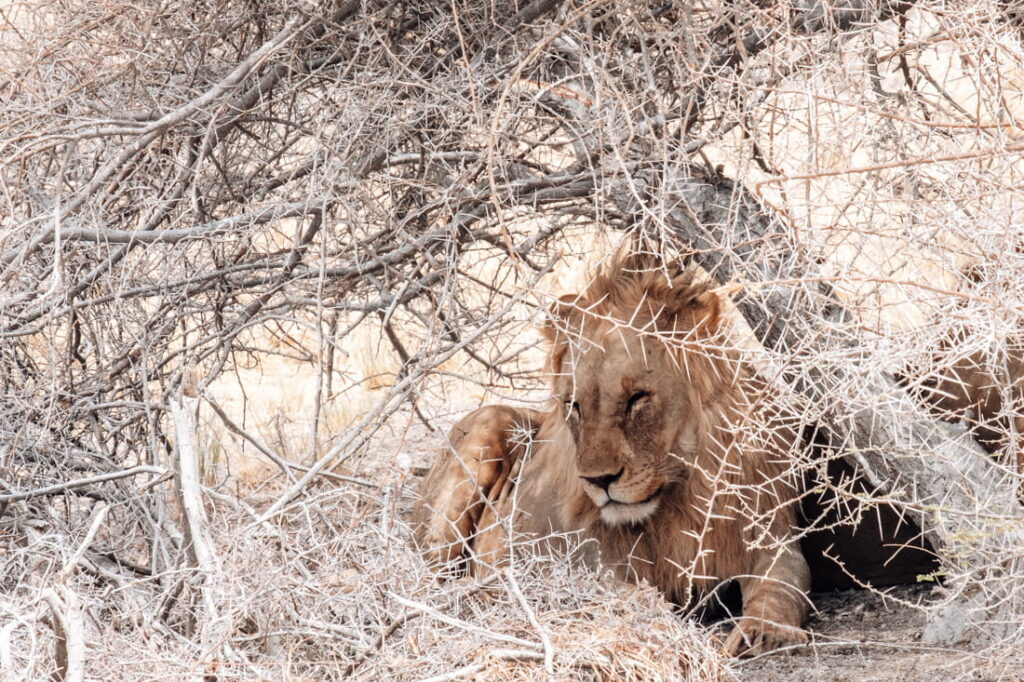
Because far fewer travelers come here, we had multiple lion sightings entirely to ourselves.
You’ll arrive by late afternoon at the relaxed, intimate Olifantsrus Camp. Grab a cold drink and head straight up to the double-decker viewing hide.
The following morning, we exited through Galton Gate, heading southwest towards Damaraland.
Tips for seeing animals in Etosha
There is an abundance of wildlife in Etosha, but spotting certain animals isn’t just about luck. Because you are doing a self drive safari in Etosha, it’s good to know how to read the landscape and how to look for animals. After spending days on the dusty roads of Etosha, we gathered some top tips for maximizing animal sightings:
1. Go to the waterholes
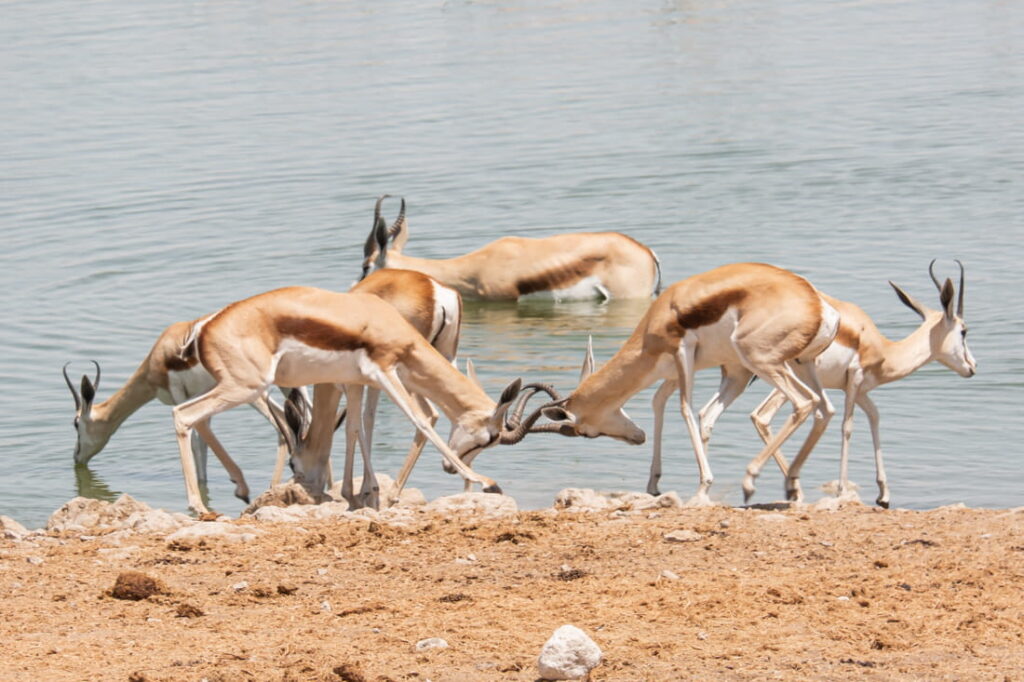
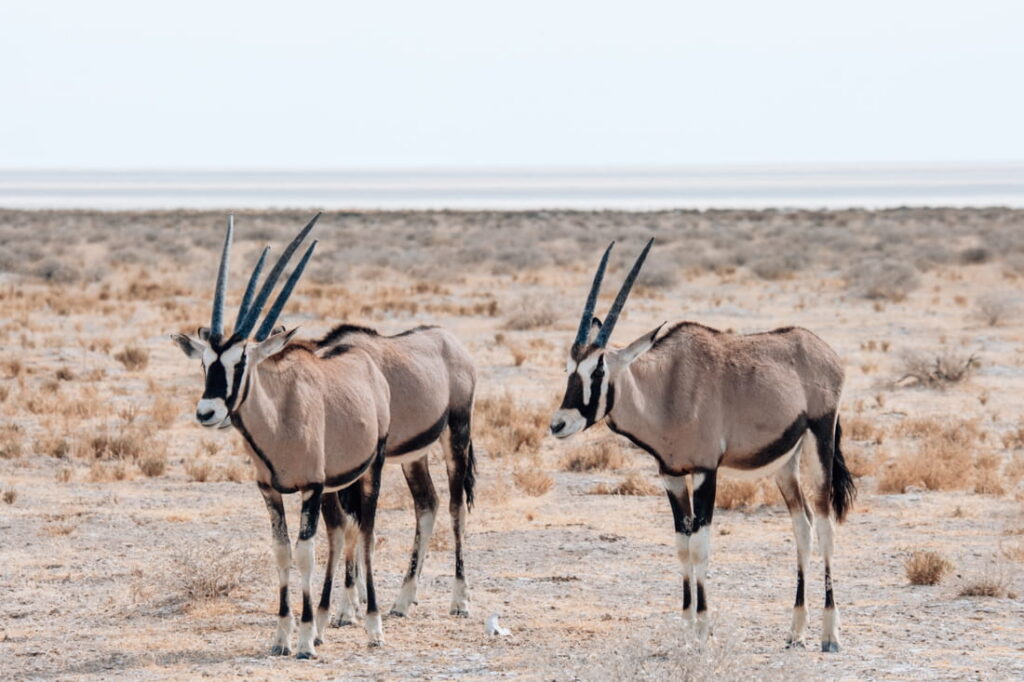
Especially during the dry season, the waterholes in Etosha are like the local pub. Animals gather here for a drink. So instead of driving endlessly, sometimes the best strategy is to find a waterhole with a bit of activity and wait for more animals to show up.
And although the gates of the camps close at sunset, the magic doesn’t stop when the sun goes down. As we mentioned above, staying at camps like Okaukuejo and Halali gives you access to their famous floodlit waterholes at night. We spent hours sitting on the benches, watching rhinos and elephants emerge from the horizon.
2. Be patient
It can be tempting to rush from one waterhole to the next, especially if a waterhole looks quiet at first sight. But it can be worth to be patient. We pulled up to a quiet spot, decided to wait it out and were eventually rewarded with a group of hyenas walking out from the low bush.
3. Take the detours and loops
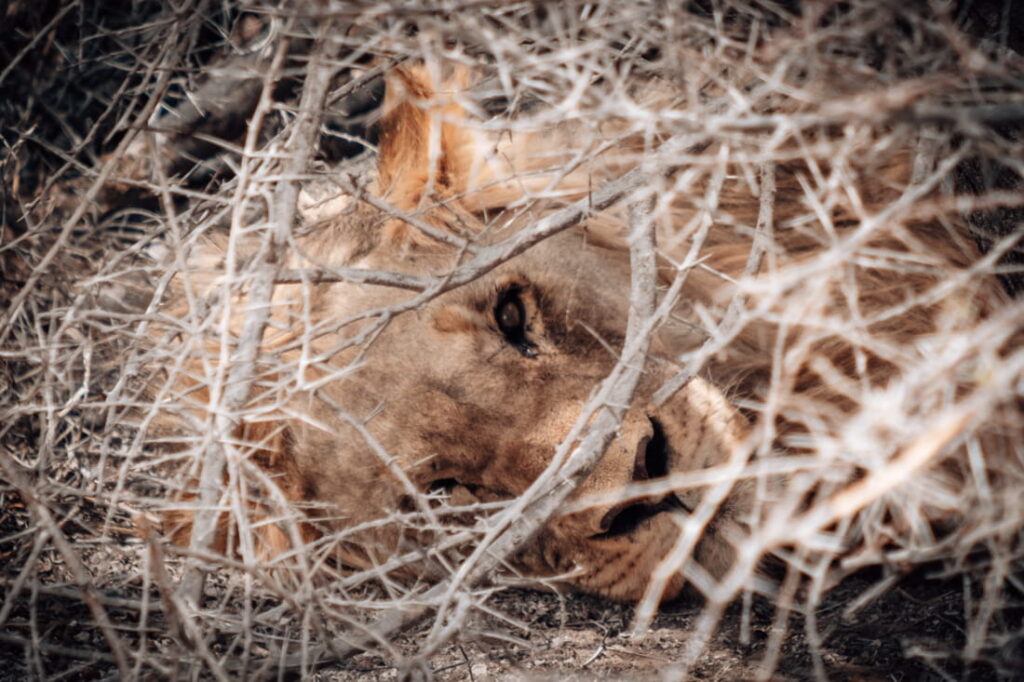
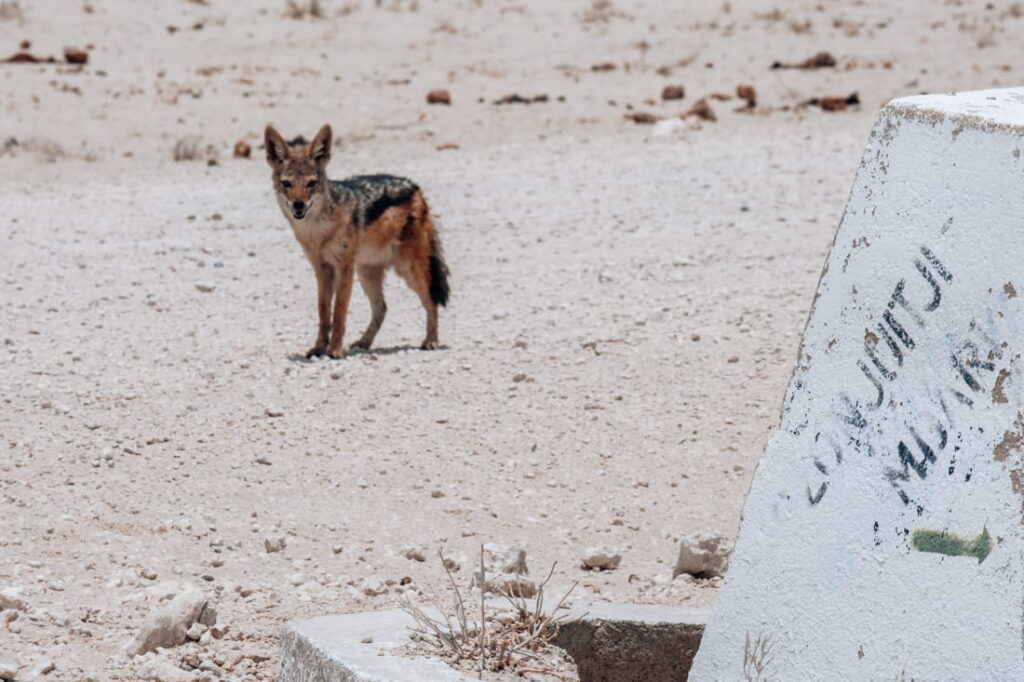
The main gravel roads will get you from camp to camp easily, but the real magic often happens on the smaller loops and detours. These roads are indicated with with white bouders and are typically quieter. Keep your eyes on the thickets and underneath large acacia trees. That’s how we often spotted lions during the heat of the day.
4. Time your visit
Pick the right season: The dry winter months (July to October) are prime time for seeing animals. The bush dries out, making is easier to spot animals. And the natural water pools disappear, so the animals are forced to gather at the permanent waterholes.
Pick the right hours: Wildlife is most active during the cooler hours of the day. Be at the camp gates at sunrise. It is said that the midday heat is best spent relaxing at your campsite swimming pool or grabbing an ice cream, as most animals hide in the shade and become active again around sunset. To be honest, we loved the self drive safari so much we didn’t really took a lot of time to relax and looked for animals even during the hottest hours of the day.
5. Bring a good pair of binoculars
Although you get remarkably close to the animals in Etosha, it’s also a good idea to bring a good pair of binoculars.
6. Chat with other travelers (and check the sightings that are written down in the camps)
The self-drive community in Etosha is incredibly friendly. When you pull up next to another car on a quiet road, roll down your window and gently ask what they’ve seen. Camp receptions also have books where sightings are written down.
7. Look for “traffic jams”
If you see different vehicles clustering together, slow down and approach quietly. Chances are high there is a major sighting. Please be considerate: pull up carefully, don’t block anyone’s view, switch off your engine immediately, and enjoy the sighting.
Practicalities for a self drive safari in Etosha
A self drive safari in Etosha is incredibly straightforward, but a few practicalities can make or break your trip. Here is everything you need to know to keep your journey smooth, legal, and totally stress-free.
Best time to visit
Etosha is a year-round destination, but the best season is the dry season (from July to October): As we mentioned above, the vegetation thins out and natural pools dry up, forcing the animals to gather around the permanent waterholes.
- The shoulder season (from May to June and November): These are beautiful months as the park is lush and green after the rains. But animal sighting will require more effort as they aren’t bound to the main waterholes.
- The wet season (from December to April) are the months Etosha transforms into a green landscape. It is the best time for birdwatching and seeing newborn animals. But keep in mind that the rain can make the roads muddy and wildlife is more dispersed, making them much harder to spot.
Entrance fees and permits
The entrance fee to Etosha National Park are charged per 24-hour cycle from the exact time you enter. For international adults (16+) the entrance fee is NAD 280 (~ €14.50) per person, per day. You also pay a fee per vehicle (10 seats or fewer), NAD 60 (~ €3) per vehicle, per day.
When you arrive at your first entry gate, you will fill out a form to receive a permit. You do not pay at the gate itself. Instead, you take this permit to the park office inside your first rest camp (like Okaukuejo or Namutoni) to settle the bill and get your official payment receipt. Keep this receipt safe, as rangers will verify it when you exit the park! You can pay in cash or by credit card.
The Etosha app
While buying a paper map at the park gate is a classic safari tradition, there is a more modern tool available that we used our entire time in Etosha: the Etosha App (available on both iOS and Android).
A traditional GPS or Google Maps is useless in Etosha as there isn’t cell service everywhere. The Etosha app was a game-changer for our self drive safari for three reasons:
- Offline Navigation: The app uses a highly detailed, interactive map of Etosha that functions entirely offline using your phone’s built-in GPS. It shows every minor gravel track, loop, and detour. You can select any waterhole you want to visit, and it will map out your route and even give you an estimated arrival time. We used it often for making sure we got back to camp before the gates lock at sunset
- Location of waterholes: Etosha has many waterholes and the app clearly marks all of them. They also give a description of which ones are perennial and which ones are most frequented by specific species.
- Built-in animal identification guide: We used the app’s digital mammal guide to identify what we were looking at. When we spotted a pair of ears twitching in the distance or an unfamiliar antelope species resting under a tree, we could quickly pull up the guide to look up what it was, what its characteristics, habits, and details were.
Some final rules for visiting Etosha
1. Keep in mind the strict gate times
Etosha operates on a strict sunrise-to-sunset policy. The main park gates open exactly at sunrise and close precisely at sunset. Driving after dark is strictly prohibited to protect both you and the wildlife. Make sure to plan your afternoon game drives so that you are back inside your camp at least 30 minutes before the sun drops. Arriving late can result in heavy fines.
2. Keep to the speed limits
The maximum speed limit on all roads inside the park is 60 km/h. However, for optimal game viewing, you’ll want to cruise at 20 to 40 km/h. Driving slowly not only protects the wildlife but also prevents your tires from getting punctured by sharp gravel stones.
3. Always stay in your vehicle
It sounds obvious, but it’s a legal requirement and an important safety rule: you must remain inside your vehicle at all times. The only exceptions are the fenced rest camps and a few clearly designated, unfenced picnic/toilet stops marked on the park map.

4. Fuel and supplies
Fuel stations are available at Okaukuejo, Halali, and Namutoni, but pumps can sometimes run dry if a delivery is delayed. So our golden rule: always fill up your tank whenever you see working fuel pumps. The main camps also have small shops for basics like water, firewood, snacks, and ice cream. But make sure to buy your main groceries in Windhoek or Outjo before entering the park.
Ready to plan your Etosha adventure?
Driving through the gates of Etosha will be an experience that stays with you long after you returned back home. The freedom to track lions at sunrise and sit by a floodlit waterhole at sunset is truly unmatched.
Are you planning a self drive safari in Namibia? Let us know your questions about routes, car rentals, or campsite bookings via our social media channels. We’d love to help you plan your journey!
Happy travels!
M&M
Quick start your holiday with the help of our trusted tools
These are the websites we highly recommend to plan your next trip. We use them all the time to save money and travel freely! Did you know that by purchasing through our links, you support us at no additional cost. Thank you for your support. ♥️
Find hotels: via booking.com
Find a rental car: via discovercars.com
Find cheap flights: via skyscanner.com
Book tours & attractions: via getyourguide.com
Book a bus / train / transfer: via omio.com—